
Last updated November 3, 2026
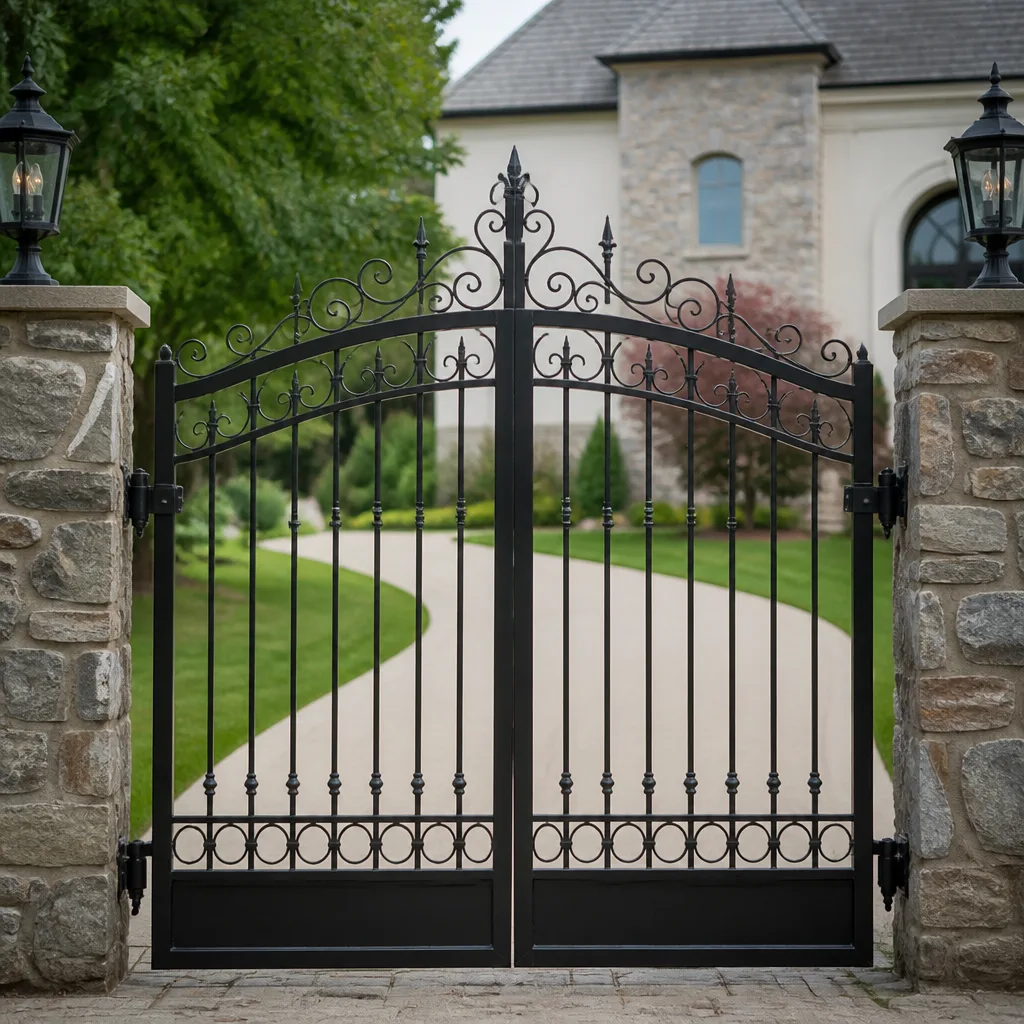 Wrought iron
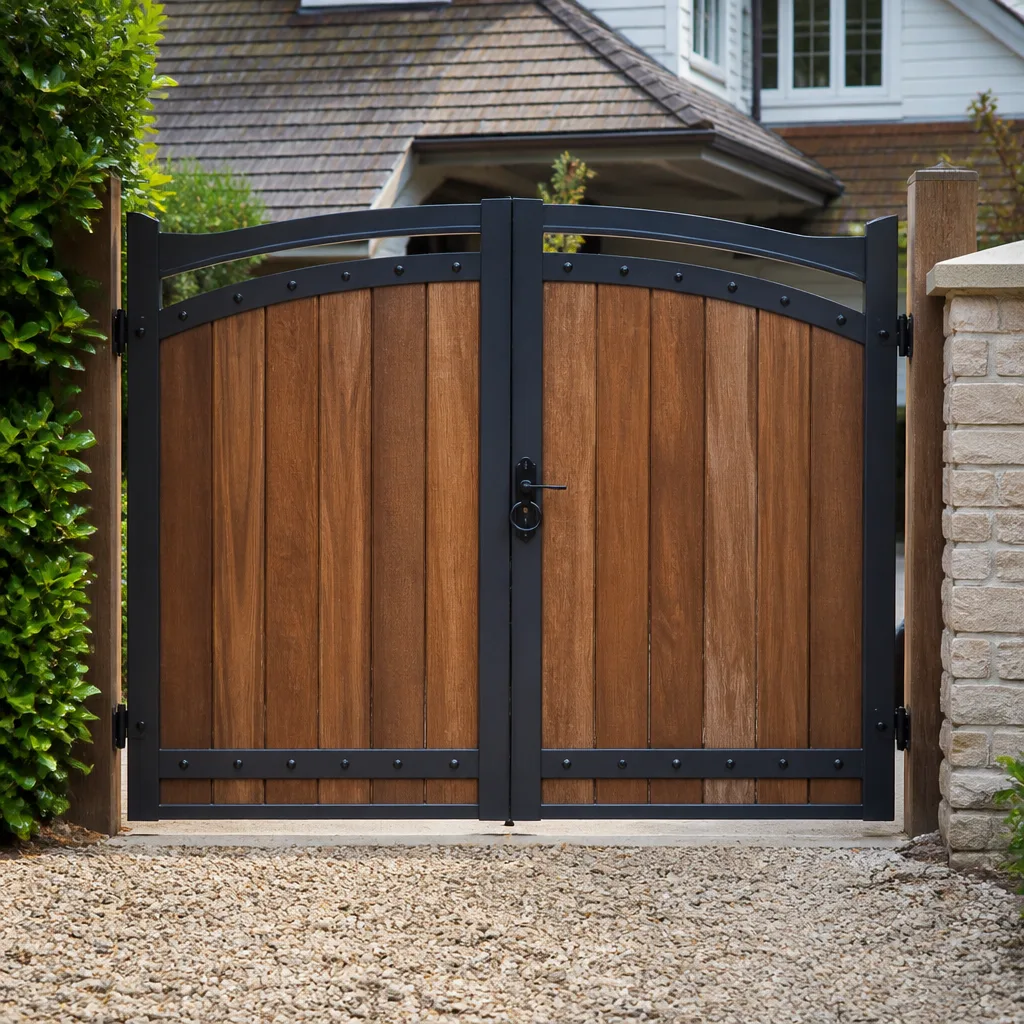 Wood & steel frame
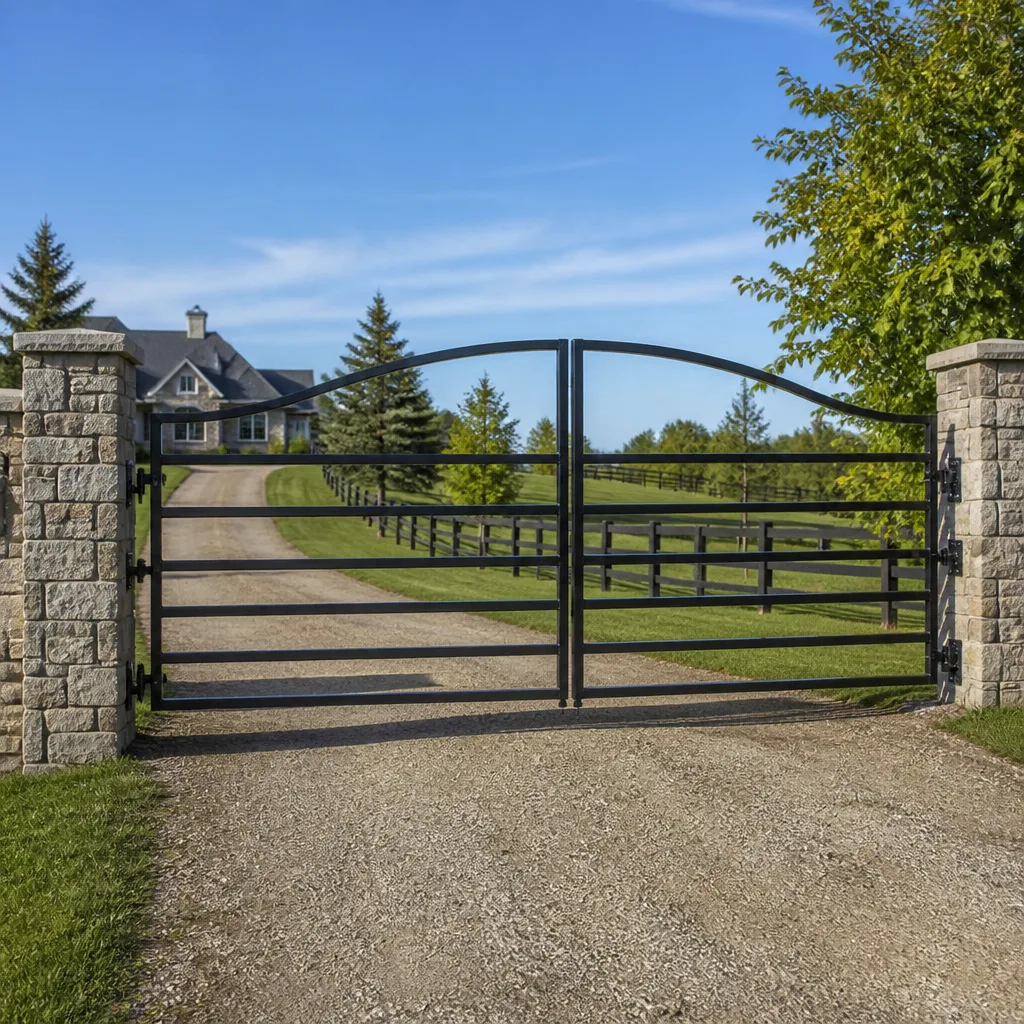 Farm & ranch
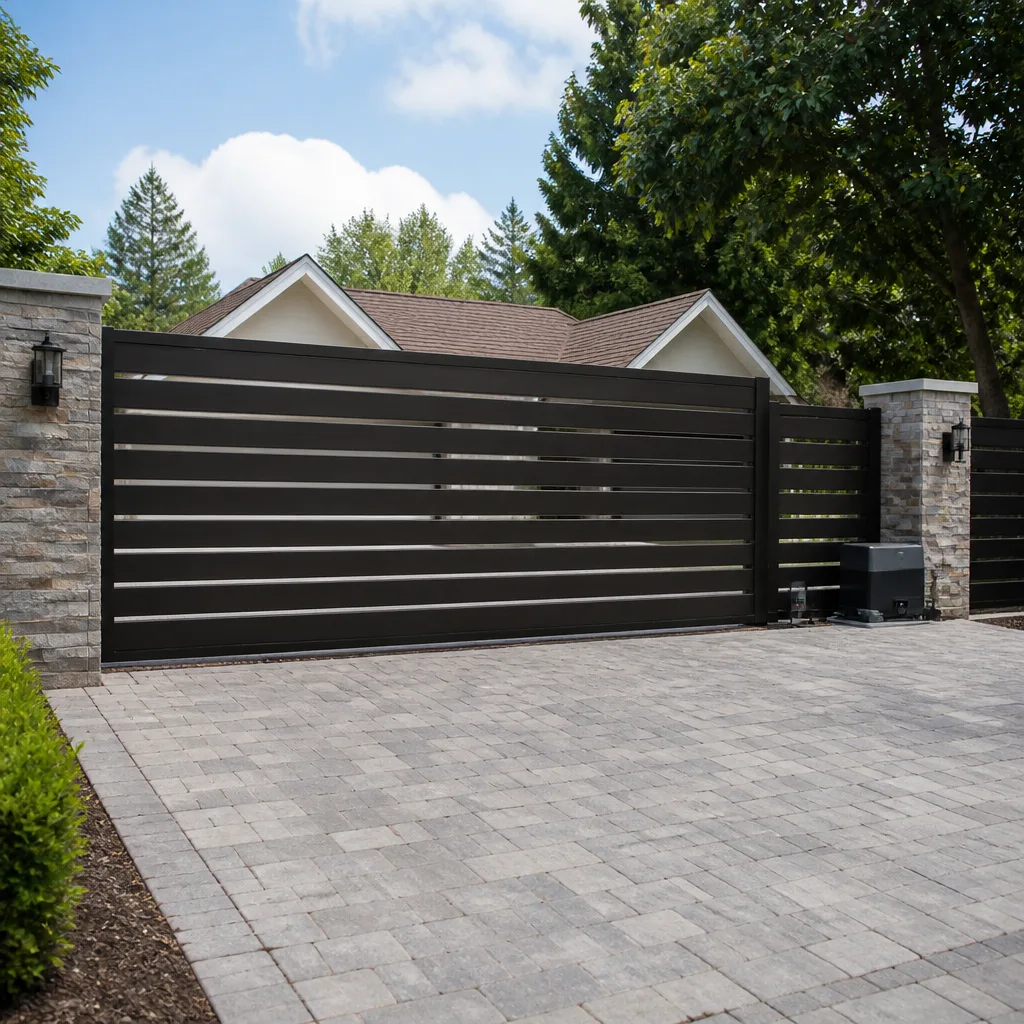 Sliding driveway gates
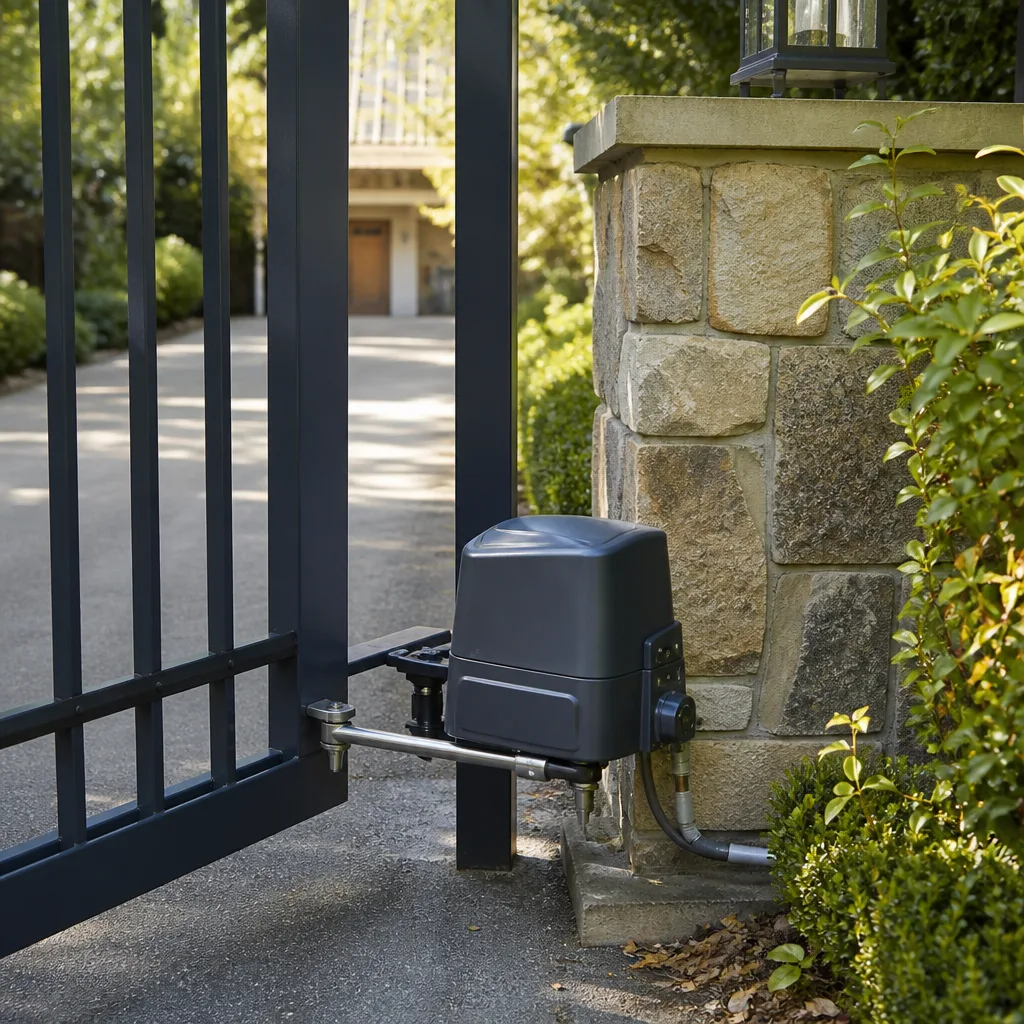 LiftMaster operators
Free on-site gate assessment - hinges, posts, and your LiftMaster or Nice gate operator checked before anything is quoted
The assessment is free and the quote is the invoice.
Get your free estimateThe Complete Gate Repair Guide for Mira Mesa Homeowners
Most gate repair guides are written for everywhere and therefore useful for nowhere. This one starts with the fact that Mira Mesa’s marine layer accelerates aluminum oxidation on hinge pins roughly twice as fast as inland San Diego zip codes. That single climate reality changes which parts fail, how often they fail, and whether a repair makes financial sense or a replacement is the smarter move. In The Complete Guide to Gate Repair in Mira Mesa, we’ll walk through the specific failure patterns we see across Mira Mesa driveways and community entrances, what requires HOA approval, what you can troubleshoot without touching a panel, and how to make a repair-versus-replace decision based on the actual equipment on your property.
Quick Answer
Gate repair in Mira Mesa typically costs between $180 and $450 for common mechanical fixes like hinge pins, receiver boards, or limit switches, while motor or control board replacements run $600 to $1,800 depending on the operator brand. Most residential swing gate repairs can be diagnosed in one visit, and because we carry parts for nine major brands including LiftMaster, DoorKing, and Mighty Mule, we rarely have to special-order or wait on a distributor. The fastest way to get an exact price is a free on-site estimate: call Gate Repair Mira Mesa home at (833) 593-4660.
Styles & brands we work with
- Wrought iron
- Wood & steel frame
- Farm & ranch
- Sliding driveway gates
- LiftMaster operators
Table of Contents
- Why Mira Mesa Gates Fail Differently
- The Most Common Gate Types in Mira Mesa
- HOA Rules and Permits: What Actually Requires Approval
- Diagnosing the Most Common Gate Failures
- Repair vs. Replace: A Framework That Works
- Electric Gate Repair vs. Mechanical Repair: What You’re Actually Paying For
- Maintenance That Prevents Most Mira Mesa Gate Failures
- Common Mistakes to Avoid
Why Mira Mesa Gates Fail Differently
Coastal-adjacent climate is the variable most general repair guides ignore. Mira Mesa sits close enough to the Pacific that the marine layer rolls in most nights, carrying salt and moisture. That air settles on exposed metal and works into hinges, motor terminals, and receiver loop connections. Aluminum oxidation on hinge pins is the single most common call we run in this zip code. A gate that opens fine in Clairemont or Kearny Mesa will bind and squeal in Mira Mesa because the pins have corroded inside the barrel hinge.
The second local variable is soil. Much of Mira Mesa is built near canyons, and the soil shifts. Sandy soil doesn’t hold gate posts the way the clay-rich ground inland does. We regularly see post lean on lots near Lopez Ridge and along Calle Cristobal, and the typical homeowner misdiagnoses it as an operator problem because the gate starts dragging or failing to close fully. The motor is often fine. The post has moved a quarter inch and the gate geometry is now wrong.
Salt air, shifting soil, and the third factor – HOA-mandated equipment choices – combine to create gate failures that don’t match what a generic troubleshooting guide would predict. This isn’t a reason to replace everything. It’s a reason to diagnose accurately before spending money. That’s the whole point of this guide.
The Most Common Gate Types in Mira Mesa
Knowing what’s actually installed across Mira Mesa matters because each gate type fails in a predictable order. Here’s what we see most, roughly in order of frequency.
Residential Swing Gates (Single and Double Leaf)
The workhorse of Mira Mesa single-family homes. Most are chain-driven swing arm openers from Mighty Mule or Ghost Controls at the entry-level end, with LiftMaster and Elite appearing on higher-end installations. Failures cluster around three areas: hinge pins (corrosion), the swing arm itself (bent or stripped), and the control board (moisture ingress). Swing gates also suffer most from post lean because the entire mechanical load hangs on two posts.
Residential Slide Gates
More common on larger lots and canyon-edge properties where a swing arc doesn’t fit. Slide gates ride on a track and rely on V-wheels or rollers that pick up sand and grit from Mira Mesa’s soil. We see roller bearing failure and track warping more than motor failure. When a slide gate starts shuddering, the track is usually the first place to look, not the operator.
Community Entry and HOA Gates
Mira Mesa’s planned communities run heavier hardware: DoorKing and FAAC slide operators, sometimes BFT hydraulic units on large iron gates. These are commercial-duty systems with different failure characteristics: loop detector drift, control board capacitor aging, and limit switch misalignment from daily cycling. They also typically require board-level HOA review before any repair, which changes the timeline.
One pattern worth noting: many Mira Mesa homes built in the 1970s through 1990s had entry-level openers installed at construction. Those systems are now 25 to 40 years old. The electronics degrade even when the mechanical components still move. We’ll come back to this in the repair-versus-replace section, because age alone isn’t the deciding factor, but it matters.
HOA Rules and Permits: What Actually Requires Approval
Here’s the honest reality about gate work in Mira Mesa’s HOA neighborhoods: most repairs don’t require approval. Most replacements do. The confusion is a bigger problem than the process.
In general, the following do not require HOA review in most Mira Mesa communities:
- Replacing a failed control board, receiver, or remote
- Swapping out a hinge pin, wheel, or roller
- Replacing an operator motor with a same-brand, same-size unit
- Adjusting limit switches or safety sensors
- Any emergency repair that restores the gate to its previous working condition
The following usually do require architectural review or at minimum a courtesy notification:
- Changing gate material, height, or color
- Switching from a swing gate to a slide gate
- Adding a pedestrian gate where none existed
- Installing a gate where only a fence post existed before
- Any change visible from the street that alters the community’s appearance
The City of San Diego permit picture is straightforward: replacing an existing gate operator with a comparable unit is generally a repair, not an installation, and doesn’t pull a building permit in most cases. New gate installations on a new post or foundation do. If you’re unsure, call us before you start: we’ve worked in enough Mira Mesa HOAs to tell you quickly whether your project falls in the “just fix it” category or the “submit a form first” category. The worst outcome is completing a gate replacement, then having the HOA require changes.
Diagnosing the Most Common Gate Failures
Before you call anyone, a five-minute visual check can tell you a lot. Here’s the sequence we use when a Mira Mesa homeowner calls and says, “My gate stopped working.”
- Look at the gate’s physical position first. If it’s leaning, sagging, or the latch doesn’t line up with the strike, you have a mechanical problem (post lean, hinge wear, bent arm), not an electrical one. Half of “dead gate” calls in Mira Mesa are actually misaligned gates where the safety sensor reads the bad position and refuses to run.
- Check for power. If the keypad lights up or you hear a click when you press the remote, the board has power. If nothing responds at all, check the breaker and the GFCI outlet the operator plugs into. Mira Mesa’s marine air causes GFCI nuisance trips more often than inland areas.
- Observe what it does when you try to open it. Does it hum but not move? Start and stop? Open but not close? Each symptom points to a different system: humming usually means a bad capacitor or gearbox, start-stop usually means a limit switch or sensor issue, open-only often means a blocked safety beam or a failed edge sensor.
- Listen. Grinding usually indicates a mechanical problem (rollers, tracks, pinions). Clicking without movement points to a relay or board issue. A gate that moves slowly but moves is often a low-voltage or failing motor problem.
- Check the obvious wear items. For swing gates, wiggle the gate leaf. Movement at the hinge means the pin or bushing is worn. For slide gates, look at the rollers and track for sand buildup or flat spots.
This sequence works for most residential gates in Mira Mesa, whether they run on a Mighty Mule, a LiftMaster, or a commercial DoorKing. The principle doesn’t change; only the parts do.
Repair vs. Replace: A Framework That Works
Most gate companies default to replacement because it’s more profitable. We don’t. We work on the brand already on your property, no replacement required just because we don’t recognize the name. That said, replacement sometimes is the right call. Read our DIY vs Professional Gate Repair: The Mira Mesa Homeowner’s Decision Guide for the framework we use, and you can use it too.
Ask four questions:
- Is the failed part available? Part availability has quietly become the biggest driver of replacement decisions. Entry-level operators from fifteen years ago often have discontinued control boards. If we can’t source a board for a gate opener that’s otherwise in good shape, replacing just the operator, not the whole gate, is the economical move.
- Is the problem mechanical or electrical? Mechanical repairs (hinges, wheels, arms, track) are usually worth doing at almost any gate age because the parts are commodity and affordable. Electrical repairs get dicier when boards and motors age, because one electrical failure often presages another.
- How old is the operator, in cycles not years? A residential swing gate cycles maybe 10 to 15 times a day. A busy community gate cycles 200 to 300 times a day. Two gates can both be eight years old, but the community gate is “older” in every way that matters. Cycle count, not calendar age, drives failure.
- What’s the cost ratio? If the repair is under 40% of a full replacement and the gate is otherwise sound, repair. If the repair exceeds 50%, replacement gets more attractive. Between 40% and 50%, brand and part availability tip the decision.
In Mira Mesa, this framework plays out in a specific way: salt-air corrosion makes mechanical components fail faster than expected, so the “otherwise sound” part of the equation matters more than the calendar year. We’ve replaced hinge pins on gates that are 30 years old and left the operator untouched. We’ve also recommended full operator replacement on systems that were 12 years old because the electronics were toast.
Electric Gate Repair vs. Mechanical Repair: What You’re Actually Paying For
There’s a big difference between fixing the part that moves and fixing the part that thinks. Understanding it saves you from paying for a control board when the hinge is the problem, or vice versa.
Mechanical repair covers the physical components: hinges, hinge pins, swing arms, track rollers, V-wheels, chain, sprockets, gate leaf alignment. In Mira Mesa, mechanical issues dominate because of corrosion and post settling. Typical mechanical repairs run $180 to $450 for most residential gates, depending on how many components need replacement and whether the gate leaf needs to be lifted and rehung.
Electric gate repair covers motors, control boards, safety sensors, keypads, receiver boards, loop detectors, and the wiring between them. Electric repairs run higher, typically $350 to $1,800, because the components cost more and diagnosis takes longer. A LiftMaster or DoorKing control board replacement is a different job than a bad hinge pin, and it’s priced accordingly.
The diagnostic skill is knowing which system failed. We see homes where a previous company replaced a control board, and the gate still didn’t work because the real problem was a bent hinge pin causing the gate to bind and overload the board. Conversely, we see boards getting blamed when the actual fault is a safety sensor with corroded terminals. This is where the Electric Gate Repair in Mira Mesa side of our business differs from a general handyman: we’re trained on nine specific brands and their failure signatures, including LiftMaster, FAAC, BFT, Linear, Viking, Ghost Controls, DoorKing, Elite, and Mighty Mule. That brand knowledge means we identify the real fault instead of throwing parts at it.
Maintenance That Prevents Most Mira Mesa Gate Failures
Prevention is boring, and that’s the point. The gate owners who spend the least are the ones who do these unglamorous things twice a year. Here’s what we recommend for Mira Mesa specifically.
- Lubricate hinge pins and moving joints every six months. In Mira Mesa’s marine air, six months is about when corrosion starts binding movement. Use a penetrating lubricant on the pins, not just a surface spray. Wipe off the excess so salt doesn’t bond to the grease.
- Check the gate leaf for sag or drag monthly. If the gate leaves a mark on the driveway or you can see it leaning when closed, the hinge or post is failing. Catch it at the “slight drag” stage and it’s a $200 hinge job. Wait until it won’t close and it’s a post reset.
- Inspect all wire connections for corrosion. Marine air attacks exposed terminals on control boards, safety sensors, and keypads. We see green powder on terminals in Mira Mesa more than any other San Diego neighborhood we serve. Cleaning a corroded terminal is a $150 call if caught early. A replacement board is $800.
- Test the safety features once a quarter. Place a jacket or a broom in the gate path and verify the gate reverses. Test the photo eye by blocking it and attempting to operate. Failures in safety systems are the most common cause of gates that refuse to close in Mira Mesa.
- For slide gates, keep the track clear of sand and debris. Mira Mesa’s sandy terrain gets into every groove. Sweep or blow out the track monthly. Sand and grit shave years off slide gate rollers.
For homeowners with a busy household or a rental property, we offer Gate Repair in Mira Mesa maintenance visits on your schedule. The math is simple: a $200 visit that catches a corroding connection beats a $900 emergency repair that happens at 7 p.m. on a Friday.
Common Mistakes to Avoid
- Spraying WD-40 into the operator motor. WD-40 is a penetrant, not a motor lubricant. Spraying it into a gate opener attracts dirt and accelerates wear. We see this on entry-level operators constantly.
- Ignoring a gate that’s dragging or noisy. A hinge that’s binding doesn’t heal itself. In Mira Mesa’s climate, it gets worse fast. The gate leans more, the operator works harder, and the motor burns out sooner.
- Bypassing safety sensors because they’re “annoying.” Disconnecting a photo eye or edge sensor to get the gate to close creates a real injury hazard. If the sensor keeps tripping, the problem is usually alignment or corrosion, not the sensor’s existence. We fix the cause, not the symptom.
- Replacing the whole operator when a $30 part failed. We see this more than we’d like: homeowners told their gate operator is dead, when in fact a limit switch or a receiver board is the only problem. That’s an expensive misdiagnosis dressed up as a repair.
- Waiting until the gate fails completely before calling. Most gate failures give warning: slow operation, unusual noise, intermittent function. Ignoring those warnings turns a $250 repair into a $1,200 replacement.
- Not knowing your gate’s brand or model. When something fails, the first question we’ll ask is what system you have. If you don’t know, a photo of the operator helps. If you don’t know and can’t get to it, diagnosis takes longer. The brand plate is usually on the side of the motor housing or the control box.
When to Call a Professional
Some gate problems are safe to investigate. Some are not. If your gate involves high-tension springs, counterweights, or steel cables under load, do not work on those components. A gate spring can store enough energy to cause serious injury if released improperly. Same goes for any gate that’s heavy enough to trap or crush: the safety sensors are there because the gate can hurt someone. If your gate has become noisy, sluggish, or intermittent, that’s the time to call. We handle everything from a broken residential swing arm to a full commercial slide operator replacement. Gate Installation in Mira Mesa is also available if your existing system is beyond repair. Gate Repair Mira Mesa offers free estimates in Mira Mesa – call (833) 593-4660.
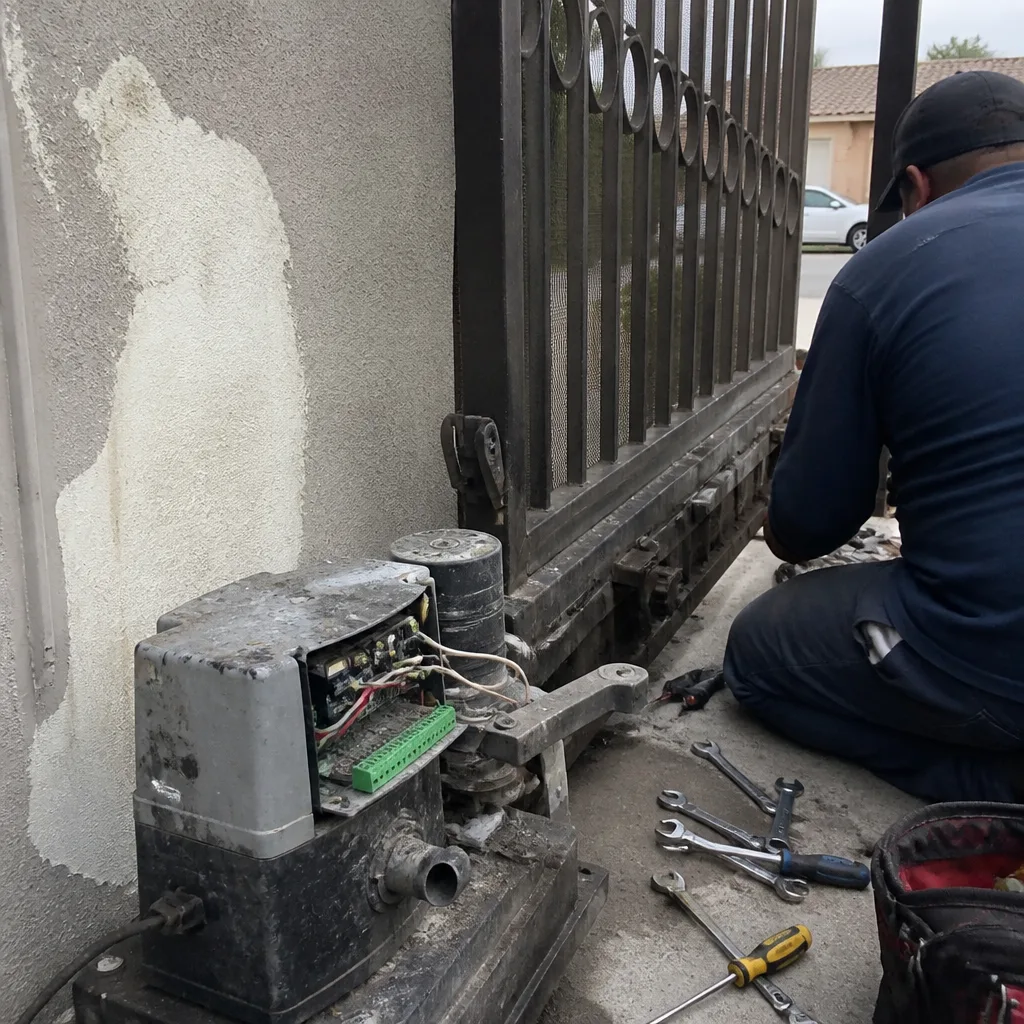
See the difference
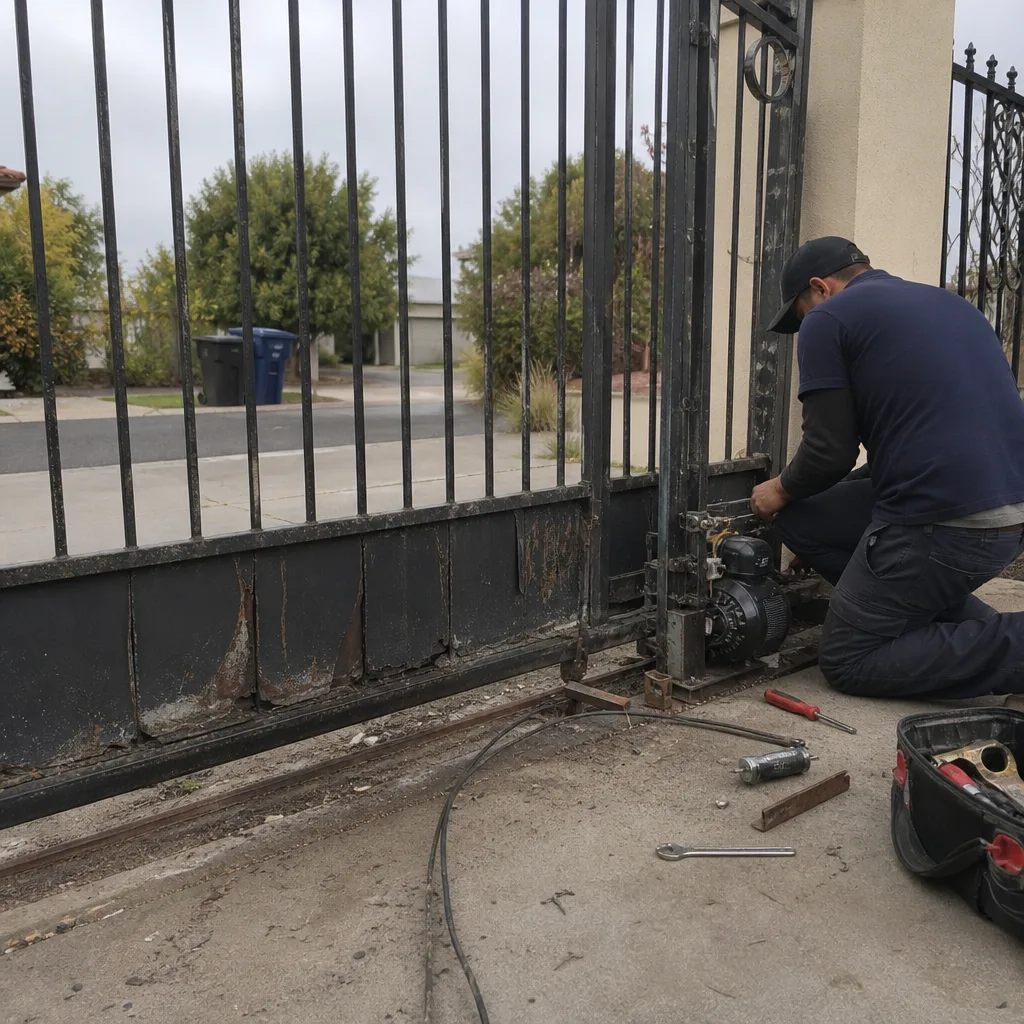 Before
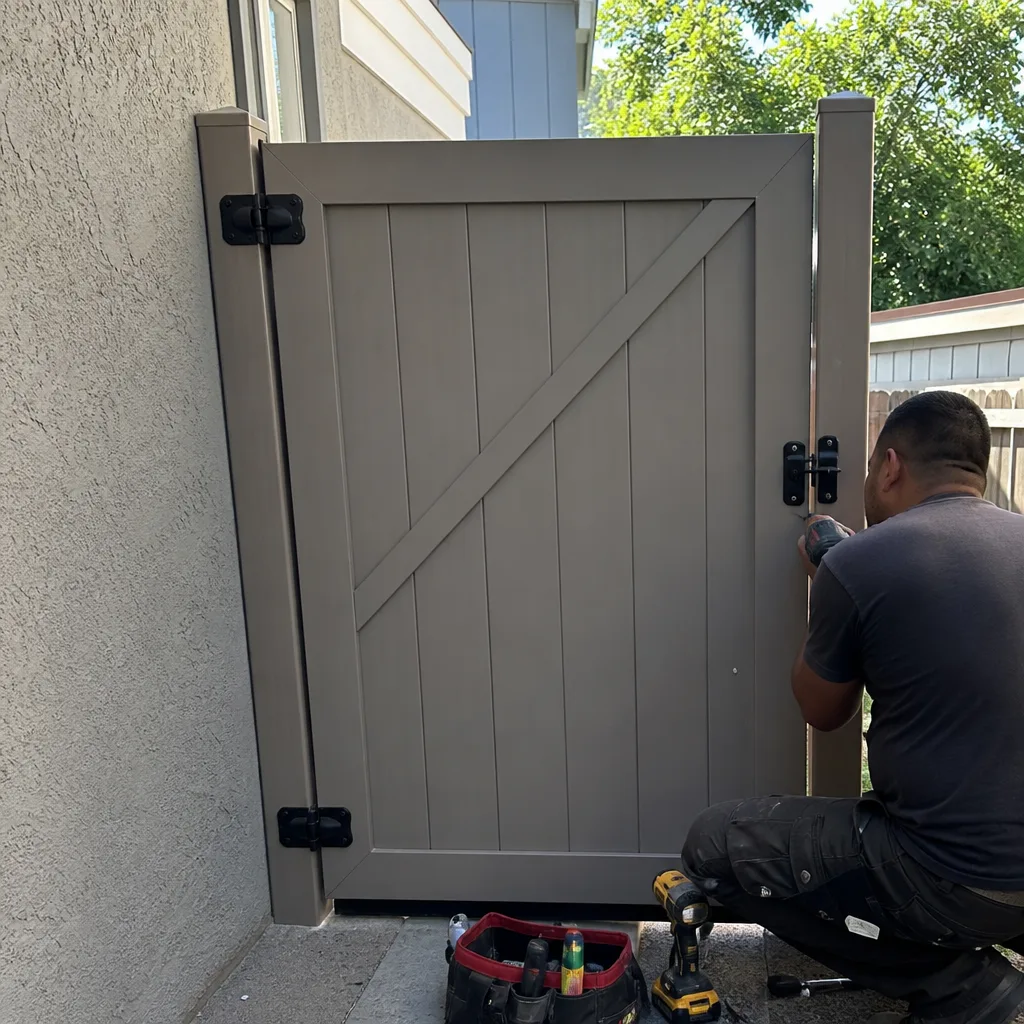 After
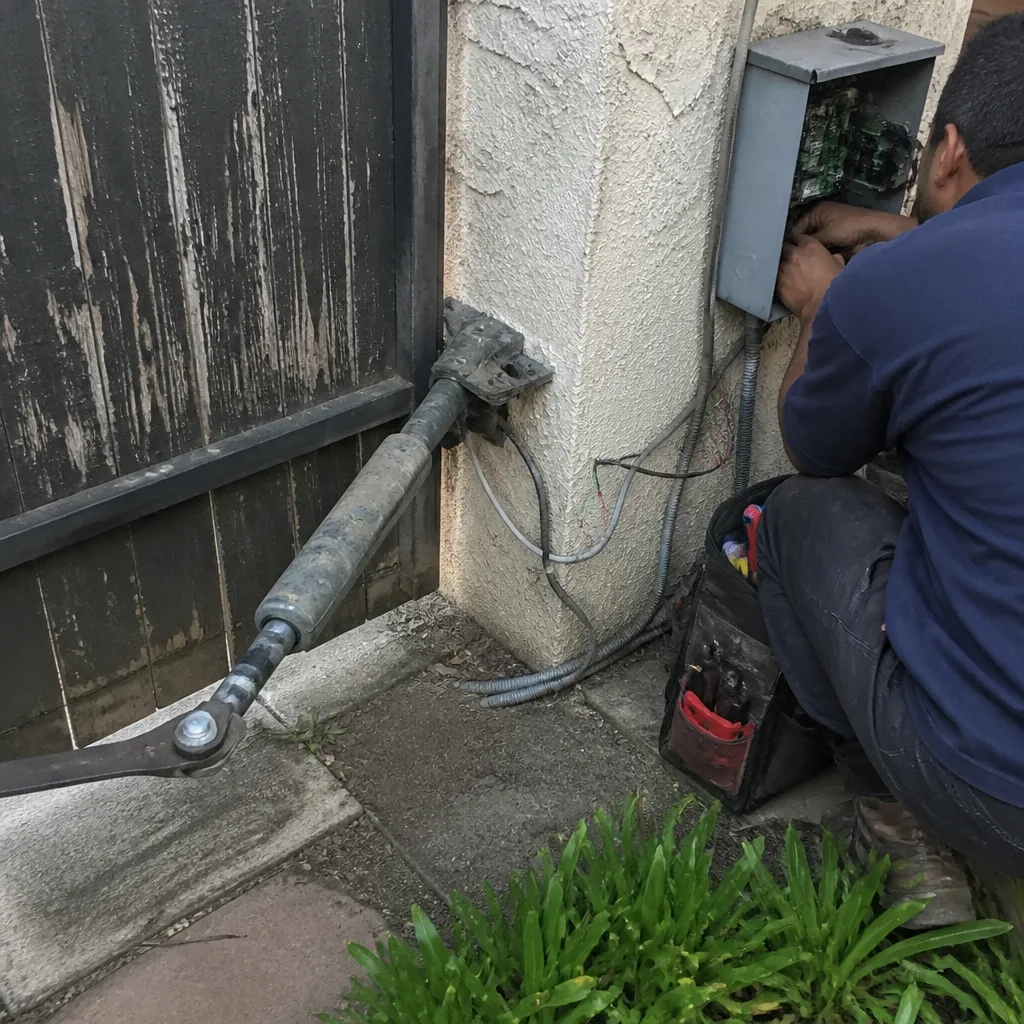 Before
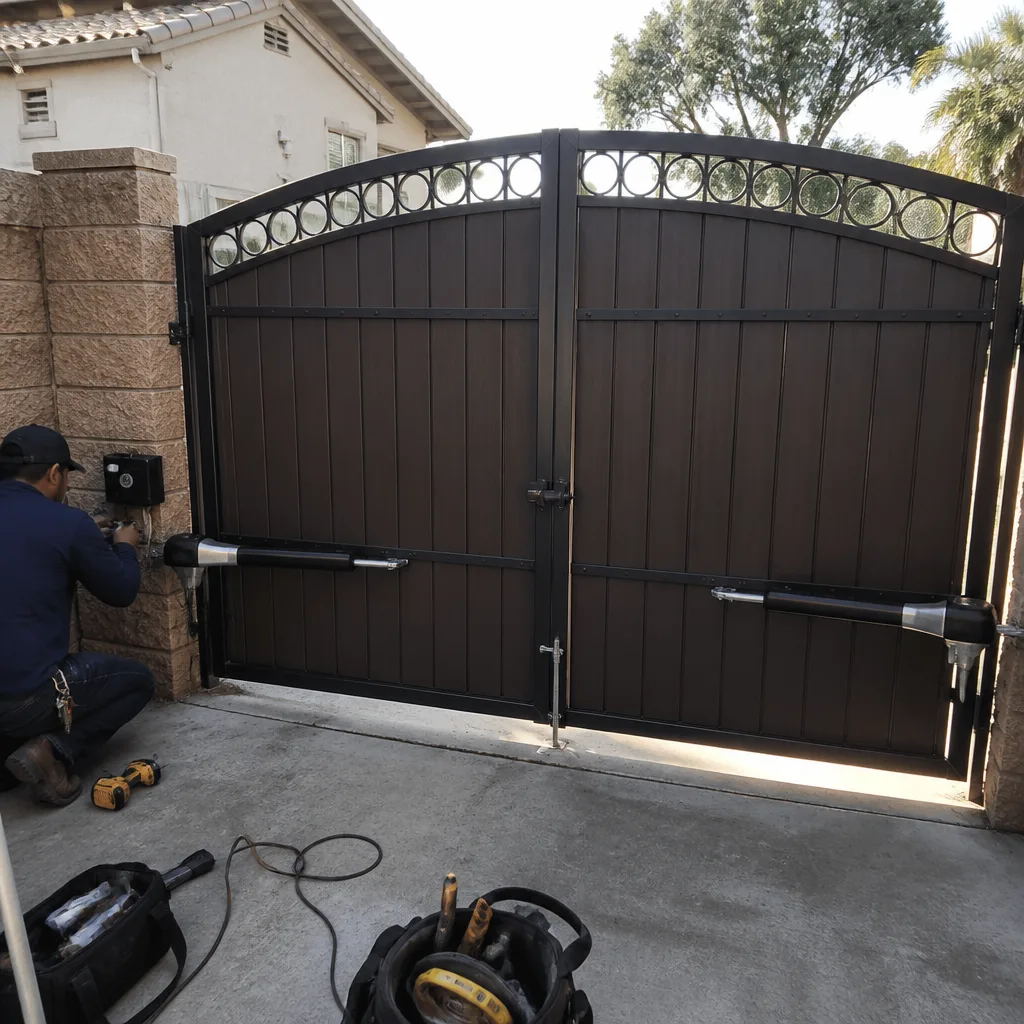 After
 Before
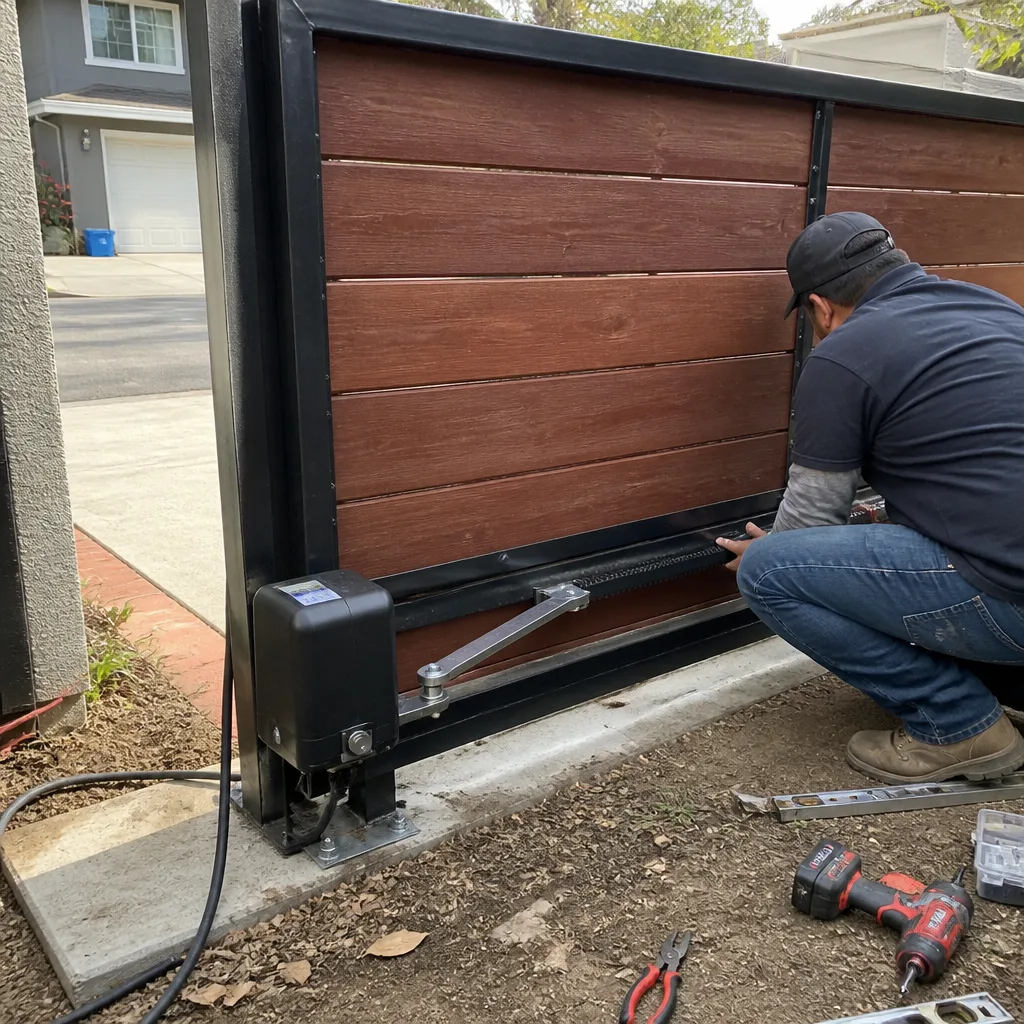 After
Frequently Asked Questions
Most residential Gate Repair in Mira Mesa runs between $180 and $450 for mechanical work (hinges, pins, rollers, alignment) and $350 to $1,800 for electrical work (control boards, motors, safety sensors). The exact quote is free: call (833) 593-4660 and we’ll give you a written price before any work starts.
In most cases, yes. We keep our trucks stocked with parts for the brands most common in Mira Mesa, including LiftMaster, DoorKing, Mighty Mule, and Elite. For repairs, that means we often fix the problem on the first visit rather than ordering parts. Same-day availability depends on our schedule, but emergency calls get priority. Call (833) 593-4660 and we’ll tell you our soonest window.
Almost certainly. We work on the brand already on your property, even if it’s not one of the nine we carry parts for. It’s common for homeowners to have an opener installed by a previous resident or a fencing company, and we diagnose the actual problem regardless of the label. If parts are discontinued, we’ll give you honest options for repair or replacement at a price that makes sense.
In most Mira Mesa communities, repairs that restore the gate to its original condition don’t require HOA approval. Replacing a motor, board, hinge, or roller is typically considered maintenance, not modification. Changing the gate’s appearance, material, or location usually does require architectural review. When in doubt, we can tell you how similar jobs have gone in your specific community.
Coastal-adjacent air shortens the lifespan of unprotected electrical components here compared to inland San Diego. Entry-level residential operators typically last 8 to 12 years in Mira Mesa. Higher-end systems like LiftMaster and DoorKing last 15 to 20 years with proper maintenance. Mechanical components like hinges and rollers can be renewed indefinitely if the gate structure itself stays sound.
Repair is almost always worth it when the problem is mechanical: hinges, pins, wheels, tracks, alignment. For electrical problems, the decision comes down to age, cycle count, and whether the brand still supports the parts. A 30-year-old gate with good bones and a replaced operator can keep working for decades. We’ll give you the honest breakdown and let the numbers decide. Estimates are free.
The Bottom Line
Mira Mesa gates fail in specific, predictable ways: salt air corrodes hinge pins and terminals faster than inland neighborhoods, sandy soil shifts posts and throws off gate geometry, and aging electronics on gates installed decades ago eventually die. The good news is that most failures can be diagnosed quickly, repaired without replacing the whole system, and prevented with twice-annual maintenance. The key is knowing what you have, understanding whether the problem is mechanical or electrical, and calling someone who works on your brand. That’s what we do, every day, across Mira Mesa. For more guides & resources, explore our blog, or call (833) 593-4660 for a free estimate.
Written by the team at Gate Repair Mira Mesa, serving Mira Mesa since 2017.