
Last updated November 2, 2026
 Wrought iron
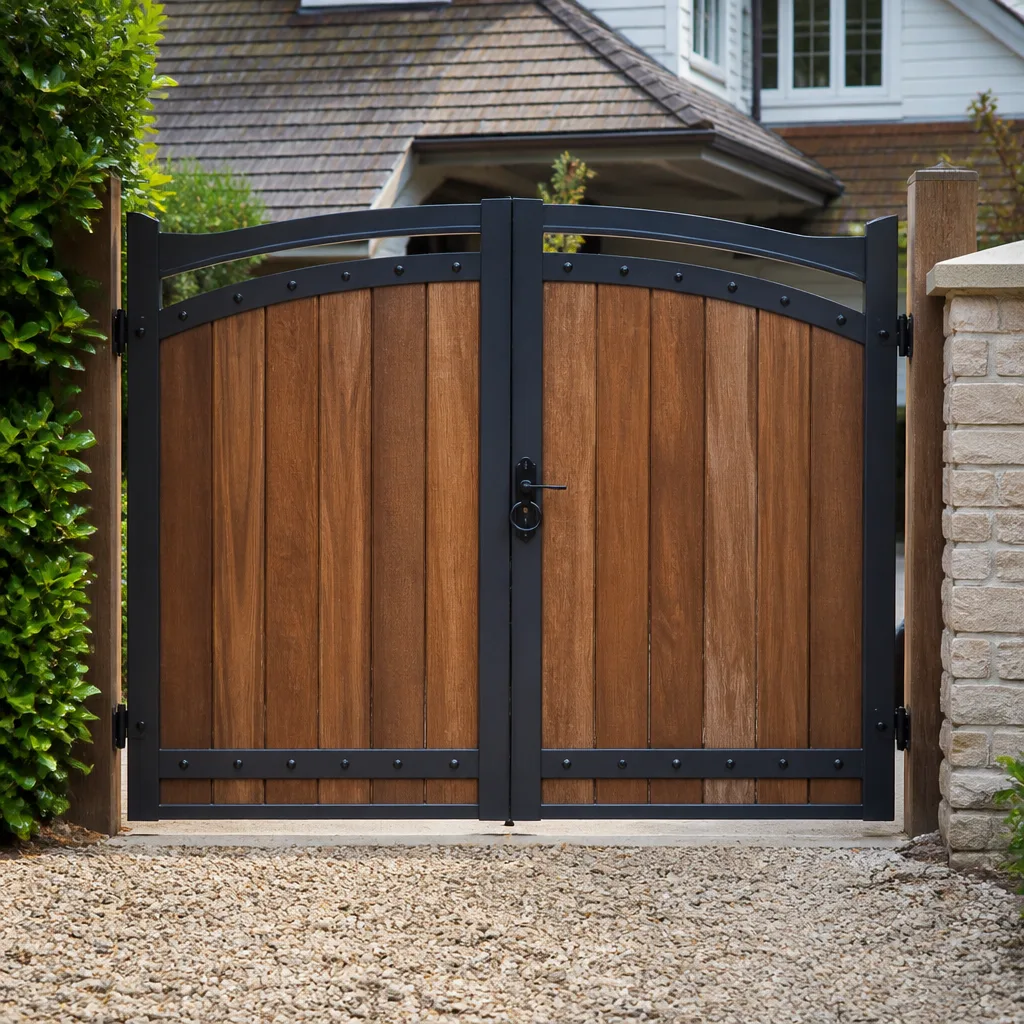 Wood & steel frame
 Farm & ranch
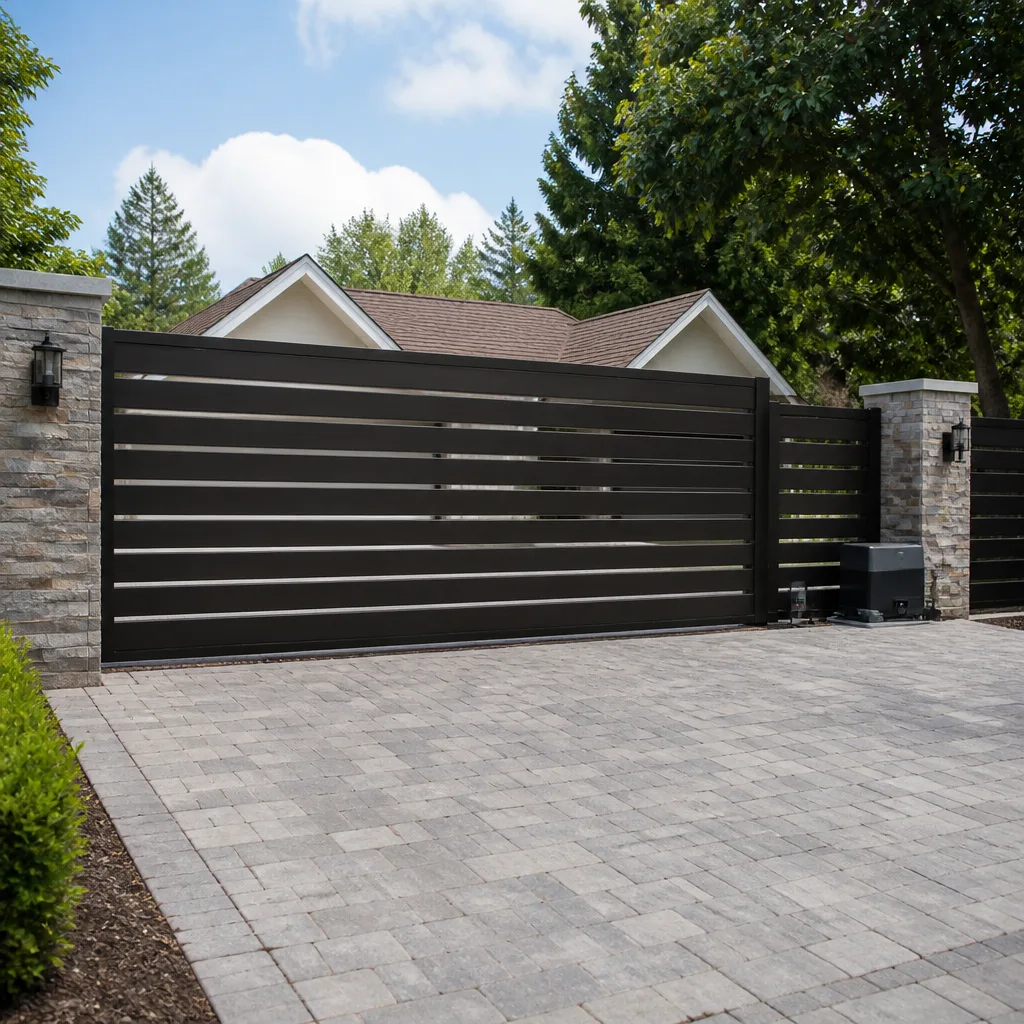 Sliding driveway gates
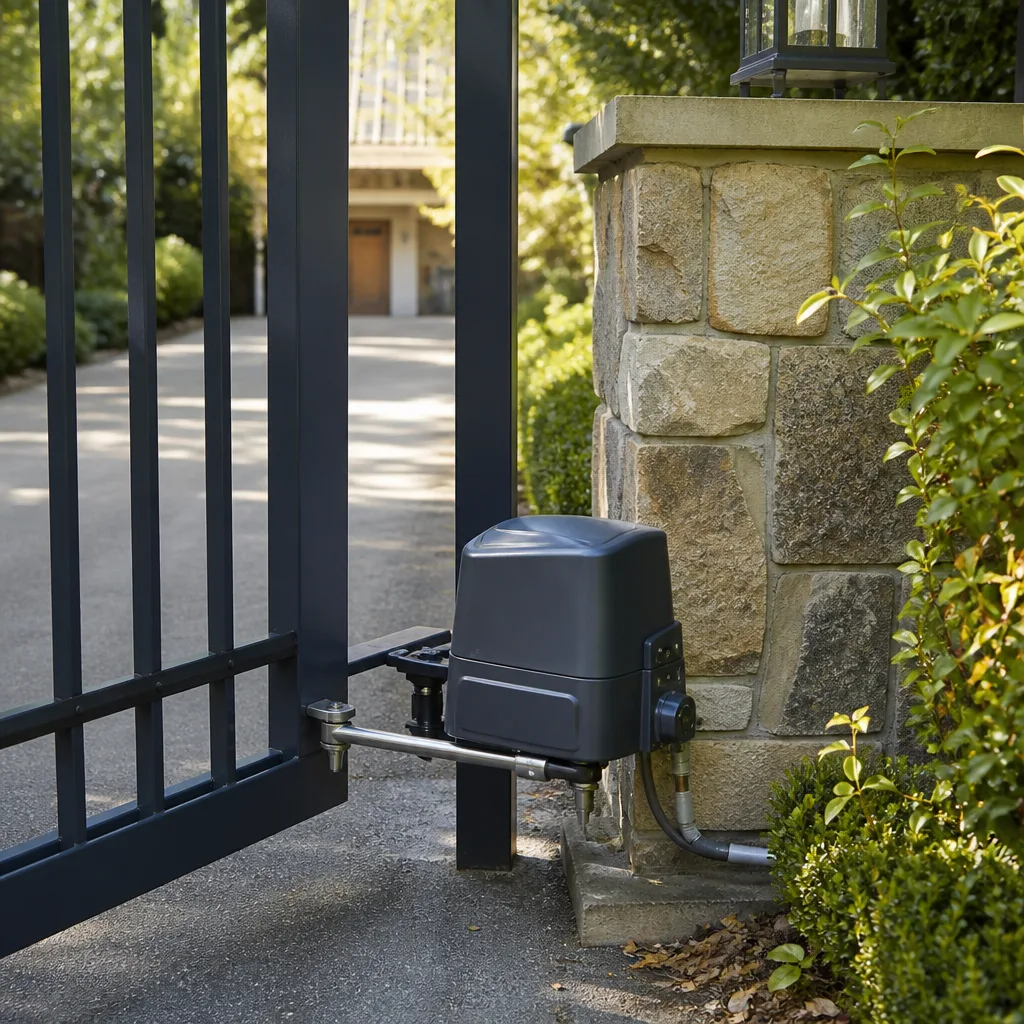 LiftMaster operators
Free on-site gate assessment - hinges, posts, and your LiftMaster or Nice gate operator checked before anything is quoted
The assessment is free and the quote is the invoice.
Get your free estimateSeasonal Gate Repair Care for Mira Mesa: Year-Round Homeowner’s Guide
October through December is when more Mira Mesa gate operators fail than any other period, and it rarely has anything to do with rain. Santa Ana winds push fine dust and grit into control boards and motor housings that have been running all summer with loosened or unserviced enclosures. The result is a cascade of failures: shorted control boards, jammed limit switches, photocells that read phantom obstructions and refuse to close the gate. This guide lays out what actually happens to a powered gate in Mira Mesa across the year, which components fail in which window, and exactly what a homeowner can do in about ten minutes each season to prevent a call for emergency gate repair in Mira Mesa.
Styles & brands we work with
- Wrought iron
- Wood & steel frame
- Farm & ranch
- Sliding driveway gates
- LiftMaster operators
Quick Answer
Seasonal gate care in Mira Mesa means three distinct checkpoints: a pre-Santa Ana sealing and cleaning pass in September or early October, a condensation and fastener check during the marine layer months of February through April, and a thermal clearance and UV inspection in June or July. The biggest single preventive step is keeping operator enclosures, control boards, and photocell lenses free of dust and moisture before each stress season arrives.
Table of Contents
- Why Mira Mesa Gates Fail Differently Than Coastal or Inland Gates
- Fall: Santa Ana Season and the Dust Problem
- Winter and Spring: Marine Layer Moisture and Cooler Temperatures
- Summer: Heat, UV, and Thermal Expansion
- The 10-Minute Seasonal Inspection: A Calendar-Based Routine
- What Homeowners Can Fix vs. What Requires a Technician
- Commercial Gate Considerations in Mira Mesa
- Common Mistakes to Avoid
- When to Call a Professional
- Frequently Asked Questions
- The Bottom Line
Why Mira Mesa Gates Fail Differently Than Coastal or Inland Gates
Mira Mesa sits in a microclimate that most gate maintenance guides simply get wrong. We’re far enough inland that we don’t get the constant salt spray of La Jolla or Pacific Beach, which means coastal-style rust prevention isn’t the top priority. But we’re close enough to the ocean and low enough in elevation that the marine layer reaches us regularly, especially from late winter through early summer. Add the Santa Ana winds that funnel through the mesas and canyons between October and January, and you get a very specific wear pattern: dust-driven electrical failures in fall, condensation-driven corrosion in winter and spring, and heat-driven mechanical binding in summer.
We’ve replaced control boards in Mira Mesa that looked like they’d been buried in a sandbox, not mounted inside a gate operator housing. The dust here is exceptionally fine, and when a motor housing has a degraded gasket or a control board cover that doesn’t seat properly, that dust finds its way onto the board. It acts as an insulator, trapping heat. Then it absorbs moisture from the next marine layer cycle. Now you have a conductive paste sitting on your board traces. That’s not a scenario most generic gate maintenance checklists mention, because most are written for other climates.
The Three Stress Periods
Instead of four seasons, Mira Mesa gate hardware sees three distinct assault windows:
- Santa Ana wind season (October through December): Dry offshore winds, low humidity, airborne dust and grit. Attacks: control boards, limit switches, photocell lenses, operator enclosures.
- Marine layer months (February through April, sometimes into May): Cool, damp air, condensation, reduced sunlight. Attacks: steel fasteners, unpainted metal surfaces, battery backup systems, electrical connections.
- Summer heat (June through August, with spikes into September): High UV exposure, surface temperatures on metal gates exceeding 140°F, thermal expansion. Attacks: wiring insulation, gate alignment, hinges, solar charger components.
Each period demands different preventive steps, and the windows to act before the stress arrives are relatively narrow. A homeowner who does the right maintenance in the wrong month gets limited benefit. Timing matters almost as much as the work itself.
Fall: Santa Ana Season and the Dust Problem
The first Santa Ana event of the year usually arrives in October, and if an operator enclosure hasn’t been serviced since spring, that first wind event does more than rattle the gate. It pushes airborne particles into every gap in the system. Here’s what to do before the winds arrive, ideally in September:
Step-by-Step Pre-Santa Ana Gate Inspection
- Inspect the operator enclosure gasket. On most residential swing and slide gate operators, the main enclosure has a rubber gasket around the access panel. Run a finger along it. If it’s cracked, compressed flat, or missing sections, dust will enter during the first wind event. Replacing this gasket is inexpensive and takes minutes, but it prevents a $200 to $500 control board failure.
- Clean the photocell lenses. Photocells are the small paired sensors mounted near the bottom of the gate opening, one on each side of the driveway. Wipe both lenses with a dry or slightly damp cloth. If dust films the lens, the photocell reads a false obstruction and the gate will refuse to close or will reverse mid-cycle. This is the single most common cause of “my gate won’t close” calls we get in October and November.
- Check the limit switch area. Limit switches tell the operator where the gate should stop in both the open and closed positions. On chain-driven and ram-style swing operators (common on DoorKing and Mighty Mule residential units), limit switches sit near the motor or along the drive rail. Dust buildup here causes erratic stopping behavior. A vacuum with a crevice tool handles this in under a minute.
- Tighten the enclosure fasteners. Wind vibration loosens screws on plastic and metal enclosures. If the control board cover has any play, the dust seal is already compromised. A snug fit is what keeps the board protected.
- Check the gate’s manual release operation. Every powered gate has a way to disconnect the operator and move the gate by hand. During a Santa Ana-driven power outage or operator failure, you’ll need this to get vehicles in and out. Operate the release once, then reseat it. If the release is stiff or jammed, it needs attention before an actual emergency.
One thing we see repeatedly in Mira Mesa: homeowners wait until the gate actually fails during a wind event, then discover the control board is caked in dust that’s been accumulating since summer. That board is not rebuildable once the dust has shorted traces; it’s a replacement. The pre-Santa Ana inspection is the highest-ROI maintenance most Mira Mesa homeowners can do. If any part of this process feels uncertain, a technician can complete the full inspection in a single visit. For anyone in Mira Mesa dealing with repeated wind-season failures, our electric gate repair in Mira Mesa service handles these systems daily.
Winter and Spring: Marine Layer Moisture and Cooler Temperatures
From February through April, the marine layer sits over Mira Mesa for hours in the morning, sometimes lingering all day. The air is cool and damp, and surfaces that never see direct sunlight stay wet. This is not dramatic weather, but it creates a slow corrosion environment that most gate owners never notice until a fastener shears or a battery fails.
Moisture Effects on Gate Hardware
- Steel fasteners and unpainted steel components: Bolts, hinge pins, and bracket hardware develop surface rust. On coastal-exposed properties, this happens faster, but even inland Mira Mesa homes see accelerated rusting during marine layer months. Surface rust isn’t structurally dangerous immediately, but neglected for two or three years, it can freeze a hinge pin or cause a bracket to fail under load.
- Condensation inside operator enclosures: When the marine layer moves in, the air inside an operator enclosure cools and moisture condenses on the coldest metal surfaces, usually the transformer and the board mounting plate. This is the same mechanism that causes condensation on a cold glass of water. If the enclosure has no weep hole or the weep hole is clogged, water pools and the board sits in a humid chamber for weeks.
- Battery backup performance: Most residential gate operators with battery backup use sealed lead-acid batteries, and these lose usable capacity as temperatures drop. A battery that floats the gate through a brief outage in August might only run the gate three or four cycles during a cool February evening. This is the season to test battery performance realistically, not just confirm the battery light is green.
Marine Layer Maintenance Pass
- Inspect all visible fasteners. Walk the gate, hinges, brackets, and posts. Look for rust streaks, which indicate water is running over a corroding fastener. A light coat of anti-seize or corrosion inhibitor on exposed threads slows this down.
- Check the weep holes on operator enclosures. Most metal enclosures have small drain openings at the bottom. If they’re plugged with spider webs, mud, or rust flakes, clear them with a small pick or stiff wire. Enclosures that can’t drain will collect condensation.
- Run a loaded battery test. Disconnect the operator from main power (or shut the breaker) and cycle the gate open and closed on battery. If the gate moves noticeably slower on battery than on line power, or if it only completes one or two cycles before dying, the battery has lost capacity. This is a replaceable wear item, not something that requires a whole new operator.
- Clean and lightly lubricate hinges and pivot points. Use a dry-film lubricant or a silicone spray, not WD-40, which leaves a residue that attracts dust (and in Mira Mesa, dust season is always around the corner).
- Verify the gate closes fully against its stop. Thermal contraction in cooler months can shift the closed position slightly. A gate that stops half an inch short of the post in February may stop two inches short by summer. Small adjustments now prevent drifting later.
Property managers who oversee HOA gates and commercial driveways in Mira Mesa should know that these marine layer issues compound across multiple daily cycles. A residential gate might cycle ten times a day. A commercial gate on a parking lot might cycle two hundred times. Condensation and rust don’t just degrade; they degrade in proportion to use.
Summer: Heat, UV, and Thermal Expansion
Mira Mesa summer temperatures regularly push into the mid-80s and 90s, and a metal gate sitting in direct afternoon sun can reach surface temperatures well above 130°F. That heat does three things to gate systems, and each one can cause failures that homeowners misdiagnose as motor problems.
UV Degradation on Wiring and Plastic Components
PVC wire insulation breaks down under sustained UV exposure. On gates where the wiring runs through exposed conduit or along the gate frame, five to seven summers of Mira Mesa sun is enough to cause cracking and brittleness. Once insulation cracks, you get intermittent shorts that are notoriously hard to diagnose because they only present when the gate is in a specific position, or when temperature causes the insulation to expand and expose a conductor. Photocell housings and plastic control board covers also become brittle with UV exposure and crack during routine use.
Thermal Expansion and Gate Clearance
This is the most misunderstood summer failure. Aluminum and steel gate frames expand when heated. A gate that clears its post by three-quarters of an inch at 8am may only clear by a quarter inch at 3pm. If the gate was installed with tight clearances, or if the posts have settled, that expansion causes the gate to bind. The operator’s obstruction detection then kicks in and reverses the gate. Homeowners interpret this as a bad motor or a bad board, but the issue is purely mechanical. The fix is adjusting hinge positions or resetting post clearance, not replacing electronics. This is also a common issue on gates that were installed in winter when everything was contracted and the installer set clearances too tight for summer conditions.
Solar Charger Performance
For properties with solar-powered gate operators or solar-maintained battery backup, summer seems like the easy season, but the heat actually reduces panel efficiency. Photovoltaic cells lose output as temperature rises. A panel that produces 20 watts at 70°F might produce 15 watts at 100°F. Meanwhile, if the battery sits in direct sun inside a metal enclosure, the heat accelerates battery aging. Checks here include cleaning dust from the panel surface (Santa Ana season dust accumulates fast), verifying wiring connections are tight, and making sure the panel angle hasn’t shifted over the year.
Summer Inspection Steps
- Check gate clearance at both morning and afternoon temperatures. Open and close the gate at 8am, then again at 3pm. If the gate is noticeably slower, binds, or reverses in the afternoon but works fine in the morning, thermal clearance is the likely issue.
- Inspect all visible wiring. Look for cracked, brittle, or discolored insulation. Pay special attention to wire runs along the gate frame where flex happens on every cycle.
- Test the obstruction detection in the heat. Block the gate path with a small object and verify the gate reverses. Heat affects sensor sensitivity, and this test confirms the safety system works under worst-case conditions.
- Clean solar panels if installed. Wipe dust off the surface. Check that mounting brackets haven’t loosened.
- Check hinges and pivot points for galling. Heat accelerates metal-on-metal wear. If you hear a squeal or see powdered metal around a hinge, it needs attention before it seizes.
Summer heat failures tend to be slow-developing rather than sudden. The gate gets a little slower, a little noisier, a little more reluctant to close. Addressing those symptoms in June prevents an August breakdown. For residents considering an upgrade or a full replacement before heat season hits, our gate installation in Mira Mesa service covers everything from a single residential swing gate to full commercial systems.
The 10-Minute Seasonal Inspection: A Calendar-Based Routine
Most gate maintenance advice says “check your gate twice a year,” which is vague enough to be useless. Here’s a specific calendar for Mira Mesa, with months tied to specific tasks. The entire routine takes about ten minutes per season, and everything here is within a homeowner’s capability:
| Month | Task | Time |
|---|---|---|
| September | Pre-Santa Ana pass: clean photocells, check enclosure gaskets, vacuum limit switches, tighten enclosure fasteners, test manual release | 10 min |
| February | Marine layer pass: inspect fasteners for rust, clear weep holes, test battery backup under load, lubricate hinges with dry-film | 10 min |
| June | Summer pass: check morning vs. afternoon gate clearance, inspect wiring for UV cracking, test obstruction detection in heat, clean solar panels | 10 min |
| November | Post-Santa Ana check: clean photocells again, inspect for dust intrusion despite September prep, verify limit switches still accurate | 5 min |
The November pass matters because even well-sealed enclosures can admit a small amount of dust during a prolonged Santa Ana event. Catching early dust accumulation in November means a quick vacuum rather than a board replacement in January. Put these four dates in your phone calendar now, with a recurring annual reminder. The consistency is what keeps a gate running for a decade or more without major component failure.
What Homeowners Can Fix vs. What Requires a Technician
Here’s the honest breakdown of what’s safe and reasonable for a homeowner to handle versus what needs professional attention. Some of this surprises people. Cleaning a photocell lens is genuinely DIY work. Adjusting a limit switch after thermal drift is not, because a misadjusted limit on a gate can cause the operator to overdrive the gate past its stop, bending the arm or bracket.
Safe DIY Tasks
- Cleaning photocell lenses with a soft cloth
- Vacuuming dust from inside the operator enclosure (with power off at the breaker and the battery disconnected if present)
- Lubricating hinges and pivot points with dry-film or silicone spray
- Tightening enclosure screws and inspecting gaskets
- Testing the manual release mechanism
- Wiping down solar panels and checking that mount bolts are snug
- Inspecting visible wiring for cracked insulation or exposed conductors
- Clearing weep holes in metal enclosures
Professional Work
- Limit switch adjustment after thermal drift or movement
- Control board replacement or repair (this involves mains voltage and board-level diagnostics)
- Battery replacement inside the operator (wiring, terminal connections, and battery disposal)
- Hinge replacement or realignment when gates bind
- Motor replacement or repair
- Keypad, loop detector, or remote access system programming
- Any work on a hydraulic operator (FAAC and some BFT systems are hydraulic; pressures here are high enough to cause serious injury)
- Safety sensor replacement when the gate fails obstruction tests
There’s a safety line here that matters. Powered gates are heavy, and the operator can generate significant force. A gate that closes unexpectedly during DIY work can cause serious injury. The components inside an operator enclosure carry mains voltage. If a task involves opening the enclosure and touching anything beyond a vacuum nozzle, power the system down at the breaker first. And if you’re not certain the system is fully de-energized, stop and call. We regularly help Mira Mesa homeowners who started with a simple cleaning task and discovered a loose wire or a swollen capacitor. The work from there belongs to a professional.
Commercial Gate Considerations in Mira Mesa
Mira Mesa has a dense commercial district along Mira Mesa Boulevard and Miramar Road, plus numerous HOA communities with electric entry gates. Commercial gates cycle far more often than residential systems, which means seasonal issues that take years to damage a residential gate can damage a commercial operator in months. Dust intrusion, rust, and thermal clearance issues all scale with cycle count.
For commercial property managers, the seasonal calendar is the same, but the execution needs to be more frequent. We recommend commercial gate inspections quarterly rather than three times a year, with particular emphasis on the pre-Santa Ana pass and the marine layer corrosion check. Commercial operators like Elite and LiftMaster slide gate systems used in parking applications often have multiple safety devices: loop detectors, photoeyes, edge sensors, and sometimes barrier arms. Each one is a potential failure point when dust or moisture enters the system.
One issue specific to Mira Mesa commercial gates is accumulated landscape debris. Landscaping crews with leaf blowers often direct debris toward gate tracks and sensor areas without realizing it. That debris builds up in slide gate tracks and causes operator strain long before the dust from Santa Ana winds becomes a factor. If you manage a commercial property in Mira Mesa, ask your landscaping contractor to avoid blowing debris toward gate tracks and photocell posts. It’s a two-minute conversation that saves hundreds in repair costs.
Common Mistakes to Avoid
- Ignoring a gate that’s slightly slower than before. Reduced speed under load is almost always a sign of increasing mechanical resistance or a weakening motor. Both get more expensive the longer they wait.
- Using WD-40 on hinges and pivot points. It’s a water displacer, not a lubricant, and it leaves a film that attracts the very dust that causes Mira Mesa failures. Use dry-film or silicone spray instead.
- Replacing the operator when the problem is the photocell. We see this all the time: a homeowner calls another company, gets told the motor is bad, and pays for a replacement when the actual issue is a dusty or misaligned photocell lens. A $10 cleaning fixes it. A competent diagnosis starts with the cheapest components first. Our brand-agnostic approach to diagnostics is built specifically around finding the real fault on systems from LiftMaster, Elite, Mighty Mule, DoorKing, and others.
- Skipping the pre-Santa Ana inspection because the gate “worked fine last year.” Santa Ana dust accumulation compounds. Last year’s minor dust didn’t kill the board, but two years of buildup shorted it. The year the gate fails, it fails fast.
- Tightening hinges without checking gate clearance. If a gate has shifted over time and you tighten the hinges without addressing alignment, you lock in the poor clearance and the gate will bind when it gets hot.
- Running a battery test right after a charge cycle. A battery that just finished charging will show full voltage regardless of actual capacity. Test the battery after the gate has run a few cycles, or better, run a load test with the gate moving.
- Waiting until the gate fails completely to call. By the time a powered gate stops responding entirely, the failure has usually been developing for weeks or months. The grinding noise, the hesitation, the occasional reversal, those were the warning signs. Calling at the first sign of trouble prevents a small adjustment from becoming a full replacement.
When to Call a Professional
Certain symptoms demand a technician call rather than a DIY attempt, and recognizing these saves money in the long run. If the gate makes a grinding or grinding-metal sound, something is mechanically binding and continued operation will cause further damage. If the gate opens but won’t close, or reverse mid-cycle, the issue could be a photocell, a loop detector fault, or a board problem; jumping to the wrong diagnosis wastes time at best and replaces working parts at worst. If you smell burning, or if the gate trips a breaker, power it down and stop attempting to operate it. If the gate has struck a vehicle, a person, or an object, have the system inspected for structural and sensor damage. Gate Repair Mira Mesa offers free estimates in Mira Mesa. Call (833) 593-4660 and we’ll assess the system, identify whether the problem is seasonal wear, component age, or installation-related, and quote the exact repair before any work begins.
Frequently Asked Questions
A seasonal inspection pass typically runs $75 to $150 when performed as a standalone service, while annual maintenance contracts that include three seasonal visits and priority emergency response generally range from $250 to $500 per year depending on the gate type and operator complexity. Prices are always quoted and agreed before work starts. Call (833) 593-4660 for a quote specific to your gate system.
A well-maintained residential gate operator in Mira Mesa typically lasts 10 to 15 years, though operators exposed to heavy Santa Ana dust without regular cleaning may fail in as little as 5 to 7 years. The single biggest lifespan factor is not brand, but whether the enclosure seals are maintained and the internal components stay dust-free.
Same-day service is available for many common failures, and the fastest way to find out is to call (833) 593-4660 with a description of what your gate is doing. We carry components for the brands most technicians have to special-order, which means a single visit often gets a gate back in operation.
We work on the brand already on your property. Our technicians are trained on LiftMaster, FAAC, BFT, Linear, Viking, Ghost Controls, DoorKing, Elite, and Mighty Mule. From a bent arm on a Ghost Controls unit to a failed FAAC hydraulic board, it’s the same team and the same call.
That depends on the failure, the operator’s age, and what replacement parts are available for that specific model, and we answer that question honestly after diagnosing the fault. We don’t recommend replacement just because we don’t recognize the name on the enclosure; in many cases, a component-level repair restores an older operator for a fraction of replacement cost.
Dust-contaminated photocells and control boards during Santa Ana season account for more Mira Mesa gate failures than any other seasonal issue, typically presenting as a gate that refuses to close or a system that stops responding entirely. The good news is that a September cleaning pass prevents most of these failures completely.
The Bottom Line
Mira Mesa gates don’t fail randomly; they fail on a predictable seasonal schedule that maps to three weather-driven stress periods. Santa Ana dust kills control boards and photocells in fall. Marine layer moisture corrodes fasteners and degrades batteries in winter and spring. Summer heat causes thermal expansion, UV wire damage, and solar charger inefficiency. A homeowner who spends ten minutes on the right task in the right month prevents most of the failures that drive emergency repair calls. And when a job does require professional help, whether it’s limit switch adjustment on a DoorKing system, board replacement on an Elite slide gate, or a complete gate repair in Mira Mesa, calling early keeps a small repair from becoming a full replacement. For questions about your specific gate, call (833) 593-4660 for a free estimate. The price is quoted and agreed before any work starts, and the goal is always to fix what’s broken, not to sell you a new operator you don’t need.
Written by the team at Gate Repair Mira Mesa, serving Mira Mesa since 2017.
See the difference
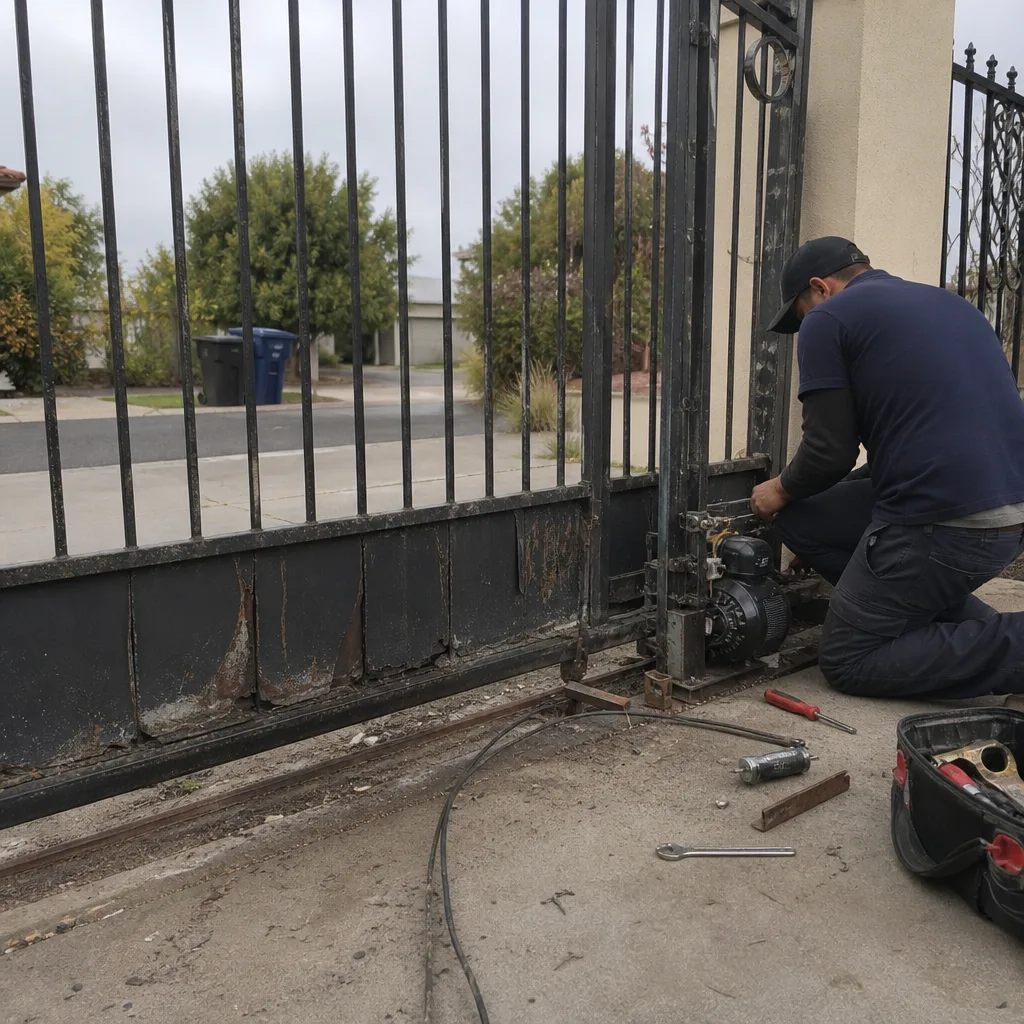 Before
 After
 Before
 After
 Before
 After