
Last updated November 2, 2026
 Wrought iron
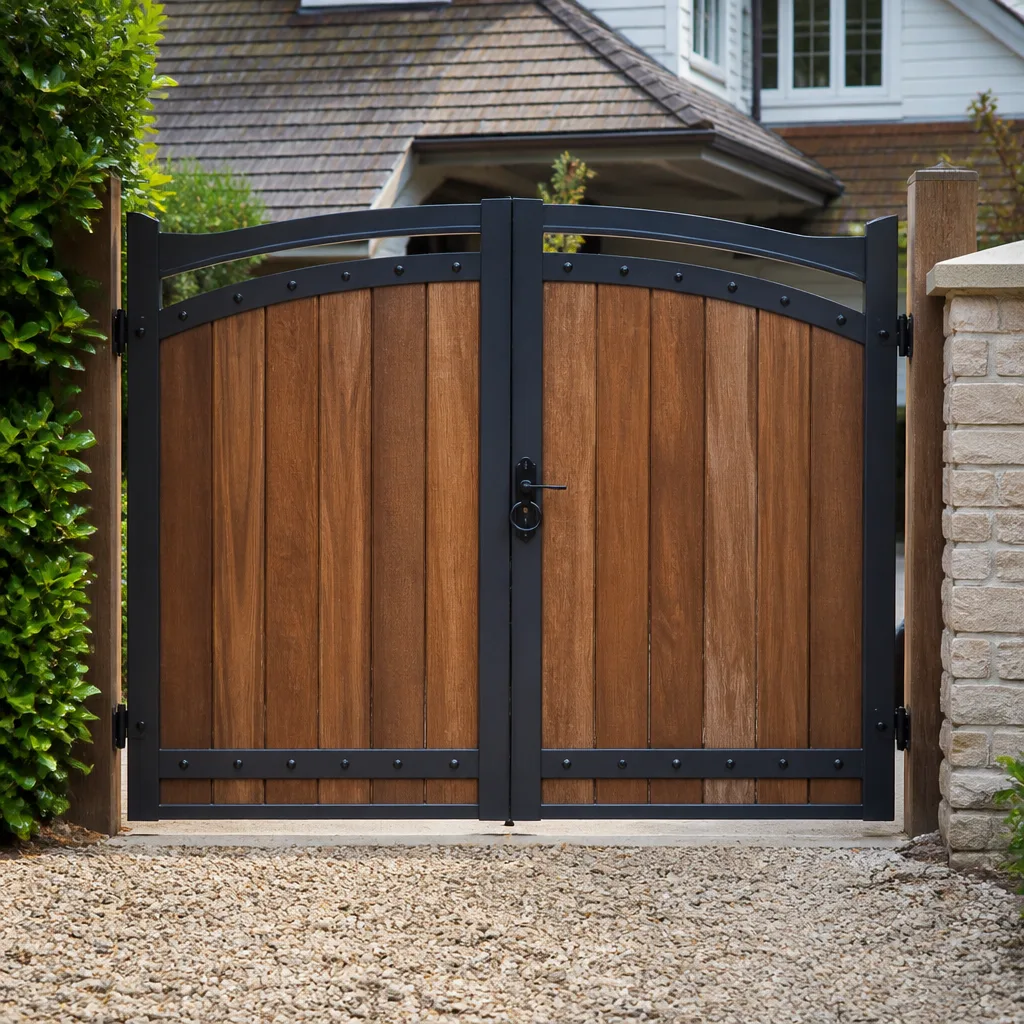 Wood & steel frame
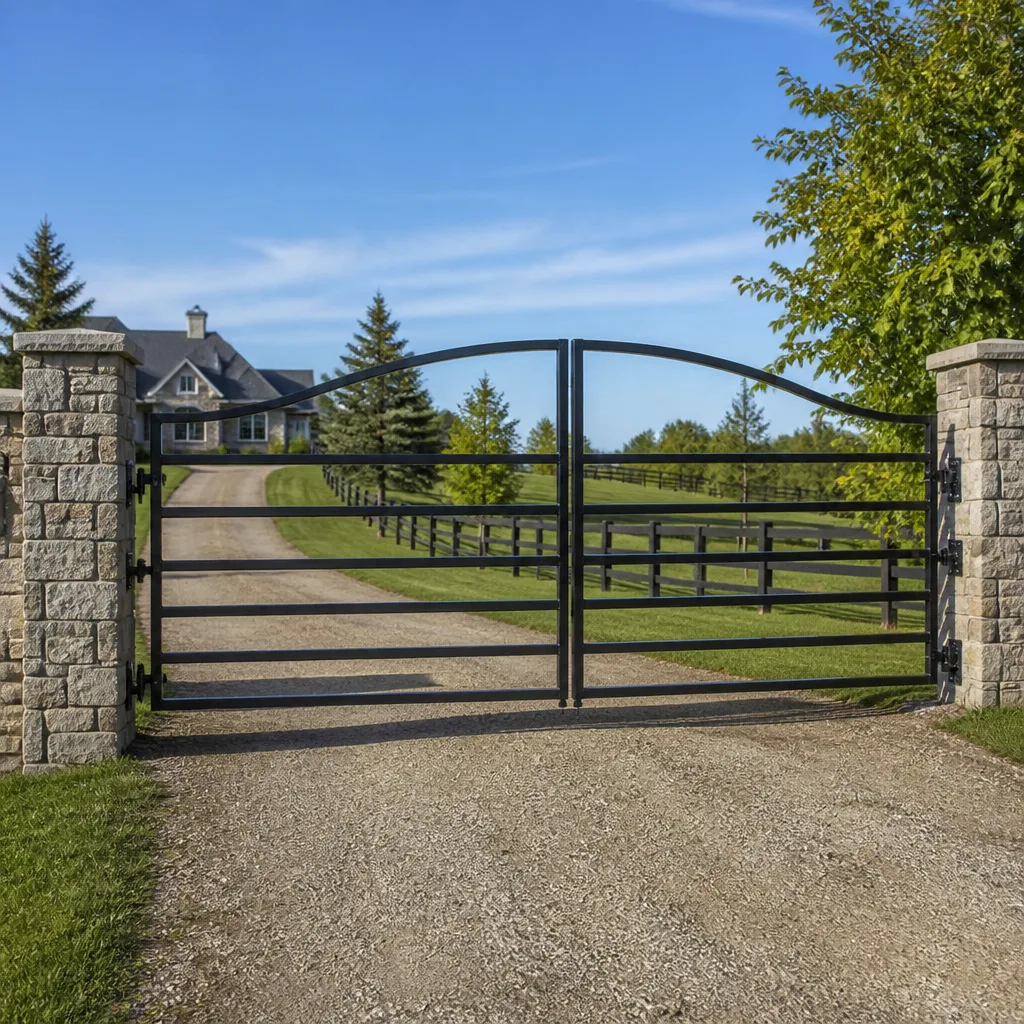 Farm & ranch
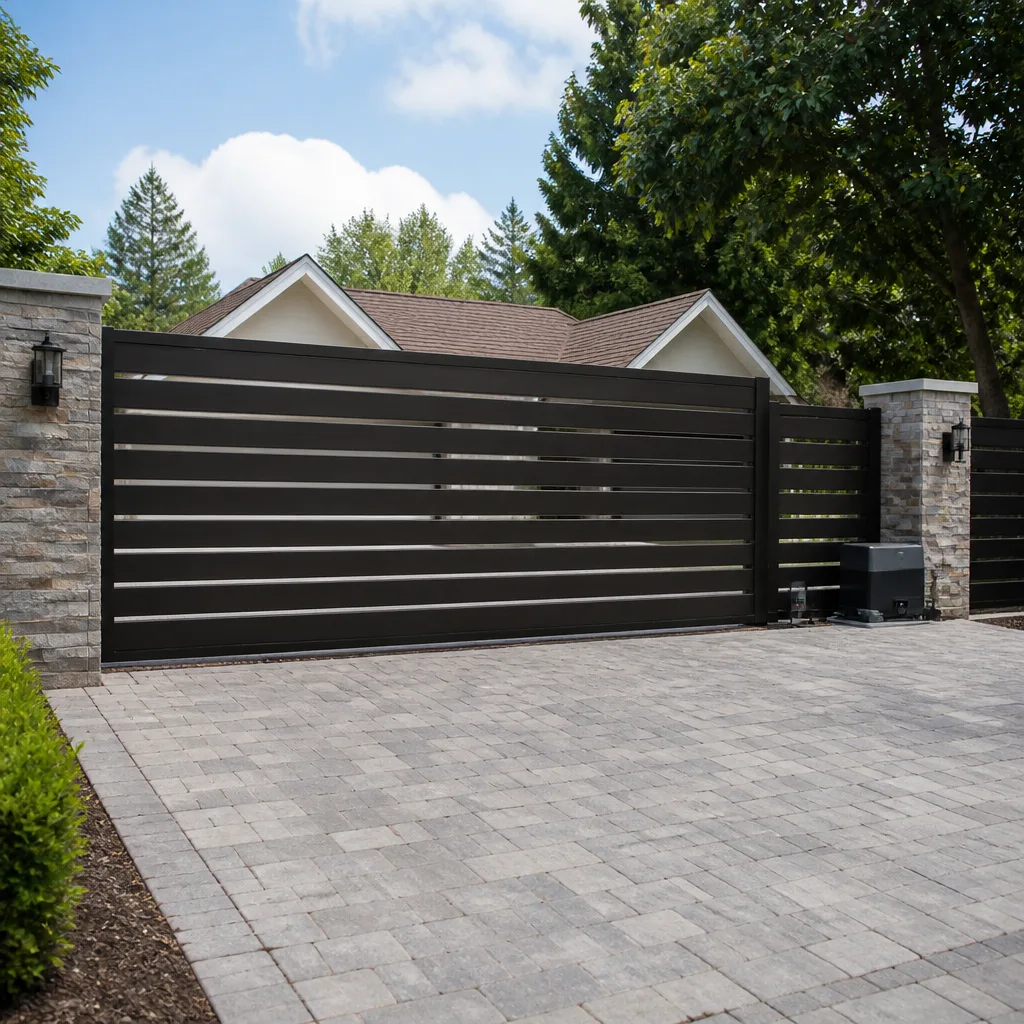 Sliding driveway gates
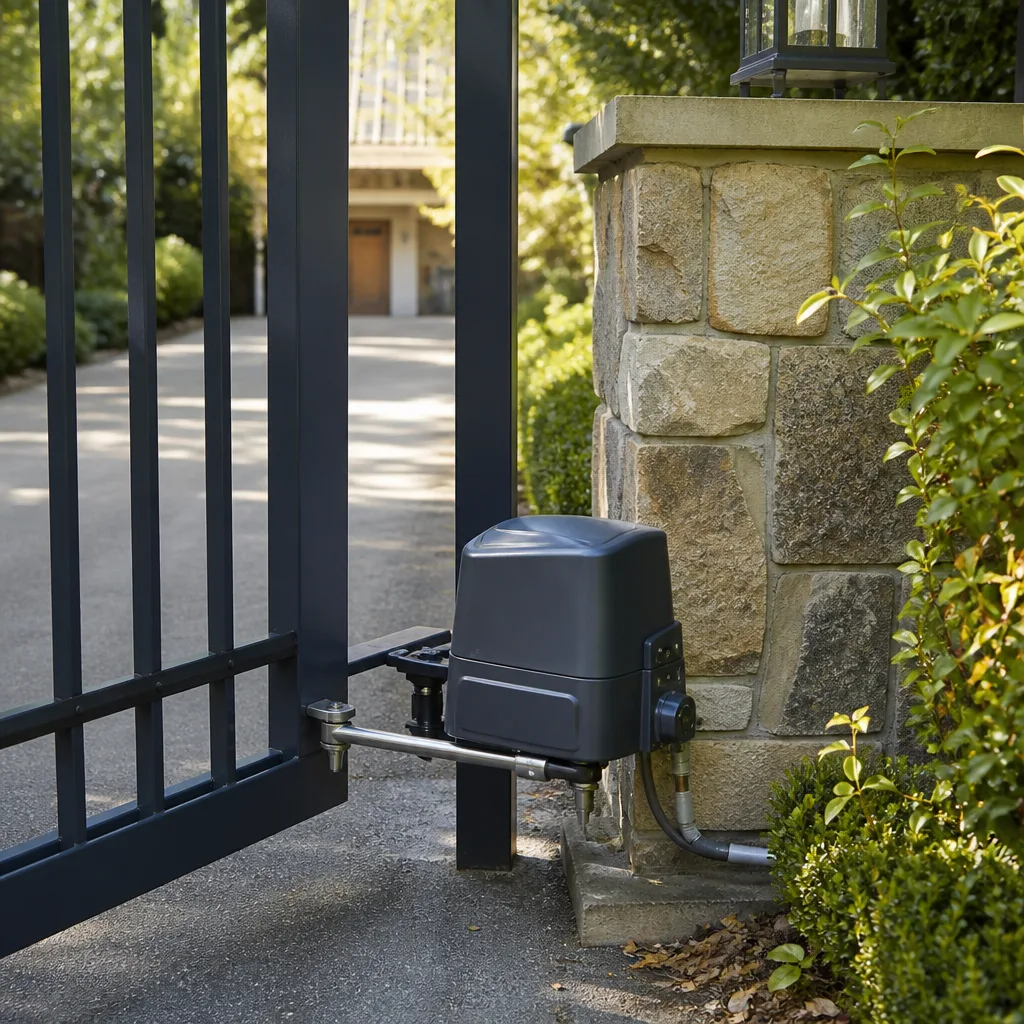 LiftMaster operators
Free on-site gate assessment - hinges, posts, and your LiftMaster or Nice gate operator checked before anything is quoted
The assessment is free and the quote is the invoice.
Get your free estimateGate Repair Warning Signs: A Mira Mesa Homeowner’s Reference Guide
A gate that still opens and closes can be quietly reporting its own upcoming failure, and most homeowners miss the signal entirely. The half-second hesitation before the motor engages, the grinding that vanishes after the first cycle, the remote that needs two presses instead of one: these are not quirks to live with. They are diagnostic data points with a known meaning, and they usually point to a part that is wearing, a connection that is loosening, or a motor that has already lost a meaningful fraction of its service life. This guide decodes those warnings so you know, long before a gate stops moving altogether, whether you can wait, watch, or make the call. We wrote it from what we see every week on driveways and commercial lots around Mira Mesa.
Styles & brands we work with
- Wrought iron
- Wood & steel frame
- Farm & ranch
- Sliding driveway gates
- LiftMaster operators
Quick Answer
Most gate failures announce themselves weeks or months in advance through hesitation, unusual noise, intermittent reversal, reduced remote range, or visible rust and weld stress. The most expensive signal to ignore is not a dead gate; it is a gate that “works” but works differently than it did six months ago, because that means a component is already failing under load. If you notice any of the signs in this guide, get a diagnostic before the part takes something else out with it.
Table of Contents
- Auditory Warnings: What the Noise is Actually Saying
- Behavioral Warnings: Hesitation, Reversal, and Inconsistent Response
- Visual Warnings: Rust, Gap Changes, and Weld Stress
- Electrical Warnings: Control Board Lights, Range Loss, and Battery Draw
- The Intermittent-Symptom Trap: Why a Gate That “Fixed Itself” is Not Fixed
- What Each Warning Sign Typically Costs to Fix in Mira Mesa
- What You Can Safely Check Yourself (and What You Should Not Touch)
- Common Mistakes to Avoid
- When to Call a Professional
- Frequently Asked Questions
- The Bottom Line
Auditory Warnings: What the Noise is Actually Saying
A gate motor makes sound. That is normal. A linear actuator has a screw turning inside a housing. A slide-gate operator runs a gear rack along a toothed rail. A swing-gate arm pivots on a bearing. Each of those systems produces a baseline hum or mechanical whir that is consistent run to run. What is not normal is a change in that sound: a new pitch, a new location, a new rhythm, or a noise that only appears on certain days.
The most useful way to think about gate noise is to separate it into three families:
- Surface friction noises – squeaks, chirps, or light scraping that track with the gate panel’s movement rather than the motor itself. These are usually hinge pins, roller surfaces, or the point where a swing gate rides over a strike plate. When caught early, in our experience this is the cheapest repair on a gate. Left alone, a squeaking hinge wears its bushing into an oval instead of a circle, and the hinge gets replaced instead of lubricated.
- Gear-drive noises – a grinding, crunching, or ratcheting that tracks with motor run time, not panel position. On a FAAC or BFT operator, this typically means a worn drive gear inside the gearbox. On a chain-driven slide gate, it signals a chain that has stretched past tension spec and is now skipping or dragging on the sprocket. A worn drive gear does not heal. It keeps wearing, and it sheds small metal particles into the bearing surfaces around it.
- Load-related noises – a low groan, strain, or laboring tone that appears when the gate is mid-travel, especially on an uphill stretch or a particularly heavy panel. This tells you the motor is working harder than it was rated to work. That could mean a misadjusted travel limit, a binding hinge, a wheel that no longer turns on a slide gate, or a motor that is under-specified for the gate it is driving. In Mira Mesa, we hear this most often on older heavier ornamental iron gates where someone replaced the original motor with a smaller residential unit and assumed it would be fine.
How do you tell a harmless break-in squeak from a failing gear, from inside your car? Roll down the window and put the gate through one full open and one full close. Step out and run it once more while standing near the operator. If the noise is loudest at the motor or gearbox housing, it is not a hinge problem. If it only sounds when the gate is moving, not when the motor runs, it is mechanical friction at the panel. If you hear a dramatic or repeated impact, like a metallic click- pop every few seconds, that is a broken gear tooth cycling: the gear rotates until it hits the damaged section, skips, and thunks. That noise predicts a complete stop, usually inside a week or two of heavy use.
Behavioral Warnings: Hesitation, Reversal, and Inconsistent Response
The behavior of a gate is a language. The first moment of motor engagement, the speed and smoothness of travel, the pause at the limits, the behavior under load – these all report on the health of the operator, the control board, the sensors, and the physical gate itself. Behavioral failures are the warning signs we consider most actionable, because they point to a specific subsystem with surprising accuracy.
Hesitation at the same point in travel
A gate that pauses, slows, or briefly stumbles at the same spot in its cycle every time is reporting a mechanical obstruction or a travel-limit misadjustment. The obstruction may be subtle: a wear groove developing in a slide gate’s track, a hinge that is binding because a post has settled a few degrees out of plumb, or debris accumulation in a specific section of a track on the bottom rail. When a Mira Mesa electric gate hesitates in the same physical location, the problem is not the motor; it is the relationship between the motor and the physical gate, and diagnosing it requires watching the gate move, not just testing the board.
Two-button-press syndrome
The gate that “works fine but takes two presses” to respond on the first cold start of the morning is reporting a failing capacitor, a receiver that is drifting off-frequency, or a control board with a weak power supply section. A capacitor in a FAAC, LiftMaster, or Linear operator is a wear item. It stores the initial surge of current that gets the motor turning. As it degrades, the first press charges it partially, and the second press supplies enough to start the motor. The common fix is to replace the remote’s battery. That is the false fix. The battery in the remote is almost never the reason a gate needs a second press, unless the remote range has also collapsed, which is a different signal entirely. If you have already changed the remote battery and the second-press behavior persists, the issue is at the gate end, not the fob end.
Mid-cycle reversal
A gate that opens partway, stops, and reverses direction is typically reading an obstruction signal from a safety sensor or a force sensor. On a properly functioning gate, that is actually correct behavior: the sensor is designed to stop the gate if a child, pet, or car enters the path. But when the reversal happens repeatedly with no obstruction present, one of three things is happening:
- The safety photo-eye or edge sensor has drifted out of alignment, or dirt has built up on its lens, so it intermittently reports an obstacle.
- The force-sensing threshold on the operator has been set too low, so normal wind resistance or a slight hinge drag trips the safety reverse.
- The gate’s physical path has changed slightly – a settling post, a shifted track, a hinge that is now binding – and the motor is genuinely meeting more resistance than the board expects.
Mira Mesa gets strong afternoon wind, particularly in the sections east of Camino Ruiz and along the canyon rims. We have diagnosed far too many “sensor problems” that were actually gates reversing because a Santa Ana gust pushed the panel against the safety threshold. If the wind blows and your gate reverses when no one is near it, the safety margin is set too tight for local conditions. That is a ten-minute adjustment, not a new board.
Inconsistent response to remotes
One remote works from the street, another only works from ten feet away, and the installed keypad works inconsistently. This pattern points to the receiver in the operator, not the remotes themselves. A receiver that is losing sensitivity, or has an antenna that has been damaged or detached, will produce exactly this fragmented pattern. On a Viking or BFT system with an external receiver module, the fix may be a new receiver board or a proper grounding of the antenna lead. On a LiftMaster or Linear system with an integrated receiver, the issue could be the control board itself. The key insight is this: if some transmitters work well and others do not, but all have fresh batteries, the receiver is the likely culprit.
Visual Warnings: Rust, Gap Changes, and Weld Stress
Most Mira Mesa homeowners look at their gate every single day and register exactly nothing about it visually, because a gate in good condition is, by design, visually uninteresting. It is an object you use, not an object you see. But the visual record of wear is available to anyone who stands still for three minutes and knows what to look at.
Surface rust vs. structural rust
Surface rust is cosmetic and normal on any steel gate that lives within a mile of marine air. It appears as a uniform orange dusting on flat surfaces, and it develops where paint has chipped or worn. It is a maintenance item: sand, prime, repaint. It does not weaken the gate in any meaningful way.
Structural rust is different. It appears as flaking, layering, or bubbling that visibly separates the metal in sheets. It concentrates at joints, at the bottoms of vertical bars where water pools, and around weld points. On an ornamental iron gate near the coast, structural rust can compromise the attachment points where the gate hangs. We have seen a hinge tear out of a post because the bracket had rusted from the inside for a decade, while the visible surface looked fine for most of that time. The tell is rust-colored water streaks under a seemingly intact paint layer. When you see those streaks, the corrosion is coming from underneath, and the surface is keeping a secret.
Gap changes at hinges
Standing at the hinge side, look at the gap between the gate edge and the post. A consistent gap from top to bottom is healthy. A gap that is wider at the top than the bottom, or wider at the bottom than the top, means the gate is sagging. Sag on a swing gate happens because the hinge bearings are wearing, the hinge post is settling, or the gate frame itself has twisted slightly. What happens next is predictable: the gate drags at the latch side, the motor works harder, the force sensor starts tripping, and the hinge bearings fail faster. A sagging gate is a mechanical problem that becomes an electrical problem if ignored long enough.
Weld stress cracks
Stress cracks in painted steel usually appear as a hairline line in the paint, running perpendicular to the direction of load. Look closely at the high-load points: where each vertical picket meets the top and bottom rail, where the hinge brackets attach to the gate frame, and where the gate arm or gate bracket attaches to the panel. A crack in the paint at a weld means the weld underneath is flexing. A weld that flexes is a weld that is on its way to failure. Catching this early in Mira Mesa matters because a suddenly detached picket or separated frame member turns a secure gate into a dangerous swinging hazard.
Track and roller wear on slide gates
On a rolling slide gate, look at the wheels at the bottom, the track they roll on, and the gap between the gate and the guide posts. A flattened spot on a wheel, a groove worn into the track, or a gate that wobbles left to right as it moves means the rolling hardware is done. On a cantilever slide gate – the kind that hangs and moves without a track on the ground – look for the gate hanging visibly lower at the open-end than at the post-end; that means the inner carriage rollers are wearing. Replacing rollers early is affordable. Ignoring them until a gate drops off its carriage is a much larger repair.
Electrical Warnings: Control Board Lights, Range Loss, and Battery Draw
Gate operators are, at their core, small industrial controllers bolted outdoors. They manage high-current motor loads, listen to sensors, read keypad inputs, and run a receiver that sits in a metal box in direct sun and rain for years at a time. The electrical side of a gate system produces more warning signs than any other subsystem, and most of them are flatly ignored because they are subtle.
Control board indicator lights
Open the operator cover (with the power off, if you are not certain what is inside) and look at the board. Most boards made by FAAC, BFT, Linear, and Viking have one or more small LED indicators. In normal operation, a power LED glows steady, and status LEDs flicker only when the gate is running or a sensor is triggered. A board that shows a blinking pattern when the gate is idle is reporting a stored fault code. The pattern means something specific – a failed loop detector, a tripped safety edge, a shorted accessory – and the fix is often a few minutes when you know the code’s meaning. The mistake homeowners make is assuming that because the gate still opens, a blinking light is not worth investigating. But the board is literally reporting a fault in plain English. Reading the manual for your specific board, or having a technician read the code, is the difference between a small repair and a board replacement when the underlying fault finally takes something with it.
Reduced remote range
A remote that worked from the far end of the street and now only works from the driveway has not just “lost range” – the system between the fob and the motor is failing. Most commonly it is an antenna issue: a broken wire, a disconnected solder joint, or an antenna that has been bent back and now lies flat against the metal enclosure. Other times the receiver is drifting off-frequency, or the fob itself is done. Test with a second fob. If both have reduced range, the problem is at the receiver. If only one does, replace that fob’s battery, then test again. If it still underperforms, the fob is the issue, and reprogramming or replacing it solves the problem without touching the operator.
Backup battery that runs down faster than it used to
Mira Mesa homeowners who added a battery backup after a wind event or power outage deserve credit – that is a genuinely practical upgrade. But a backup battery is also a diagnostic tool. It has a defined capacity, and it recharges when utility power returns. If the battery used to run the gate for a week of heavy use and now drains in two days, the system’s standby power draw has increased. Common causes: a loop detector or safety sensor that is staying on when it should sleep, a control board that has developed a slow internal short, or a battery that is simply at the end of its service life (most sealed lead-acid batteries in gate operators last three to five years before capacity falls off a cliff). If a new battery drains just as fast, the draw is the problem, and that is worth having a technician measure before the battery is the only thing standing between the gate and a dead power outage.
For a deeper look at electrical diagnostics and what electric gate repair actually involves, see our main guide to gate repair in Mira Mesa.
The Intermittent-Symptom Trap: Why a Gate That “Fixed Itself” is Not Fixed
Here is the counterintuitive claim at the center of this guide: intermittent symptoms are more urgent than consistent ones. A gate that fails every time is inconvenient but diagnostic. The failure is reproducible, and a technician can find it by testing one component at a time until the fault is identified. A gate that fails only on cold mornings, or only after rain, or only when the sprinkler system has been running, hides its fault. You cannot reproduce it on demand, so it cannot be tested in the traditional sense.
What makes intermittent symptoms urgent is that they are almost always environmental, and they are almost always progressing. A crack in a solder joint opens only when a specific temperature makes the metal contract. A moisture-related short only completes its circuit when a specific humidity threshold is crossed. A gear tooth that is cracked but not yet separated only fails when the load hits it at a specific angle. Each of those failure modes gets larger over time. The intermittent symptom is the narrow window in which the fault is identifiable before it becomes permanent. Homeowners who wait for a consistent failure usually end up replacing a larger component because the intermittent fault finally became a catastrophic one.
In Mira Mesa, the single most common intermittent gate fault we see is moisture intrusion in the operator enclosure after a heavy rain. The marine air and occasional tropical storm remnants push water into a housing that was sealed a decade ago, and the result is a gate that works fine, then fails for four hours after rain, then works fine again. The fix is usually a new enclosure gasket and some drainage work. But if the water has been entering for months, the control board has been oxidizing, and the same symptom can require a full board replacement. Intermittent failures left intentionally alone are future repairs at a larger size.
What Each Warning Sign Typically Costs to Fix in Mira Mesa
Pricing for gate repair in Mira Mesa varies by brand, gate size, and whether the issue is in the operator, the safety system, or the physical gate structure. The table below reflects what we see across the residential gate systems most common in this part of San Diego – not a fixed price list, but a realistic planning range.
| Warning Sign | Typical Repair | Typical Cost Range in Mira Mesa |
|---|---|---|
| Squeaking hinge / light friction noise | Lubrication, bushing replacement, hinge alignment | $85 – $250 |
| Grinding from gearbox | Drive gear replacement in FAAC, BFT, or Linear operator | $280 – $620 |
| Gate reverses mid-cycle, no obstruction | Sensor realignment, force adjustment, or safety edge replacement | $120 – $380 |
| Second button press needed to start | Capacitor replacement (sometimes control board repair) | $140 – $350 |
| Reduced remote range on all fobs | Antenna repair/replacement or receiver board replacement | $100 – $420 |
| Battery drains faster than normal | Parasitic draw diagnostic plus battery and/or board work | $150 – $520 |
| Visible structural rust at hinges or frame | Weld repair, reinforcement plate, hinge bracket replacement | $300 – $1,000+ |
| Sagging gate or uneven hinge gap | Hinge bearing replacement, post correction, or frame realignment | $250 – $750 |
These numbers are not a bid. They are a window. The specific quote for a Viking slide gate, a Ghost Controls swing arm, or a LiftMaster operator will depend on the exact model and what the diagnostic reveals. What we can tell you: the cost of a small repair today is consistently lower than the cost of the cascade failure that happens when that same warning sign is ignored for a year. A $90 hinge bushing becomes a $400 hinge replacement. A $250 gear replacement becomes a $900 gearbox plus motor rebuild. The math in gate repair always works in favor of early attention.
If you are comparing repair costs against a full replacement, see what a gate installation in Mira Mesa actually includes before you decide. Sometimes the numbers surprise homeowners.
What You Can Safely Check Yourself (and What You Should Not Touch)
Some gate diagnostics are safe, straightforward, and genuinely useful for a homeowner. Others are genuinely dangerous and should be left to someone who works on electric gates every day. This section draws the line clearly.
Safe to check: the visual and audible walk-around
- Run the gate one full cycle and listen. Note any noise that is new, louder, or at a different pitch than you remember. Write it down or record it on your phone so you can describe it accurately later.
- Inspect the hinge gaps. Stand at the hinge side and compare the gap at the top of the gate to the gap at the bottom. Uneven gaps indicate wear or settling.
- Look for rust patterns. Note any rust streaks, paint bubbling, or hairline cracks at welds. Pay particular attention to the bottom rail and the hinge attachments.
- Check the sensor lenses. Clean any dirt, spider webs, or debris from the photo-eye lenses along the gate’s path. A surprising number of “sensor failures” are just a lens that has not been cleaned since installation.
- Test the remote range. Walk the gate through its normal operating area with both remotes. Note where each remote’s range ends. A difference between remotes tells you the issue is the fob; equal reduction points to the receiver.
Not safe to check: high-voltage and high-tension components
The inside of a gate operator enclosure can contain line voltage at 120 or 240 volts, and even with the breaker off, capacitors can hold a charge for some time after power is removed. Swing-gate arms and gate springs live under mechanical tension; if you release a gate arm or a torsion spring without the proper procedure, it can release that energy into whatever is nearest, including you. We have been called to more than a few Mira Mesa homes where a well-intentioned homeowner opened the operator cover, saw wires, and either got a shock or shorted a board. The fastest way to turn a $200 repair into a $1,000 replacement is to touch a component while it is under electrical or mechanical load.
If the diagnostic work takes you inside the operator enclosure, or involves loosening a gate arm, call a professional. Gate repair in Mira Mesa is what we do every day, and we would rather diagnose a blinking LED for free than have you open a live enclosure.
Common Mistakes to Avoid
- Replacing the remote before checking the receiver. If one fob with a fresh battery underperforms, the fob is the issue. If all fobs underperform, the receiver is the issue. Replacing every fob in the household when the receiver is failing is a complete waste of money.
- Ignoring a gate that “fixed itself.” The gate has not fixed itself. It is running on a temporarily favorable condition, and the underlying fault is getting worse. Intermittent symptoms are a diagnostic opportunity, not a close call that resolved in your favor.
- Greasing or oiling a gate that is grinding. Grease on a worn gear or a failing bearing does not repair the metal. It quiets the symptom and lets the part wear longer, which is the opposite of what you want.
- Power-cycling the gate breaker to clear a fault code. When you cut power to the operator, the fault code is often erased from the board’s memory. The gate works for a while afterward because the code is gone, not because the fault is gone. When it returns, and it will, the diagnostic information that could have identified the issue is no longer available.
- Adjusting force settings to stop a gate from reversing. When a Mira Mesa gate trips its safety reverse on a windy day or with a slight obstruction, the correct fix is to address the sensor alignment, the physical resistance, or the environment. Crank up the force threshold and the gate will push through things that used to stop it, including pets, vehicles, and people.
- Deferring backup battery replacement. A battery that is at end of life will fail exactly when you need it most: during the first power outage after a big wind event. And a dead battery that sits connected to the operator can draw the board down or leak, creating a larger electrical problem than the one it was meant to solve.
- Deciding between brands when a part fails, instead of fixing the part that failed. When a FAAC board fails, some homeowners start shopping for a whole new LiftMaster or BFT system because a neighbor or a handyman said “those FAACs are old now.” The board has a replacement part number. It is available. The rest of the system may have years of life left. Replacing the entire operator because one component failed is the most expensive decision in gate repair, and it is usually made on bad advice.
When to Call a Professional
Call a professional when a gate’s behavior changes in any way that is new, persistent, or intermittently present. Listen to the noise at the motor, not just the panel. Watch the gate move through a full cycle and ask whether it moves the way it moved a year ago. If the answer is “I don’t know,” get a diagnostic before the gate answers that question for you by failing completely.
Specific scenarios that warrant an immediate professional look: any grinding noise from the gearbox, a gate that reverses with nothing in its path, a remote range that shrinks across all fobs, a backup battery that drains quickly, visible sag at the hinges, structural rust at load points, or a control board with a fault light that will not clear. And anything inside the operator enclosure, full stop.
Gate Repair Mira Mesa offers free estimates in Mira Mesa. Call (833) 593-4660 and a gate technician, not a generalist dispatch operator, will walk you through what you are seeing and whether it warrants a service visit.
Frequently Asked Questions
Most gate repairs in Mira Mesa fall between $85 for a simple hinge lubrication or sensor alignment and $1,000 or more for structural weld repair or a full operator board replacement. The table earlier in this guide breaks down costs by specific warning sign. Every job is quoted and agreed before any work starts, so the number you approve is the number you pay. Call (833) 593-4660 for a free estimate on your specific gate, brand, and symptom.
A gate that needs a second press to start almost always has a failing capacitor in the operator or a receiver that is drifting off-frequency, not a dead remote battery. The capacitor stores the starting surge for the motor; when it weakens, the first press charges it partially and the second press supplies enough to start. This is a repairable condition. If you have replaced the remote battery and the second-press behavior continues, the issue is at the gate end.
For emergency gate failures, including a gate stuck open or a gate that will not close, we prioritize same-day response in Mira Mesa. Call (833) 593-4660 and describe the symptom; if it is urgent, we will get a technician out as quickly as the schedule allows. For non-urgent diagnostics and scheduled maintenance, we will find the soonest available window that works around your schedule.
A full gate installation includes the gate panel or operator, all mounting hardware, hinge or track installation, motor and control board setup, safety sensors and edge protection, remote programming, and a final adjustment and test cycle. The exact scope for your Mira Mesa property depends on whether you are installing a swing gate, slide gate, or a gate operator on an existing manual gate. See our Mira Mesa gate installation page for a detailed breakdown.
We handle the entire electric gate system: motors, control boards, keypads, loop detectors, safety sensors, photocells, and remote access components, in addition to hinges, tracks, and gate steel repair. Many contractors in Mira Mesa will do one or the other. We do both under one roof because a gate that works mechanically but fails electronically is still a failed gate. The brands we regularly diagnose and repair include FAAC, BFT, Linear, and Viking, among others.
Our technicians are trained on nine gate brands, including the residential workhorses like Ghost Controls and Mighty Mule, and the commercial-grade operators like FAAC, BFT, DoorKing, LiftMaster, Linear, Viking, and Elite. If the brand on your property is one we know, and it almost certainly is, we repair the existing system rather than pitching you a full replacement just because the name is unfamiliar. That is the core of what gate repair in Mira Mesa means to us.
A gate that opens fully but stops short on closing is typically reporting a problem in the closing-limit switch, a safety sensor that is tripping partway through the close cycle, or a physical obstruction that appears only in the closing path. The gate reverses when it encounters resistance or a safety alarm, and over time, the repeated short-close puts uneven stress on the operator. We recommend a diagnostic to isolate which of those three factors is at play before the symptom becomes a complete failure to close.
It depends on the noise. A surface squeak from a hinge is a maintenance problem. A grinding noise from the gearbox means the drive gear is actively damaging itself and shedding metal particles. A popping or clicking noise from the gate frame at high-load points can indicate weld stress that could separate under load. If the noise is new, from the motor, or from the hinge area on a heavy gate, we would rather see it now than see it fail at 7 a.m. on a workday with the gate blocked half-open.
The Bottom Line
Gates in Mira Mesa fail in patterns, and those patterns are visible months before the failure happens. The hesitation, the grind, the slow remote, the blinking board light, the rust streak under the paint – each signal is a specific message about a specific part that is wearing, and each message is actionable. The most expensive homeowner mistake in gate repair is not calling too late. It is deciding that a gate that works “well enough” is a gate that needs nothing. When the warning signs appear, and they always appear, the difference between a small repair and a failed gate is a diagnostic visit. Call (833) 593-4660 for a free estimate from a gate-only specialist who can read the signs on your specific brand and gate type.
Written by the team at Gate Repair Mira Mesa, serving Mira Mesa since 2017.
See the difference
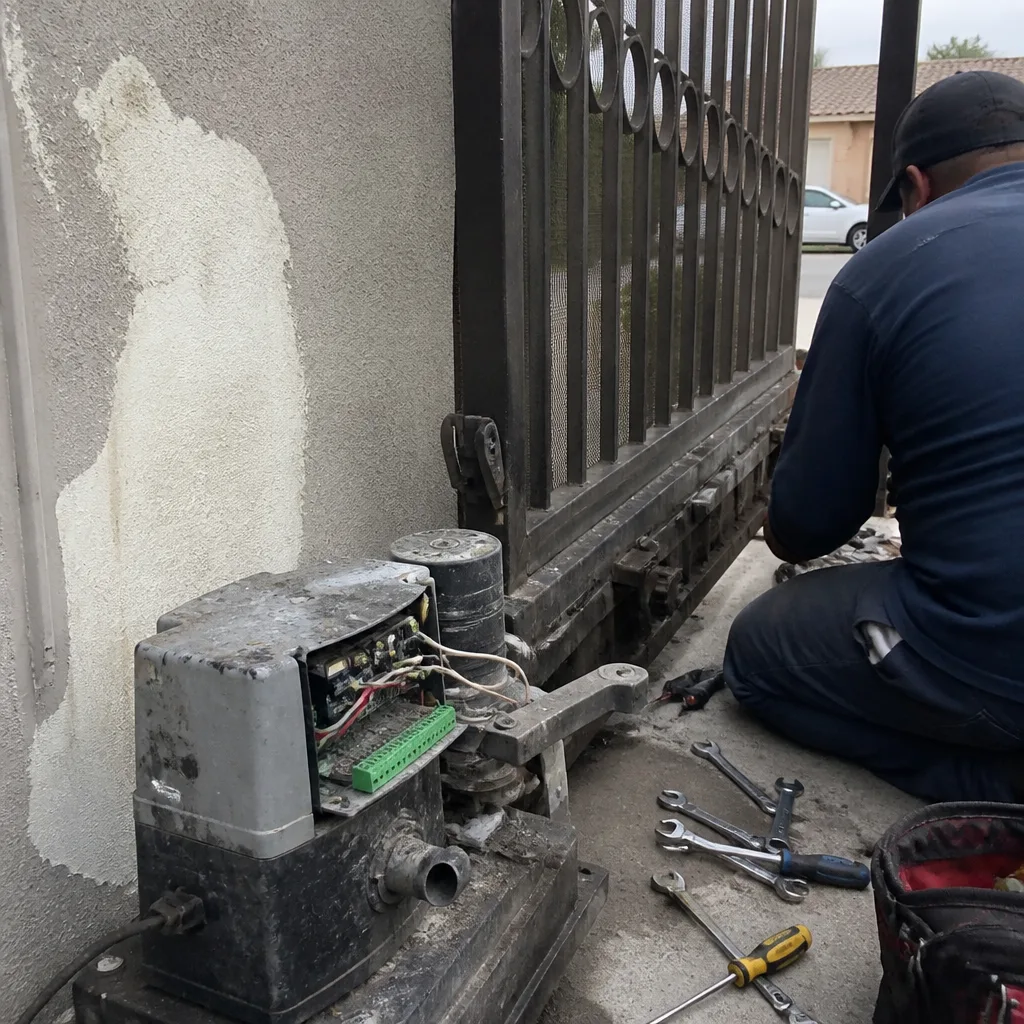
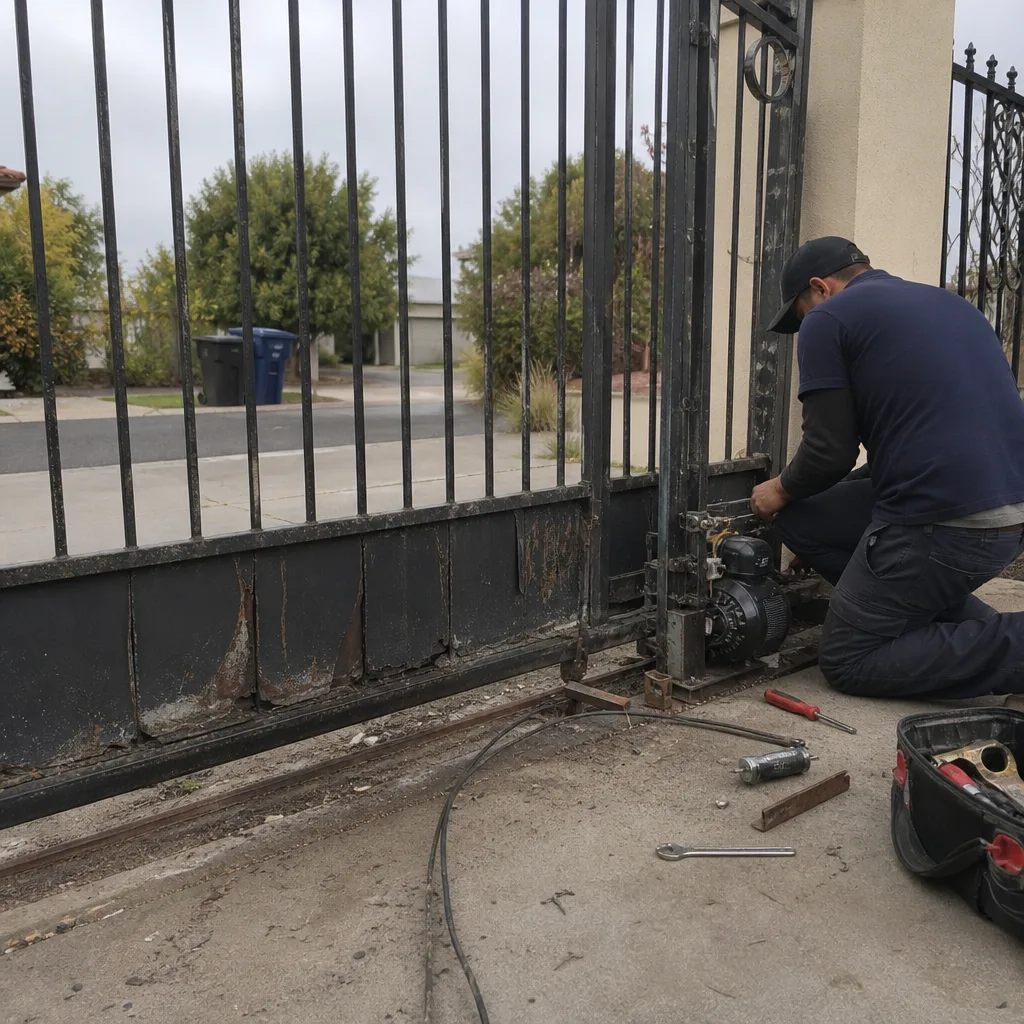 Before
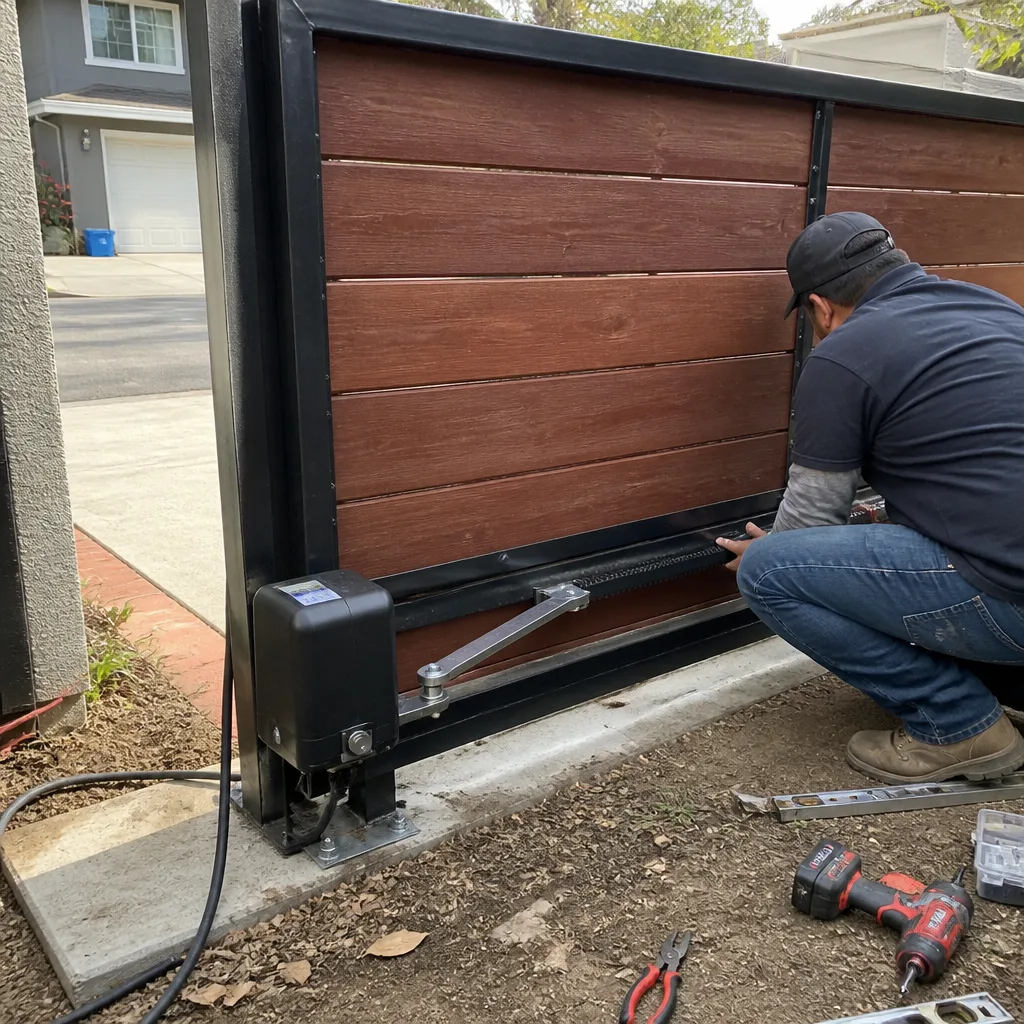
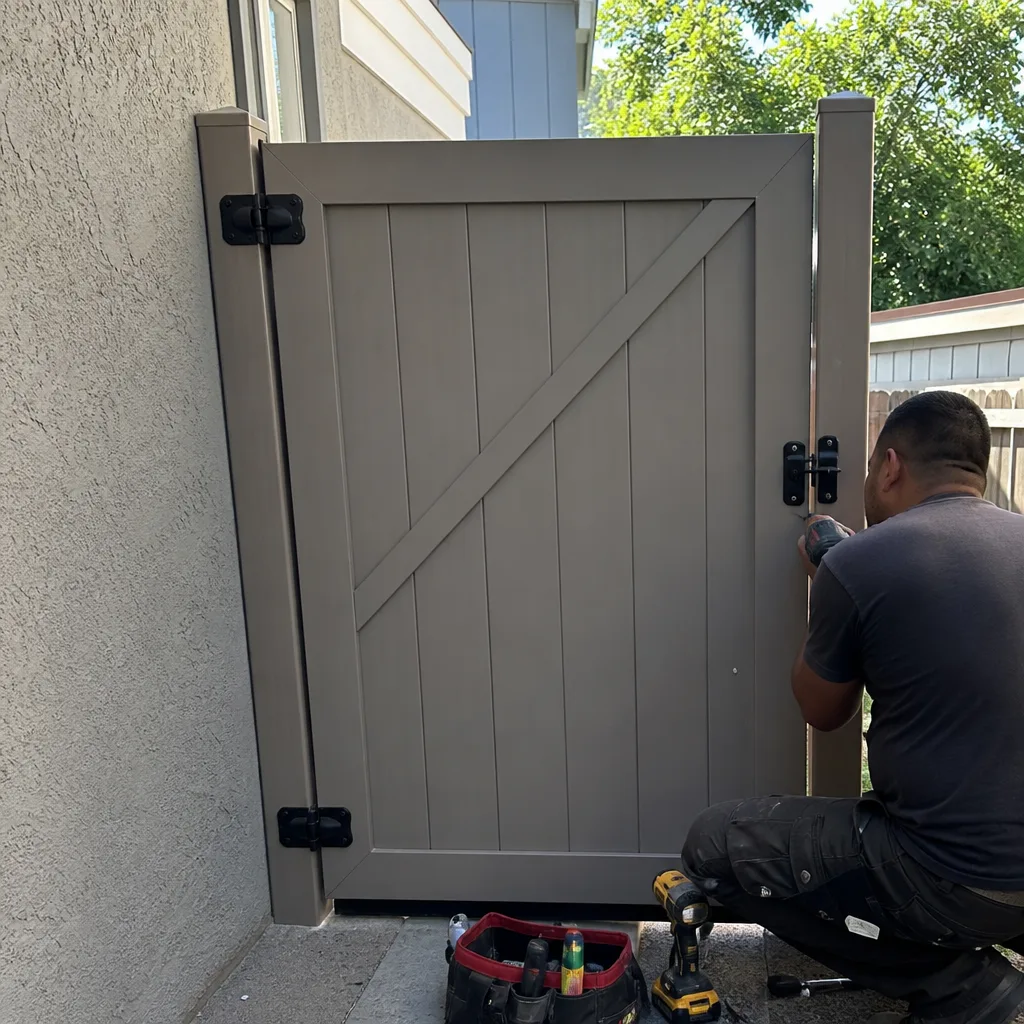 After
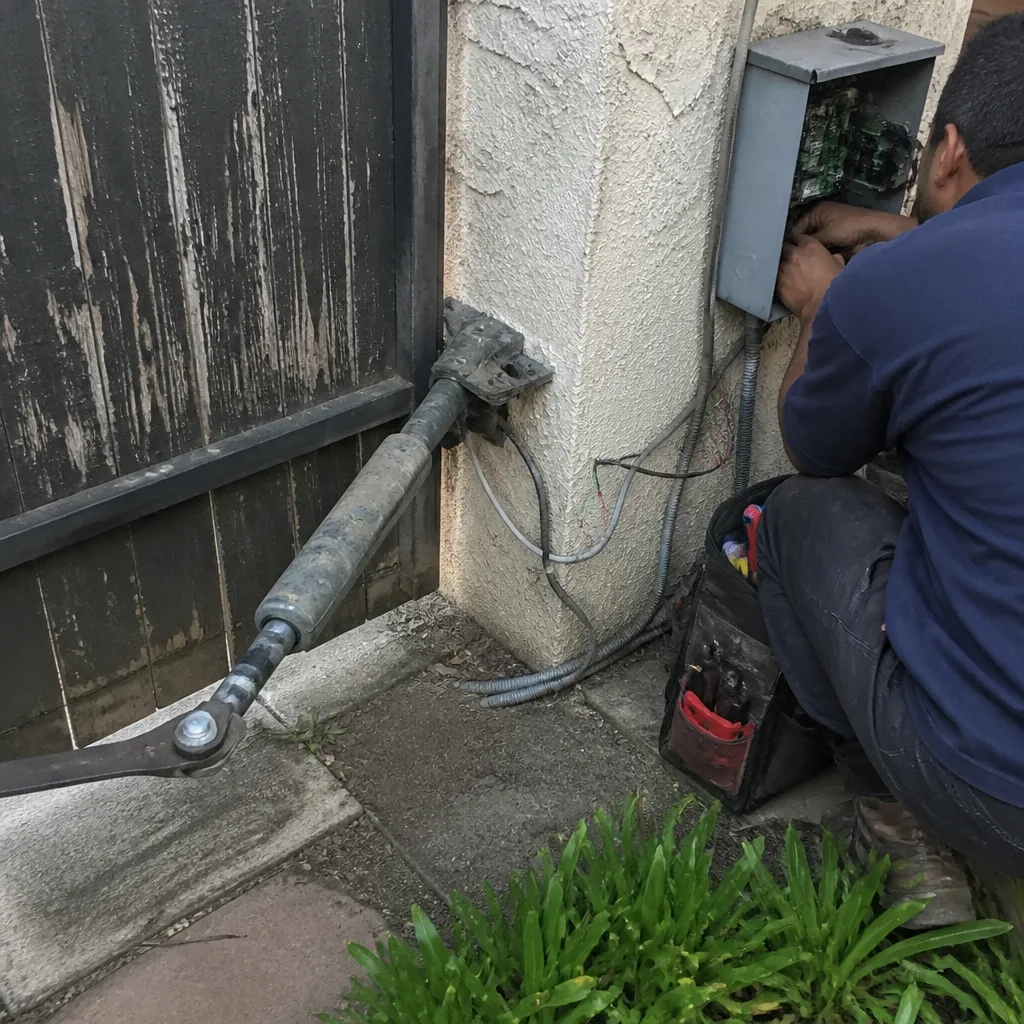 Before
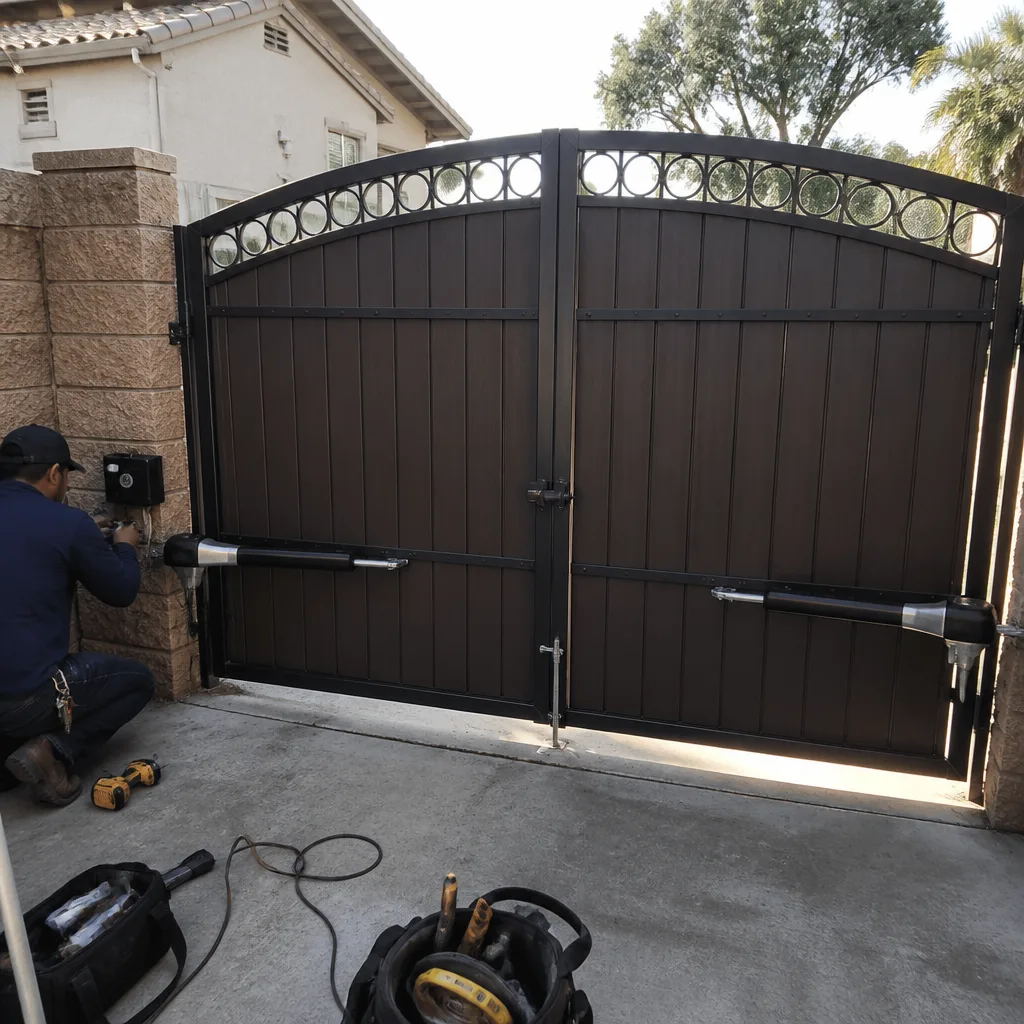 After
 Before
 After