
Last updated November 2, 2026
 Wrought iron
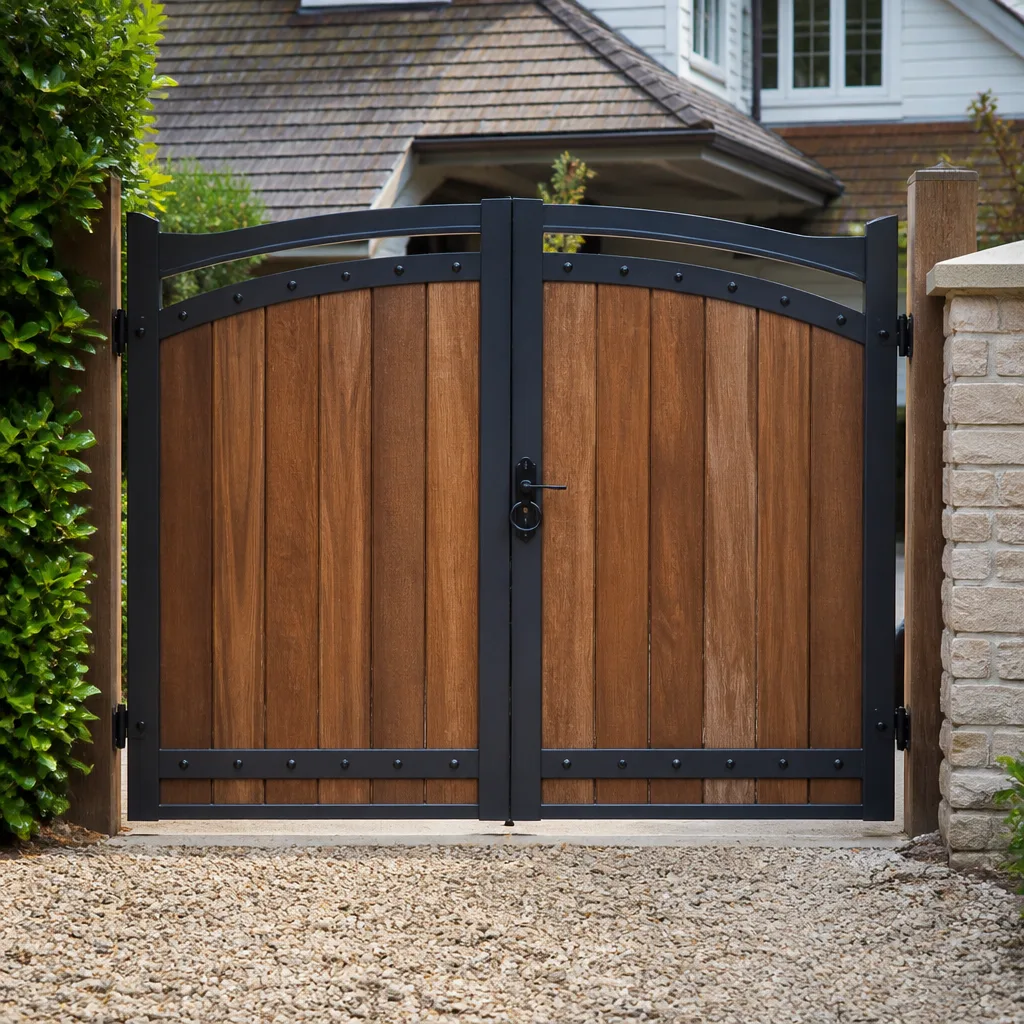 Wood & steel frame
 Farm & ranch
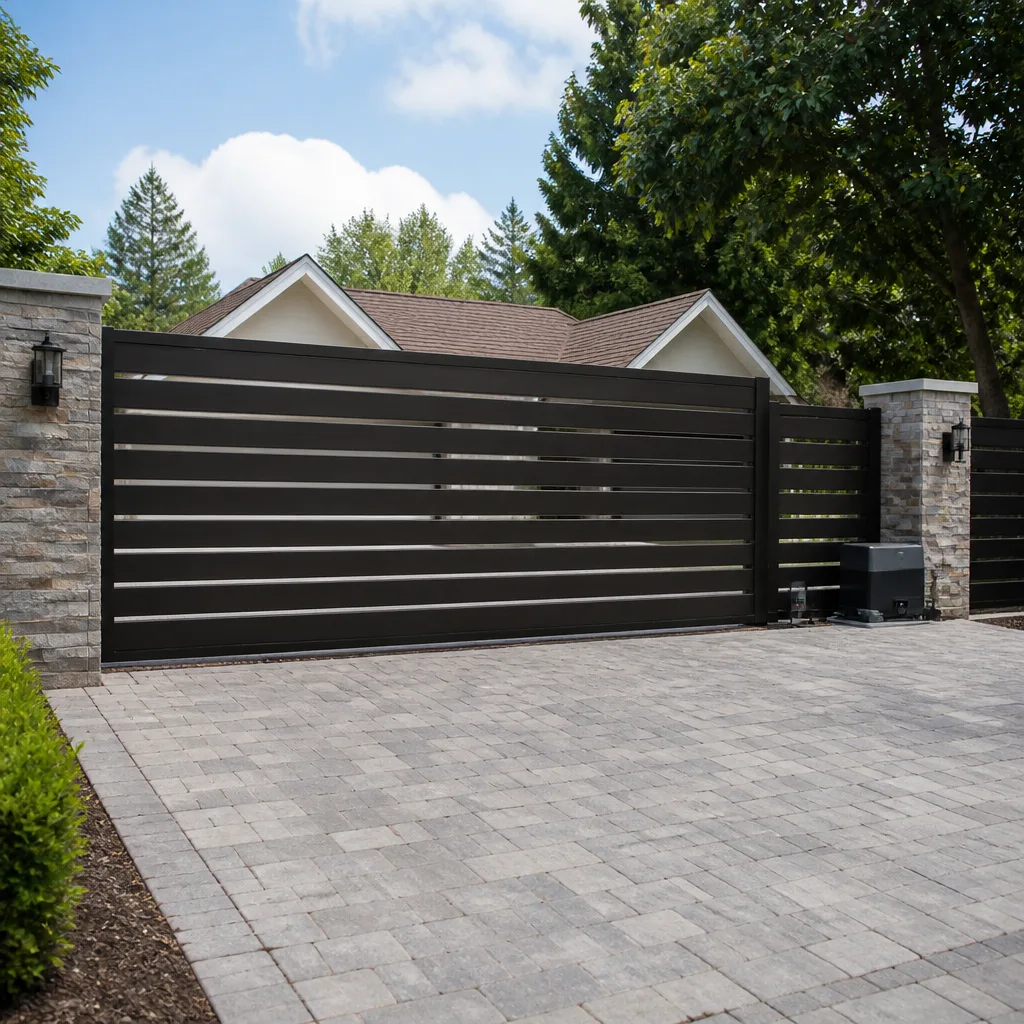 Sliding driveway gates
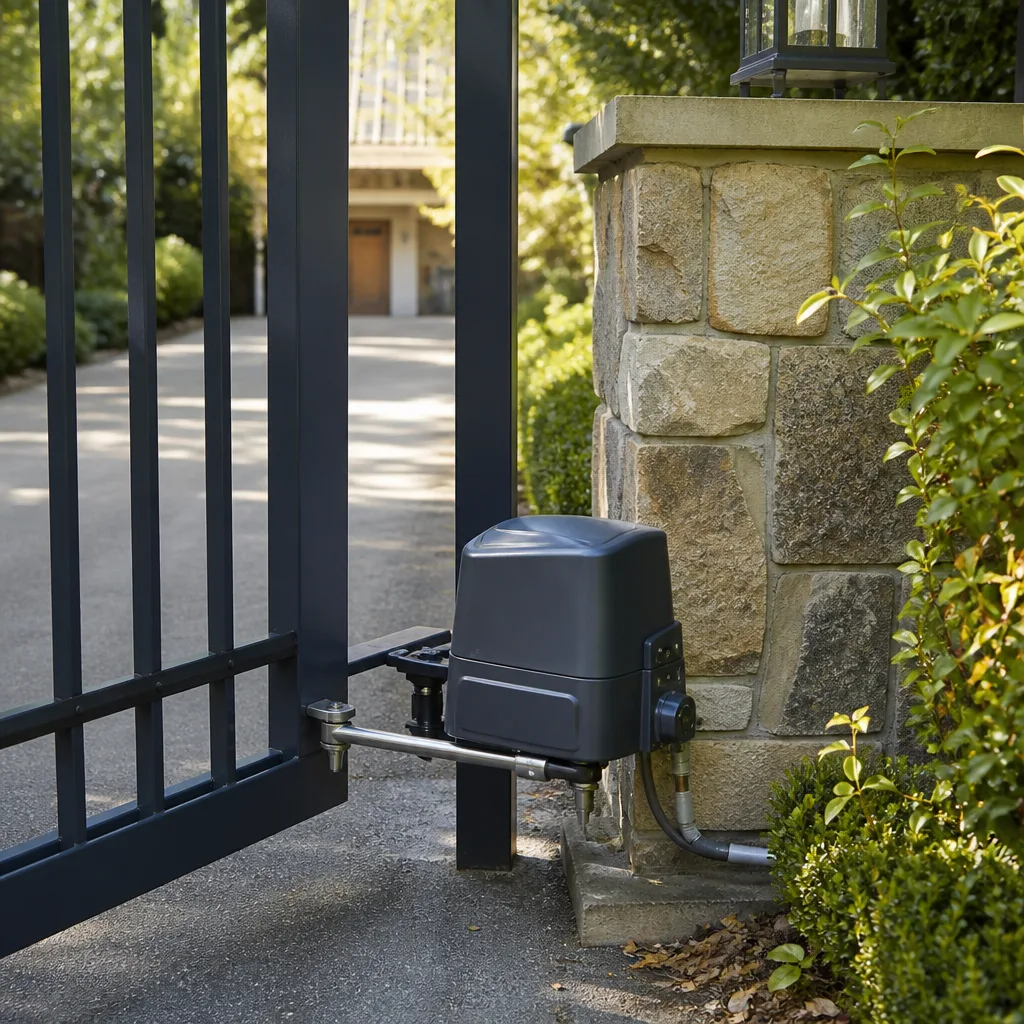 LiftMaster operators
Free on-site gate assessment - hinges, posts, and your LiftMaster or Nice gate operator checked before anything is quoted
The assessment is free and the quote is the invoice.
Get your free estimateDIY vs Professional Gate Repair: The Mira Mesa Homeowner’s Decision Guide
Here’s something that surprises most Mira Mesa homeowners: the two gate repairs most often botched by confident DIYers aren’t the hardest ones. They’re limit switch adjustment and photocell alignment. Both look simple on the surface. Both are calibrated to fractions of an inch. And both create dangerous entrapment conditions when set wrong. This guide walks you through exactly which gate repairs are genuinely safe for a homeowner in Mira Mesa, which ones require a trained technician, and how to tell the difference before you spend money or risk an injury. By the end, you’ll have a clear task-by-task framework for making that call.
Styles & brands we work with
- Wrought iron
- Wood & steel frame
- Farm & ranch
- Sliding driveway gates
- LiftMaster operators
Quick Answer
DIY gate repair is safe and cost-effective for low-risk tasks like remote programming, battery backup replacement, and basic lubrication. Anything involving limit switches, photocell alignment, control board wiring, hydraulic actuators, or commercial-grade operators requires a professional who understands California’s UL 325 entrapment protection standard. The decision isn’t about your skill level. It’s about which specific task you’re attempting.
Table of Contents
- What’s Genuinely Safe to DIY
- What Requires a Trained Tech
- The UL 325 Liability Problem
- The True Cost of DIY Mistakes
- Tools and Knowledge You Actually Need
- The $95 Diagnostic Value Argument
- Common Mistakes to Avoid
- When to Call a Professional
- Frequently Asked Questions
- The Bottom Line
What’s Genuinely Safe to DIY
Let’s be straight about this: some gate repair tasks are genuinely appropriate for a homeowner. We’re not going to tell you every repair requires a service call. That would be dishonest, and it would waste your money. The key is knowing which tasks sit safely inside the DIY zone and which ones cross into territory where a mistake costs more than the service call would have.
Remote control programming is the clearest example. Every major gate brand, from Mighty Mule to LiftMaster, has a slightly different programming sequence. But the process generally involves pressing a learn button on the control board, then pressing a button on the remote within a specific window. It’s documented in your owner’s manual. It doesn’t require tools. It doesn’t affect gate safety. Worst case, you erase the remotes and have to reprogram them all.
Battery backup replacement is another reasonable DIY task, assuming you can identify the correct replacement battery and access the compartment safely. On residential swing gates and many slide gate systems, the battery sits in a plastic housing near the motor. Disconnect the old battery, connect the new one, done. The catch: if your gate’s battery backup is integrated into a commercial control board, you’re no longer in the DIY zone.
Basic lubrication also falls into the safe category, with one important caveat. Use the wrong lubricant and you’ll destroy a gear. More on that in the mistakes section below.
Here’s the full list of tasks we consider genuinely DIY-safe for most Mira Mesa homeowners:
- Remote programming: Adding or replacing a hand transmitter using the learn button sequence from your manual.
- Battery backup replacement: Swapping a clearly labeled, easily accessible backup battery on a residential operator.
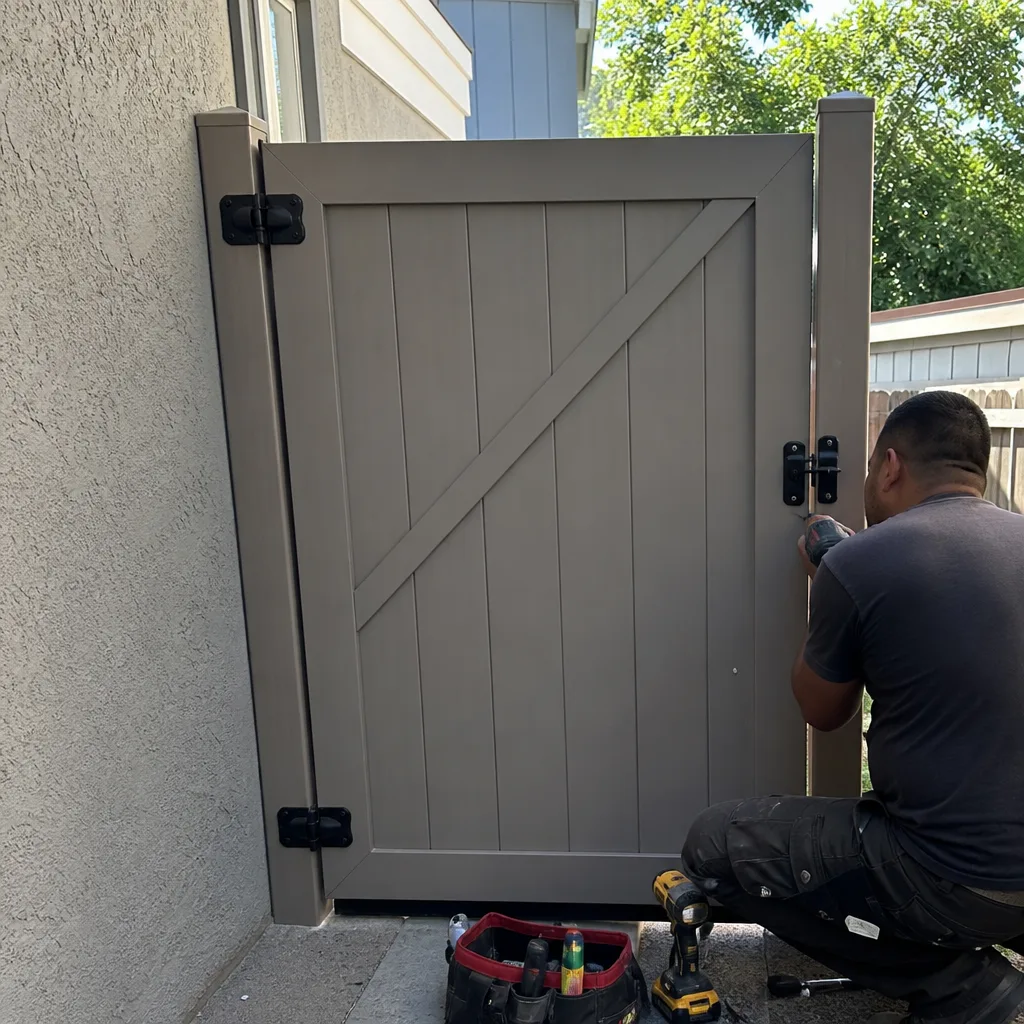
- Basic hinge lubrication: Applying the correct grease to swing gate hinges that are squeaking.
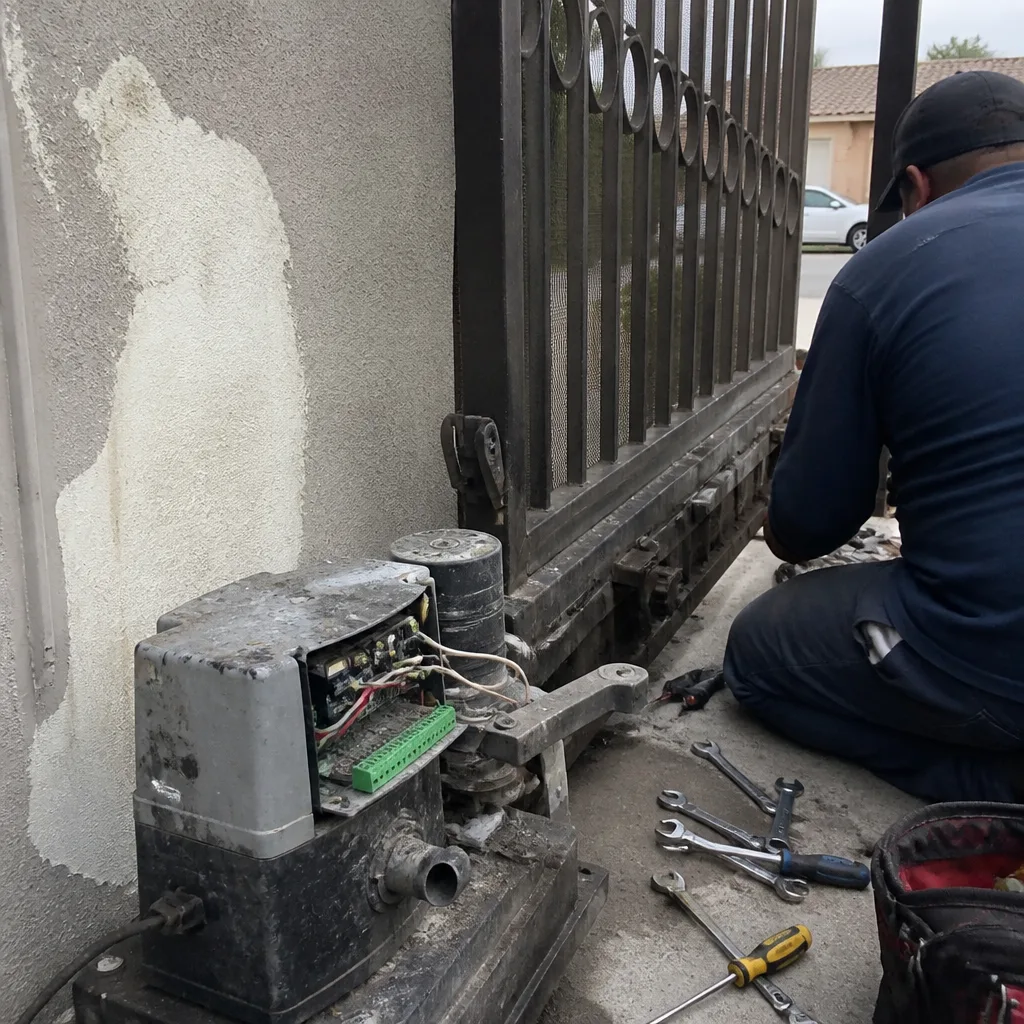
- Track cleaning: Clearing leaves, dirt, and debris from a slide gate track.
- Solar panel cleaning: Wiping down solar panels on gates that use them as a power source.
- Visual inspection: Checking for obvious wear, rust, loose hardware, or debris in the gate path.
- Keypad battery replacement: Replacing the batteries inside a wireless keypad housing.
None of these tasks affect the gate’s entrapment protection. None require specialized tools. None risk burning out a motor or frying a control board. If that’s the scope of your repair, by all means handle it. Check out our full Gate Repair in Mira Mesa page if you run into anything beyond this list.
What Requires a Trained Tech
Now the other side of the ledger. These are the repairs that should never be a weekend project, no matter how confident you are with a multimeter or how many YouTube videos you’ve watched.
Limit switch adjustment tops the list. Limit switches tell the gate motor where to stop. On a slide gate, they define the fully open and fully closed positions. On a swing gate, they determine how far each leaf travels. If the limit switch is set wrong, the gate either doesn’t close all the way or, worse, slams into the end stop and keeps pushing. That continued force is what burns out motors, strips gears, and bends gate hardware.
Photocell alignment is the second most commonly botched “simple” repair. Photocells are the safety eyes mounted on either side of the gate opening. They project an invisible beam. If the beam is broken while the gate is moving, the gate must stop and reverse. Alignment matters at the level of degrees, not inches. A photocell that’s slightly out of alignment may appear to work, but it creates a dead zone where the beam isn’t actually detecting anything. That’s an entrapment hazard, and it’s a liability waiting to happen.
Here’s the full list of repairs that require a trained technician:
- Limit switch adjustment or replacement: Affects stopping and reversing behavior. Requires precision calibration.
- Photocell alignment, repair, or replacement: Safety device. Must meet UL 325 performance standards.
- Control board diagnosis and replacement: Wiring errors here can destroy the board instantly. Some boards cost $400 to $900.
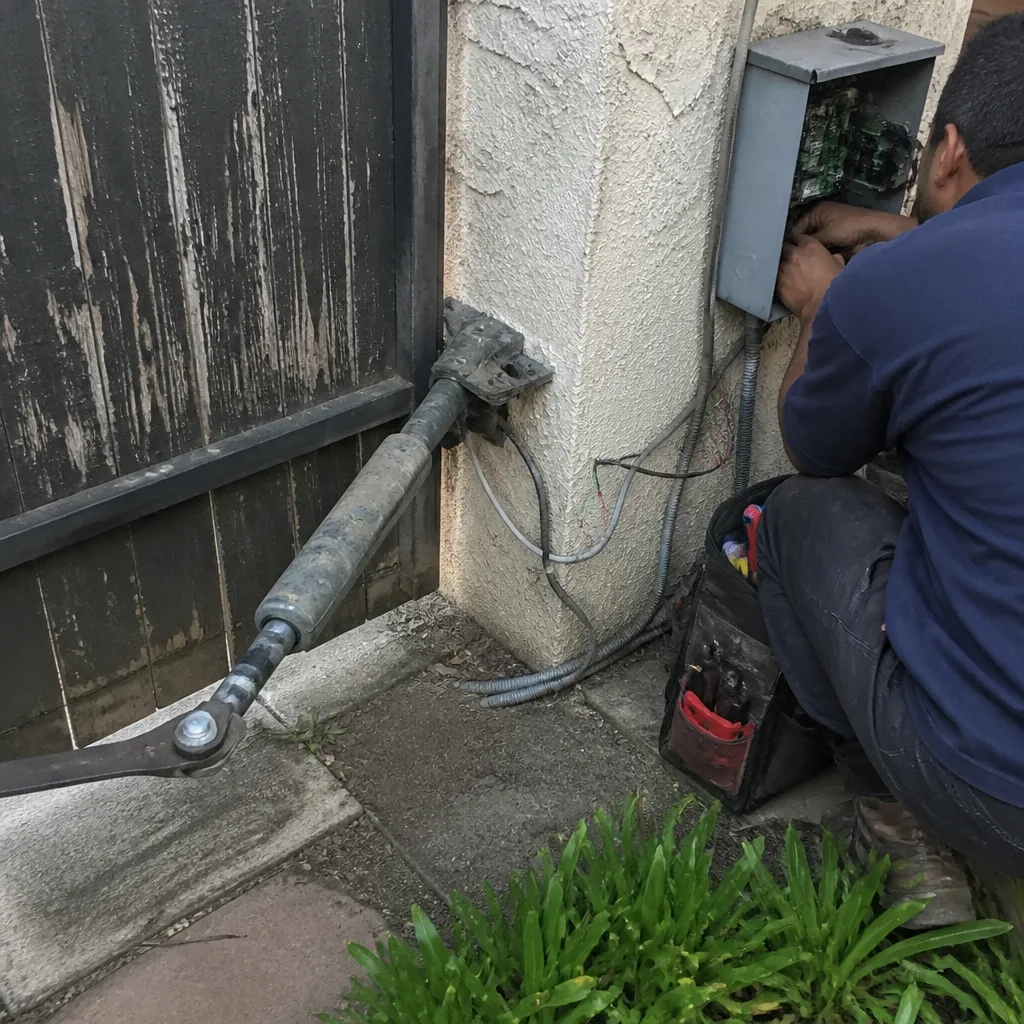
- Hydraulic actuator repair: Pressurized systems on commercial gates. Requires specialized tools and safety procedures.
- Motor replacement: Involves electrical wiring, capacitor handling, and proper torque settings.
- Loop detector installation or repair: Buried wire loops that detect vehicles. Requires trenching and correct impedance matching.
- Any repair on a commercial-grade operator: FAAC, BFT, door operators on HOAs, etc. These systems have complex control logic and multiple safety inputs.
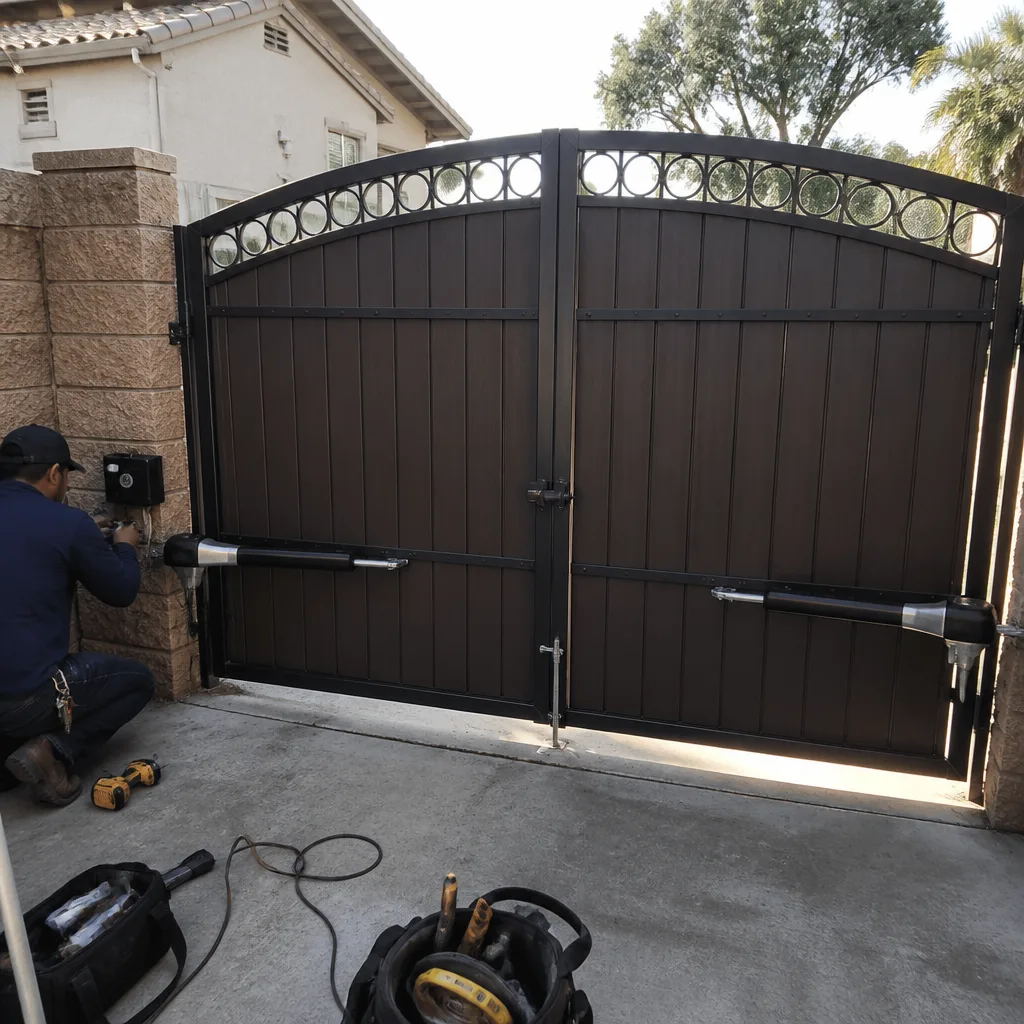
- Clutch or torque limiter adjustment: Affects the force the gate applies. Too much force creates an entrapment risk.
We work on the brand already on your property, no replacement required just because we don’t recognize the name. Our technicians are trained across nine gate brands, from entry-level Mighty Mule to commercial FAAC and BFT systems. That brand depth matters because a limit switch on a LiftMaster doesn’t calibrate the same way as one on a Viking. Knowing the difference is the difference between a repair and a second repair.
The UL 325 Liability Problem
California takes gate safety seriously, and the regulatory framework starts with UL 325. This is the national standard that governs automatic gate operators, and it’s incorporated into California building code. The core requirement: any gate operator must detect an obstruction and either stop or reverse before causing injury. That means limit settings, photocell function, and force settings all have to work together correctly.
Here’s the homeowner liability concern. If you adjust a limit switch yourself, disable a photocell to get a gate working, or change a force setting, and then a child or a pedestrian is injured by that gate, you’re liable. Your homeowner’s insurance may not cover it, because the injury resulted from an improperly maintained automatic gate that no longer met code. The insurance company will argue you modified the safety system yourself.
This isn’t theoretical. Entrapment injuries involving automatic gates happen every year in the United States. The Consumer Product Safety Commission has documented fatalities going back to the 1980s, and the UL 325 standard exists because of them. It was strengthened specifically to require secondary entrapment protection, which is usually the photocells we discussed above.
In Mira Mesa, many residential gates are at the end of sloped driveways in neighborhoods like Scripps Ranch and Rancho Peñasquitos. A gate that fails to stop correctly on a slope creates a runaway leaf that’s both heavier and faster than a gate on flat ground. The margin for error is smaller here, which is exactly when the code requirements matter most.
The takeaway: any repair that affects stopping, reversing, or force should be done by someone who understands UL 325 and can verify the gate meets it after the repair. Our Electric Gate Repair in Mira Mesa page covers this territory in more detail.
The True Cost of DIY Mistakes
Every gate technician has a collection of stories about DIY repairs gone wrong. Here’s what those mistakes actually cost, in realistic dollar figures for the Mira Mesa market.
Mistake 1: Limit switch set wrong, motor burns out
A homeowner notices the gate isn’t closing all the way. They open the control box, find the limit switch, and turn it a few clicks to make the gate travel further. It works… for about three weeks. Then the motor starts buzzing loudly and the gate stops moving entirely. What happened: the gate was now over-traveling, pressing against the end stop every cycle and stalling the motor. That stall current overheats the windings and destroys the motor.
Cost to fix the fix: A new residential swing gate motor and labor, plus a service call to diagnose and recalibrate, typically runs $450 to $800 unless the original limit switch was all that needed adjustment, in which case the original repair would have been $150 to $250.
Mistake 2: Wrong lubricant destroys the gear train
This one is painfully common. Homeowners grab the WD-40 or whatever’s on the garage shelf and spray the gate’s gears. WD-40 is a solvent and a water displacer, not a lubricant. It strips the existing grease, leaves a thin film that doesn’t protect, and accelerates metal-on-metal wear. Within months, the gear train is scored, noisy, and eventually seized.
Cost to fix the fix: Gear train replacement on a residential operator runs $300 to $600. Proper lubricant would have cost $15 and ten minutes.
Mistake 3: Improper wiring fries the control board
A homeowner replaces a keypad or a safety sensor and reverses two wires. They power the system back on. The control board smokes. The short sent voltage where it shouldn’t go, and now the entire board is dead.
Cost to fix the fix: Replacement control boards range from $200 to $900 depending on the brand and model, plus labor for installation and configuration. A professional diagnosis and repair of the original problem would have typically been $100 to $250.
Mistake 4: “Fixed” gate that no longer meets safety standards
This one has no immediate price tag, and that’s what makes it dangerous. The homeowner disables a photocell that was causing false reversals. The gate works fine. Six months later, the gate closes on a car, a pet, or worse. Now the cost is measured in medical bills, insurance claims, and liability – not repair invoices.
Cost: Impossible to quantify, but it’s the most expensive mistake on this list.
We see these patterns repeatedly in the Mira Mesa area. The homeowner who brings a Mighty Mule back to life only to burn the motor out a month later. The HOA board member who resets a commercial BFT operator and loses the safety sensor configuration. Gate repair is all we do. Not a sideline, not an upsell from a garage door call. That’s why we recognize the failure patterns quickly, and why we carry components for systems most technicians have to special-order.
Tools and Knowledge You Actually Need
Let’s talk about what a realistic DIY gate repair actually requires. Not the romanticized version where a screwdriver and a can-do attitude solve everything. The actual list.
For any repair that touches the electrical system, you need a digital multimeter. Not optional. Not “maybe I can eyeball it.” You need to verify voltage, check continuity, and test resistance. A decent multimeter costs $40 to $100, and you have to know how to use it on both AC and DC circuits, because different parts of a gate system run on different current.
For limit switch and clutch adjustments, you need the manufacturer’s service manual. Not the owner’s manual that came in the box, the service manual. These are sometimes available online, sometimes not. Many manufacturers only distribute service manuals to authorized dealers. That’s not an accident. It’s because the manufacturer doesn’t want an untrained person working on the force and travel settings of their operators.
Here’s the realistic tool and knowledge list for a mid-level DIY gate repair:
- Digital multimeter for electrical diagnosis and continuity testing ($40-$100).
- Manufacturer service manual for your specific operator model. Often unavailable to the public.
- Screwdrivers and socket set in the exact sizes for your gate’s hardware.
- Understanding of AC vs DC circuits, because a gate operator involves both.
- Understanding of normally-open vs normally-closed contacts, which determines how sensors and keypads wire to the control board.
- Sturdy blocking to physically secure the gate leaf while working on it.
- Working knowledge of UL 325 to verify the gate meets entrapment protection standards after your repair.
- Access to brand-specific replacement parts, which often aren’t sold at hardware stores.
That last item is a bigger deal than most people realize. When we repair a gate in Mira Mesa, we’re working on the brand already on your property. But a homeowner trying to source a LiftMaster limit switch or a BFT control board from a big-box hardware store is going to come up empty. These parts are distributed through specialized channels, not retail shelves.
For perspective: a residential installer might carry parts for Mighty Mule and Ghost Controls because those are the DIY-friendly, retail-available lines. A commercial technician runs into FAAC, BFT, and DoorKing systems daily. We work on all of them: nine brands across residential and commercial, so the diagnosis isn’t limited by what we happen to stock.
The $95 Diagnostic Value Argument
Here’s a scenario we’ve seen play out more times than we can count. A Mira Mesa homeowner has a gate that’s opening but not closing. They spend $60 on a set of new photocells. No change. They spend $120 on a new remote receiver. No change. They spend $80 on new limit switches. Still no change. After $260 in parts and a weekend of frustration, they call us. The actual problem: a loose wire on the loop detector. The repair takes 45 minutes and costs less than the first round of parts they bought.
This is what we call the diagnostic value argument. A service call from a company that specializes in gates produces an accurate diagnosis in the first visit. The alternative is the trial-and-error parts purchase strategy, where you’re guessing at the cause and spending money on each guess. The math rarely favors the guessing.
A professional gate diagnosis involves more than swapping parts until something works. It means testing the control board inputs, checking the safety sensor circuit, verifying the motor capacitor, and confirming that the limit switches are sending the right signals. It means knowing, from experience, that a LiftMaster operator with a specific symptom profile usually has a specific failure. That brand-specific knowledge shortens the diagnosis dramatically.
Think of it this way: the expensive part of gate repair is labor, not parts. A $95 service call that takes 45 minutes and produces the correct answer is far cheaper than a $260 parts guessing game that produces no answer at all. The diagnostic is where expertise pays for itself. Our Gate Repair Mira Mesa home page has more detail on how we approach diagnosis across the brands we service.
Common Mistakes to Avoid
Whether you’re attempting a DIY repair or deciding whether to, these are the specific mistakes we see most often in the Mira Mesa area. Avoid these and you’ve already made a better decision than most.
- Lubricating the grease points with WD-40. We covered this above, but it’s worth repeating because it’s the single most common mistake. Your gate’s gears need thick lithium grease. WD-40 strips that grease and leaves metal on metal.
- Adjusting the limit switches “just a little” to fix a closing problem. The limit switch didn’t move on its own. If the gate isn’t closing, the limit setting isn’t the root cause. Something else changed, and you haven’t found it yet.
- Disabling or bypassing a photocell to stop false reversals. The false reversals mean the photocell is detecting something, or the wiring is loose, or the alignment is genuinely off. Fix the issue. Don’t remove the safety.
- Replacing a control board without checking for the wiring fault that killed it. A dead board is often a symptom, not the root cause. If a short killed it, the new board dies the same way.
- Working on a gate without physically securing it. A swing gate leaf is heavy. A slide gate is heavier. If you disconnect the operator arm without securing the leaf, it can move on its own, especially on a sloped Mira Mesa driveway.
- Ignoring odd noises during operation. Grinding, buzzing, or clicking sounds are early warnings of wear. Addressing them early costs less than a catastrophic failure. Our Gate Repair in Mira Mesa service exists for exactly this reason.
- Mixing brands and parts that weren’t designed to work together. A LiftMaster control board doesn’t pair with a Mighty Mule motor just because both are on a shelf near each other. Compatibility matters, and it’s not always obvious from the casing.
When to Call a Professional
Call a professional if your gate repair involves limit switches, photocells, control boards, hydraulic components, motors, or any operator on a commercial property. Call a professional if the gate is exhibiting intermittent failures, because intermittent problems almost never get fixed by swapping parts blindly. Call a professional if your gate is the only secure entry point for your property and you can’t afford a repair that doesn’t work the first time. And call a professional if you’ve already attempted a DIY fix and made it worse. We see that second scenario every week in Mira Mesa, and we approach it without judgment. The goal is a gate that works correctly and safely. Gate Repair Mira Mesa offers free estimates in Mira Mesa. Call (833) 593-4660 to schedule yours. For new gate projects, our Gate Installation in Mira Mesa page walks through what a measured, permitted installation looks like.
Frequently Asked Questions
Gate repair pricing in Mira Mesa depends on the task, but here are realistic ranges: remote programming runs $75 to $150, limit switch adjustment $150 to $250, photocell replacement $180 to $300, control board replacement $350 to $900 including parts and labor, and motor replacement $450 to $800. Every job is quoted and agreed before any work starts. Call (833) 593-4660 for an exact quote. Estimates are free.
Most residential gate repairs in Mira Mesa can be scheduled within 24 to 48 hours. Emergency situations, like a gate stuck open or closed and blocking a driveway, are prioritized. Call (833) 593-4660 and describe the problem. We’ll give you a realistic arrival window.
We service nine specific gate brands, including LiftMaster, FAAC, BFT, Linear, Viking, Ghost Controls, DoorKing, Elite, and Mighty Mule. That line-up covers most residential and commercial systems installed in Mira Mesa. We work on the brand already on your property. No replacement required just because we don’t recognize the name.
Garage door companies work on overhead doors, spring systems, and garage openers. Gate companies work on slide and swing gate operators, hydraulic systems, loop detectors, and the safety sensors that govern entrapment protection. The components overlap less than you’d think. Hiring a gate specialist means the technician has seen your specific problem before, often on the same brand and model.
You can physically mount a new operator, but you shouldn’t unless you’re comfortable with electrical wiring, limit calibration, photocell alignment, and the UL 325 safety standard. A misconfigured operator is dangerous, and the liability for entrapment injuries falls on the property owner. Installation done right the first time means fewer repair calls later. We build with that in mind.
Repair work on an existing gate typically doesn’t require a permit. New gate installations, especially those with electrical work, often do. If you’re repairing a commercial gate on an HOA property or a business driveway, there may be additional municipal requirements in the city of San Diego. Our Gate Installation in Mira Mesa page covers installation permitting in more detail.
The Bottom Line
The DIY vs professional decision on gate repair isn’t about whether you’re handy. It’s about whether the specific task you’re facing affects the gate’s safety system, electrical system, or force settings. Remote programming, battery swapping, and hinge lubrication are safe DIY territory. Limit switches, photocells, control boards, and anything hydraulic are professional territory, and the cost of getting them wrong always exceeds the cost of the service call. For Mira Mesa homeowners, the smartest move is an honest assessment of which task you’re facing, and a free estimate if the answer is professional. From a bent arm on a Ghost Controls unit to a failed FAAC hydraulic board, same team, same call: (833) 593-4660.
Written by the team at Gate Repair Mira Mesa, serving Mira Mesa since 2017.
See the difference
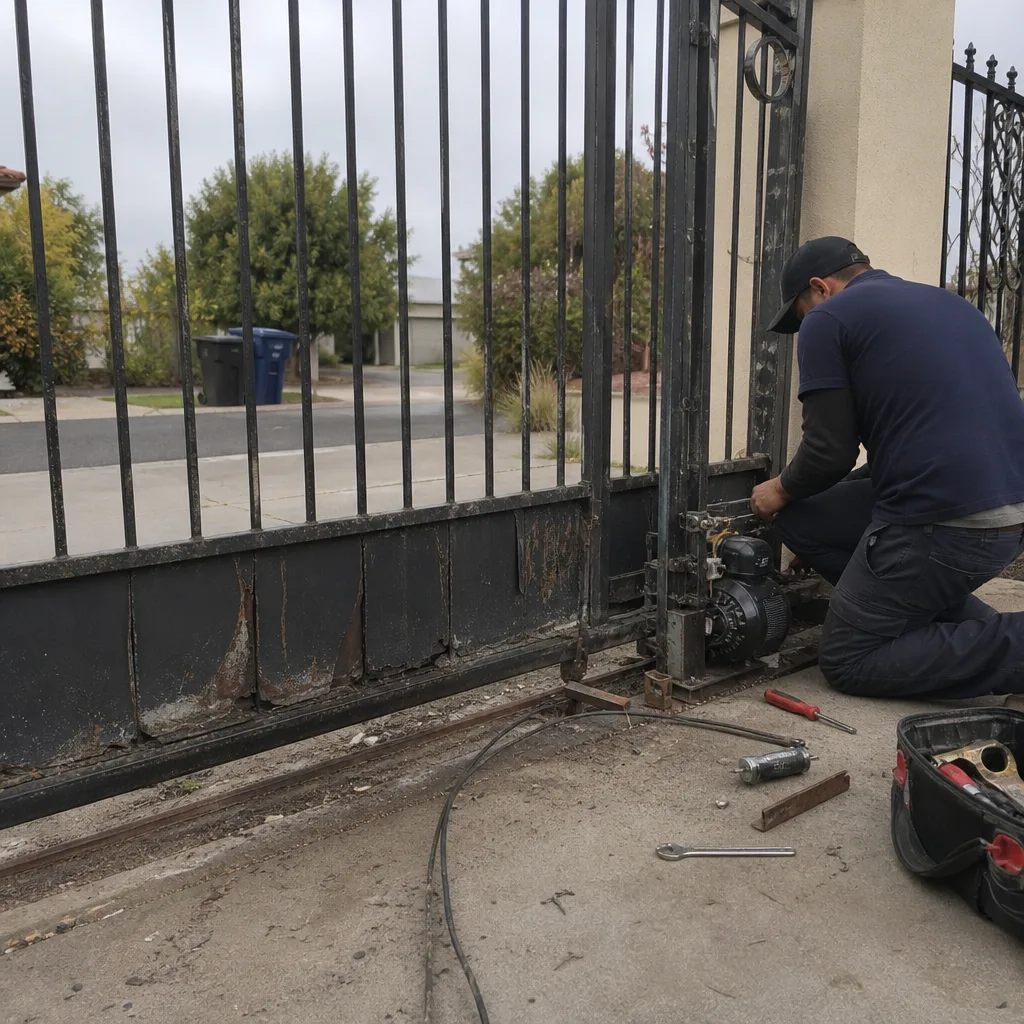 Before
 After
 Before
 After
 Before
 After