
Last updated November 2, 2026
 Wrought iron
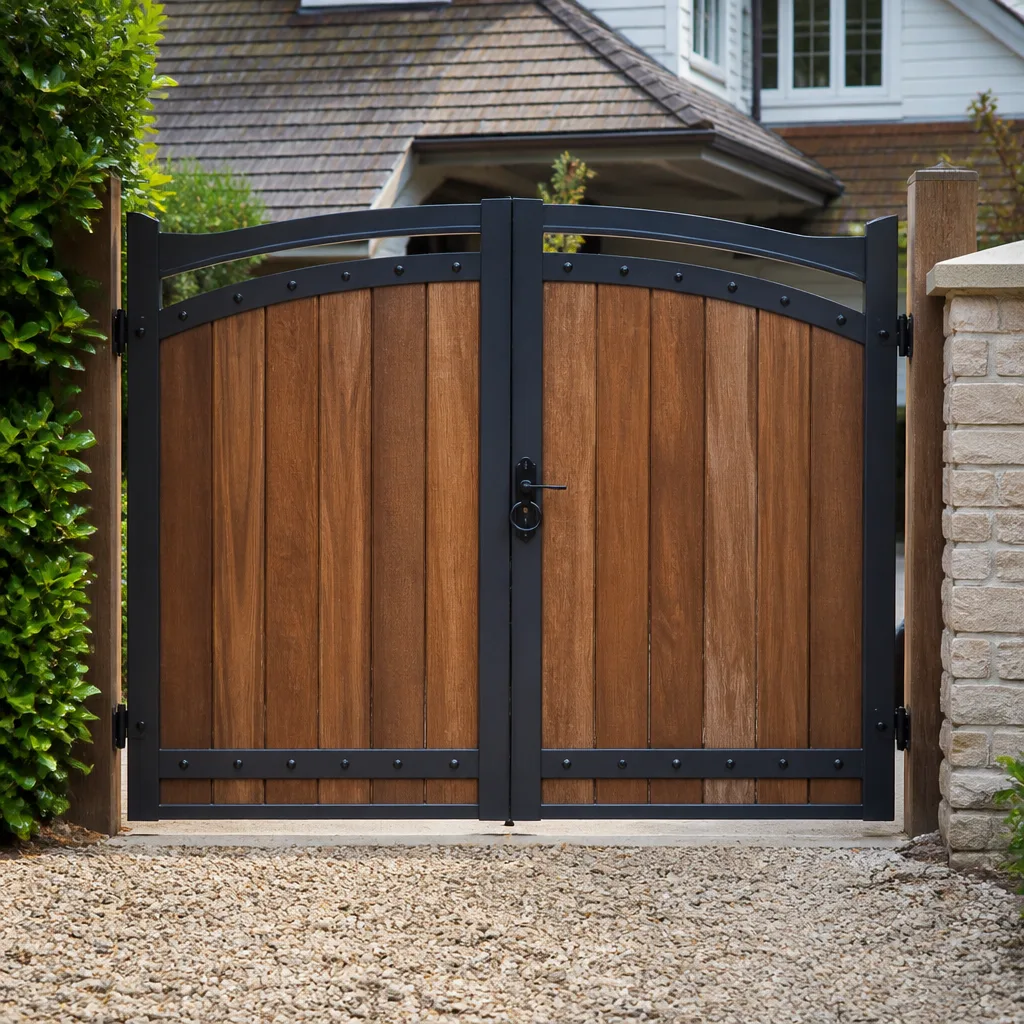 Wood & steel frame
 Farm & ranch
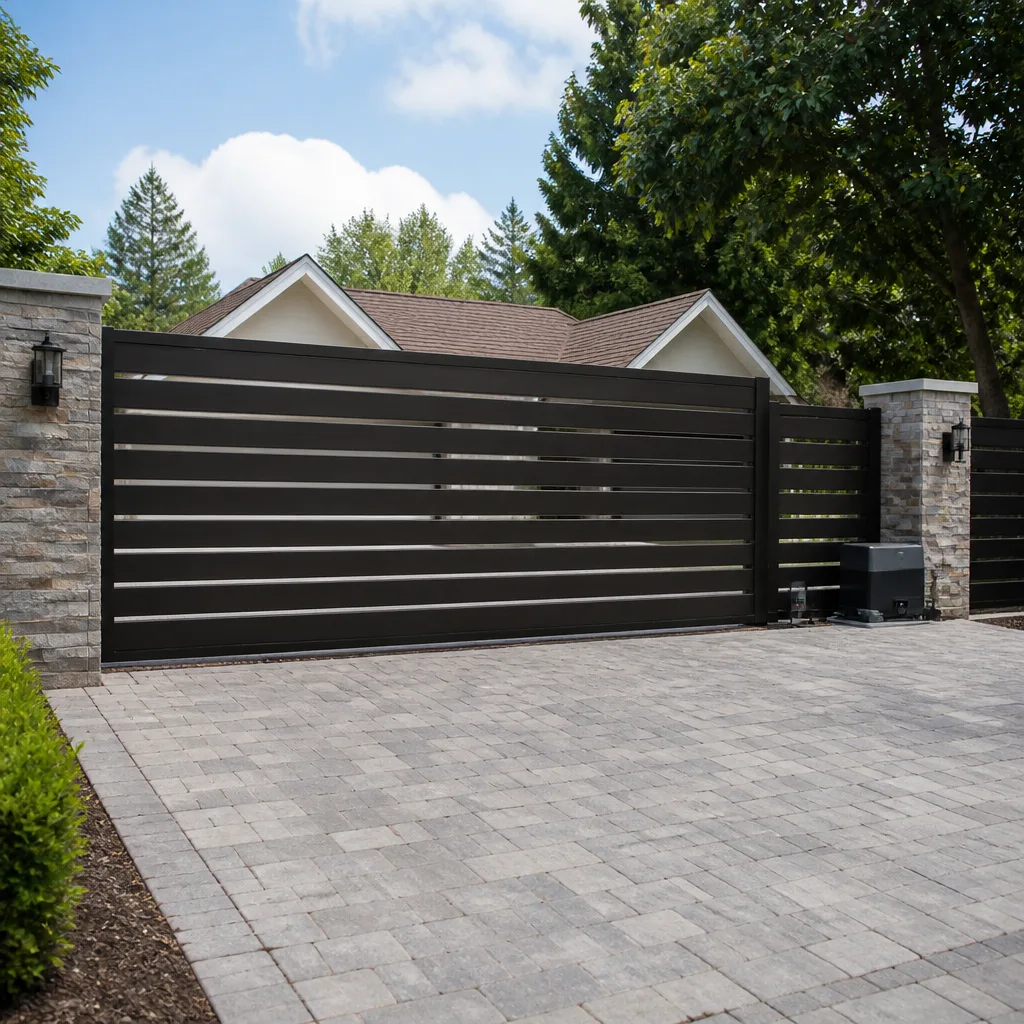 Sliding driveway gates
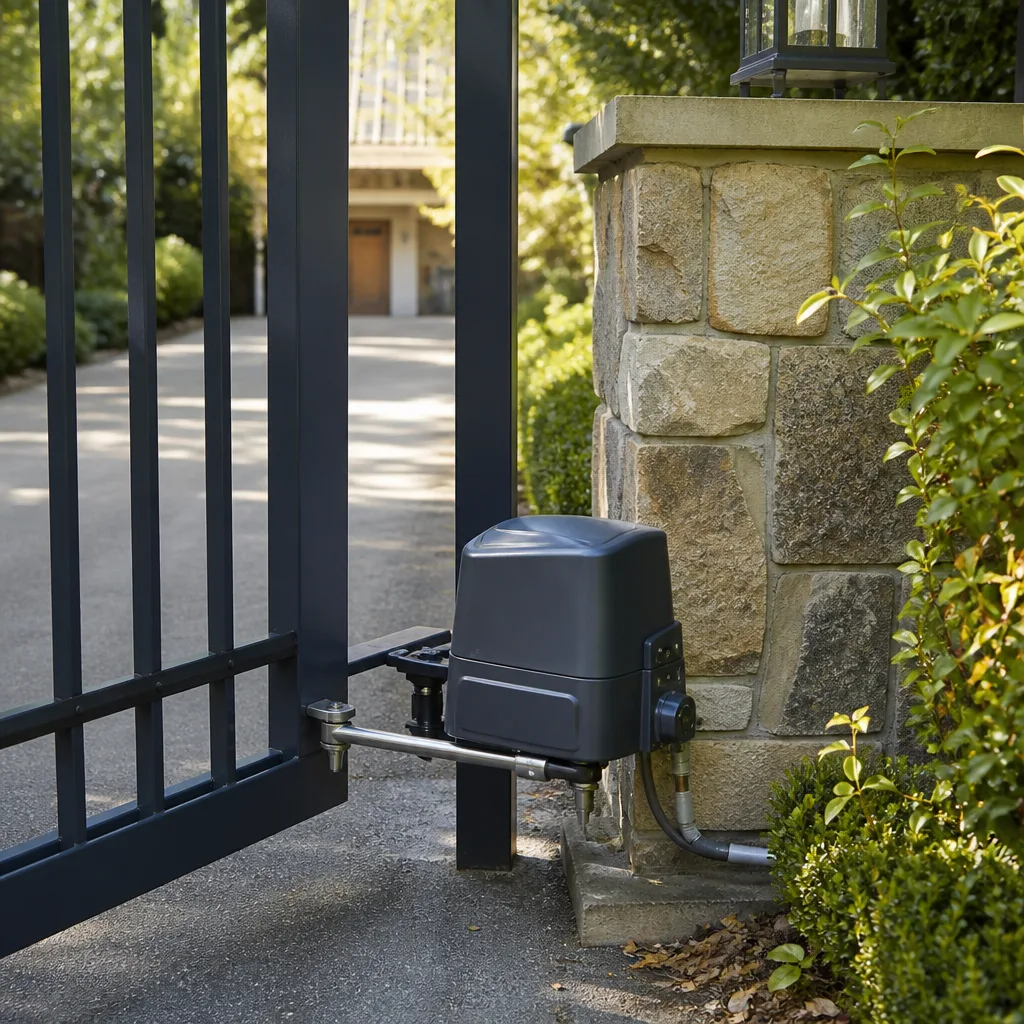 LiftMaster operators
Free on-site gate assessment - hinges, posts, and your LiftMaster or Nice gate operator checked before anything is quoted
The assessment is free and the quote is the invoice.
Get your free estimateGate Repair Troubleshooting: Common Problems and How to Fix Them
A gate that reverses immediately after hitting the closed position is almost never a limit-switch problem. It’s usually a force-sensitivity setting that’s been misread as a safety obstruction, a distinction that separates a $0 adjustment from an unnecessary $200 service call. Most troubleshooting guides stop at “check the battery” and “clean the sensor.” That’s not enough when you’re standing in your driveway in Mira Mesa at 7 a.m., late for work, staring at a gate that won’t budge. For more guides & resources, see our blog. This guide works backward from the symptom you actually observe to the exact component causing it. By the time you finish reading, you’ll know whether you’re dealing with a dead remote battery, a misaligned photo eye, a failing capacitor, or a control board that’s quietly given up after six years of Mira Mesa sun exposure.
Quick Answer
Gate repair troubleshooting starts with identifying the exact symptom: a gate that won’t open at all usually points to a power or remote issue, while a gate that opens partially then reverses typically indicates a force-setting or obstruction problem. Before calling a technician, test the manual release, check the breaker, replace remote batteries, and visually inspect the photo eyes and track. If the gate beeps but doesn’t move, check the battery backup or limit switches. If remote range has dropped from 20 feet to 2 feet, look for a failing receiver antenna or new radio interference. For anything involving high-tension springs, hydraulic lines, or control-board rewiring, stop and call a trained gate technician in Mira Mesa for our Gate Repair services.
Styles & brands we work with
- Wrought iron
- Wood & steel frame
- Farm & ranch
- Sliding driveway gates
- LiftMaster operators
Table of Contents
- Symptom 1: Gate Won’t Open at All
- Symptom 2: Gate Won’t Close or Reverses Immediately
- Symptom 3: Gate Reverses Mid-Travel
- Symptom 4: Gate Opens Partially or Stops Then Starts Again
- Symptom 5: Gate Beeps But Doesn’t Move
- Symptom 6: Remote Range Has Dropped
- The Manual-Release Test: The Single Most Useful Diagnostic
- Brand-Specific Quirks in Common Residential Operators
Symptom 1: Gate Won’t Open at All
A dead gate is either a power problem, a remote problem, or an operator problem, and the order you check them matters because it takes thirty seconds to rule out the first two and saves you a service call if one of them is the culprit. We get calls in Mira Mesa every week from homeowners who spent an hour fiddling with limit switches when the real issue was a tripped GFCI outlet on the side of the house. Start there.
Here’s the step-by-step diagnostic sequence:
- Check the breaker and GFCI. Gate operators in Mira Mesa are almost always on a dedicated circuit, often with a GFCI outlet somewhere along the run. A brownout during Santa Ana wind season will trip these. Reset them before anything else. If the breaker trips again immediately, you have a short in the operator or the wiring run and need a technician.
- Test the remote. Replace the battery first, even if the LED lights up. We see remotes in coastal and inland Mira Mesa microclimates eat through 12V batteries in under a year. If a second remote works but the first doesn’t, the remote is toast. If no remote works, move to step 3.
- Try the keypad or push-button. Most operators have a hardwired open command somewhere, whether that’s a keypad on the post or a doorbell-style button inside the garage. If the hardwired command works but remotes don’t, the issue is the receiver or antenna in the operator, not the motor.
- Check the manual release. Pull the release handle and try to move the gate by hand. A gate that swings or slides freely with the operator disengaged tells you the motor or control board is the problem. A gate that’s still stuck points to mechanical failure: a seized roller, a bent track, or a broken hinge.
This last step matters more than most people realize. If the gate is mechanically stuck and you keep sending open commands, you’re overheating the motor and shortening its life. Disengage the operator, push the gate by hand, and if it doesn’t move smoothly, gate repair in Mira Mesa is not a DIY job for that fault.
Symptom 2: Gate Won’t Close or Reverses Immediately at the Closed Position
This is the symptom that generates the most misdiagnosis we see in Mira Mesa call logs. A gate that closes fully, touches the stop, then immediately reverses and opens again is not a limit switch failure in nine out of ten cases. It’s the force-sensitivity setting on the operator reading the final stop as an obstruction and backing off.
Here’s why that happens and how to sort it out:
- Force sensitivity too low. Modern operators from LiftMaster and FAAC measure the current draw on the motor to detect obstructions. If the gate hits the mechanical stop and the operator expects it to stop at a specific point but the physical stop is slightly earlier (due to thermal expansion of the gate leaf in Mira Mesa afternoon sun, for example), the operator sees resistance before it expects to, reads it as an obstruction, and reverses. The fix is a force-adjustment change, not a limit-switch repair. On many residential units this is a single dial or a menu setting the homeowner can adjust in two minutes.
- Photo eye misalignment. If the gate reverses before it reaches the closed position, or reverses immediately after starting to close, the safety photo eyes are the usual suspect. They’re mounted on the posts on either side of the gate opening. If one has been bumped by a mower, a delivery truck, or a kid on a bike, the beam no longer aligns, and the operator behaves exactly as it should: it refuses to close because it thinks something is in the path. Check that both lenses are clean and that the small LED on each eye is lit steadily, not flickering.
- Debris on the track or in the swing path. Slide gates in Mira Mesa’s drier months accumulate fine dust and eucalyptus leaves in the track rollers. A swing gate can be blocked by a single large rock or a settling paver. Walk the full path of the gate before assuming the operator is at fault.
If the force-adjustment fix doesn’t resolve the immediate reversal, the issue is likely a failing limit switch or a control board that’s drifting out of calibration. That’s where we start seeing brand-specific behavior, which gets its own section later in this guide. For now, the takeaway is: a reverse at the closed position is a settings issue, not a catastrophic failure. Don’t let anyone sell you a new operator for it.
Symptom 3: Gate Reverses Mid-Travel
A gate that closes halfway, stops, and reverses to open is different from the symptom above. This one usually means the operator genuinely detected an obstruction. The gate hit resistance, the current draw spiked, and the operator backed off to prevent damage or injury. The question is what it hit.
Common causes in Mira Mesa:
- Track obstruction on slide gates. Gravel from driveways, palm fronds, and children’s toys all find their way into the track channel. The smaller the gate, the lower the clearance, the more likely a pebble causes a stall. Run a gloved hand along the track and look for anything that shouldn’t be there.
- Bent track or damaged roller. We see this routinely during the fall and winter months in Mira Mesa when cars clip the gate or a strong gust pushes a partially-open gate past its stop. A roller with a flat spot will stall the gate at the same point every time. Watch the gate, note where it stops, and inspect that exact section of track or roller.
- Force sensitivity too high in one direction. If the closing force is set much lower than the opening force, a gate that opens fine will struggle to close against normal wind resistance. On windy days in Mira Mesa, especially along the canyon edges, a swing gate sailing into a headwind can trigger a false obstruction reading. Adjusting the closing force up slightly solves it.
- Sagging gate leaf on a swing system. Wood and steel gates weigh a lot. After a decade, hinges wear and the gate leaf drops a quarter inch. That quarter inch is enough to make the bottom corner drag on the driveway at one specific point in its arc. The operator feels that drag as an obstruction and reverses. The permanent fix is hinge replacement or gate re-hanging, not a setting change.
Symptom 4: Gate Opens Partially or Stops Then Starts Again
A gate that stops mid-travel without reversing, or a gate that moves in jerks, points to a different set of problems: limit switch drift, capacitor failure, or mechanical binding. This symptom is less common than the reversal issues but more likely to require parts replacement.
Here’s what to check, in order of likelihood:
- Limit switch drift. On older mechanical-limit operators from Viking and older Linear models, the limit switches are physical cams that can shift over time with vibration and thermal cycling. When they drift, the operator stops mid-travel because it thinks it’s reached its destination. Adjusting the cams or replacing the limit assembly fixes it.
- Capacitor failure. A failing start capacitor gives the motor exactly one symptom: it starts, moves a few inches, and dies. Then it does it again. This is one of the most common failures we see on residential slide gates in Mira Mesa that are more than five years old. Capacitors are wear items, and they don’t like the heat cycling of inland microclimates.
- Mechanical binding at one point in the travel. If the gate stops at the exact same spot every time, it’s a mechanical issue: a bent track section, a sticky wheel, or a hinge that’s seized. The manual-release test, detailed below, isolates this.
- Low battery on solar-charged systems. Ghost Controls and Mighty Mule have large residential install bases in Mira Mesa, and many of them run on solar. If the battery is depleted mid-cycle, the gate stops, then starts again after a pause while the panel trickles charge back in. A new battery usually resolves it.
Symptom 5: Gate Beeps But Doesn’t Move
A gate that makes noise but doesn’t move is telling you something specific. The operator is alive, it’s receiving a command, and it’s either declining to execute it for a safety reason or trying to execute it and failing mechanically.
Separate these two scenarios:
- Beeps and does nothing else. If the unit beeps in response to a remote or keypad command but the motor never engages, check the photo eyes first. Most operators will beep a specific pattern (often two short beeps) when the safety beam is blocked or misaligned. This is the operator saying “I got your command, but I won’t move because something’s in the way.” Clean the lenses, realign the eyes, and test again.
- Beeps and hums or clicks. If the operator beeps and you hear a hum or a click from the motor but no movement, the motor is getting power but can’t turn the mechanism. This could be a seized gearbox, a jammed chain or belt on a slide gate, or a broken coupling. It could also be a failing motor starter. This is not a reset issue. Continuing to send commands while the motor is stalled will burn it out.
- Beeps, pauses, then beeps again. On battery-backup systems like the ones we service on commercial properties in Mira Mesa, this pattern usually indicates a low-battery condition. The operator knows what you want, but it doesn’t have the voltage to deliver it. Replace the battery or call for service if the charging circuit has failed.
The beep patterns are not standardized across brands. What a DoorKing unit means by three beeps might mean something entirely different on a BFT commercial operator. If you have the original manual, the beep codes are usually in the troubleshooting section. If you don’t, a call to a technician who works on that brand daily will save time.
Symptom 6: Remote Range Has Dropped
Remote range degradation is one of the most common gate complaints in Mira Mesa, and it’s almost never the remote itself. Homeowners replace remotes, then get frustrated when the new one has the same problem. The issue is usually environmental or electrical, not the plastic fob in your hand.
Causes of dropped remote range:
- New interference sources. Remote controls for gates operate on 318 MHz or 390 MHz frequencies. New LED landscape lighting, a neighbor’s new smart-home hub, a new wireless camera system, or even a new electric vehicle charger can emit enough RF noise on or near those frequencies to drown out your remote. If range dropped suddenly after something new was installed on or near the property, that’s the first suspect. Ask yourself: what changed in the last 60 days?
- Receiver antenna degradation. The receiver antenna on most residential operators is a simple wire that gets baked by Mira Mesa sun for years until the insulation cracks and the wire corrodes. If range has degraded slowly over months rather than suddenly overnight, this is the usual cause. We fix it with a length of wire and a good ground, not a new operator.
- Mounting position of the operator. Operators that face away from the driveway approach or sit behind a stucco wall or metal gate frame start with a range handicap. Some installations in older Mira Mesa developments were done when the gate was manual and the operator was added later in a position the installer chose for convenience, not radio geometry. Repositioning the antenna or relocating the receiver can restore 100+ feet of range.
- Failing receiver module. If remotes work from two feet away but not twenty, the receiver’s front-end amplifier may be failing. This is a component on the control board. On some LiftMaster and Linear residential operators, the receiver is a plug-in module that can be replaced without touching the main board. On others, it’s a board-level repair.
Before calling anyone, do this test: remove the remote from your keychain and test range from inside your car, holding the remote against the windshield. If range improves dramatically, your body or the metal from your keys was attenuating the signal, and the fix is a higher-gain antenna or a better remote placement. If range is the same, you’re dealing with interference or antenna issues.
The Manual-Release Test: The Single Most Useful Diagnostic
Every powered gate has a manual release mechanism, whether it’s a pull handle on a swing gate or a release lever on a slide gate operator. This one test, which takes under two minutes and requires zero tools, tells you more about your gate’s health than any other single action.
Here’s how to do it:
- Locate the manual release. On swing gates, it’s typically a pull handle near the operator arm or a lever on the operator itself. On slide gates, there’s usually a disengage lever or handle on the side of the operator housing. If you’re not sure, check the manual for your specific unit from LiftMaster, FAAC, BFT, Linear, Viking, Ghost Controls, DoorKing, Elite, or Mighty Mule. Most manuals have a diagram. Most are straightforward: pull, twist, or flip the release.
- Disengage the operator. Pull the release. You should hear a click as the gearbox or arm decouples from the motor. The gate is now free to move by hand.
- Move the gate through its full travel by hand. Push or pull the gate from fully closed to fully open and back. Feel for resistance, binding, grinding, or sections that are harder to move than others. A healthy gate moves smoothly and evenly across its entire range of travel.
- Interpret what you feel. If the gate moves freely and smoothly, the mechanical half of your system is fine, and the problem is in the operator: motor, gears, control board, or settings. If the gate binds or requires excessive force at any point, the mechanical half has a problem: hinge, roller, track, or alignment. This distinction alone tells a technician exactly where to start, and it saves you from paying for diagnostic time on the wrong half of the system.
- Re-engage the operator. Follow the manual’s instructions to reset the release. Most operators electric gate repair in Mira Mesa technicians see on residential calls need a brief power cycle after re-engagement to recalibrate the limits.
This test is safe, it doesn’t void any warranty we know of, and it’s the first thing we do on almost every service call. Do it before you call. You’ll be able to tell the technician exactly what you found, and that shortens the diagnostic time significantly.
Brand-Specific Quirks in Common Residential Operators
Identical symptoms often have different root causes depending on the operator brand. Here’s what we know from working on these units across Mira Mesa:
LiftMaster residential slide gate operators. LiftMaster uses a two-wire radio receiver module that plugs into the main control board. When remote range drops suddenly on a LiftMaster, we check the module seating first. The module works loose with gate vibration, and re-seating it restores range. LiftMaster operators also have a documented behavior where a failing accessory, like an intercom or a loop detector wired to the auxiliary terminals, drags down the entire system and causes intermittent open-command failures. Disconnecting accessories one at a time isolates it.
Mighty Mule swing gate systems. Mighty Mule is a residential staple, especially on solar-charged installs in Mira Mesa’s sunnier neighborhoods. The most common failure we see is battery-related, not motor-related. A Mighty Mule that opens partially then stops is usually a drained battery, and a Mighty Mule that beeps but won’t open at all is often in low-battery protection mode. The control board in a Mighty Mule is also notably sensitive to static discharge, which becomes relevant during dry Santa Ana conditions in Mira Mesa. If the unit was fine before a particularly dry windy stretch and then started behaving erratically, static damage to the board is on the table.
Ghost Controls swing operators. Ghost Controls units use a proprietary “Flex Sensor” force detection system rather than the current-draw method most other brands use. This means a Ghost Controls gate that reverses at the closed position can be caused by something mechanical pushing back on the arm that wouldn’t trigger a LiftMaster the same way. A gate that’s slightly out of plumb will perplex you for months until someone who knows Ghost Controls specifically checks the geometry of the hinge plane.
DoorKing commercial operators. DoorKing is everywhere on small commercial properties in Mira Mesa: parking lot gates, HOA entries, and business driveways. DoorKing operators have a distinctive failure mode where the master/slave logic on dual-gate installations drops out, and one gate refuses to move while the other operates normally. The fix is usually reprogramming the operator ID, not replacing hardware. DoorKing also uses different beep codes than residential brands, and interpreting them correctly without a manual is guesswork. If you manage a commercial property in Mira Mesa and your DoorKing is doing something you don’t understand, call someone who works on them regularly.
Warranty Considerations
Before you start adjusting settings or replacing parts, know what your warranty covers and what it prohibits. Here’s a clear breakdown:
- Encouraged by manufacturers: Remote battery replacement, photo-eye cleaning and alignment, manual-release operation, track cleaning, force-sensitivity adjustments via the documented menu or dials, and resetting a tripped breaker or GFCI. These are owner-maintenance items and doing them yourself is fine.
- Void-your-warranty territory: Opening the sealed motor housing, rewiring anything on the control board, replacing the capacitor on a sealed unit, adjusting internal limit cams on operators where those aren’t documented as user-serviceable, and bypassing any safety device. If the operator is under warranty and you open the gearbox, you may lose coverage. Most residential gate operator warranties in California run one to three years, so check your paperwork before touching anything beyond the owner-level components.
- What we tell our Mira Mesa clients: If the fix requires opening the operator housing beyond the clearly marked access panels, or if you’re not sure whether something is user-serviceable, call first. A five-minute phone call costs nothing and can keep a valid warranty intact.
Safe DIY Repairs vs. Jobs for a Professional
We believe homeowners should be empowered to handle the simple stuff, because it saves everyone time and money. But some gate repairs belong in the hands of people who do this every day. Here’s the honest division.
Safe to reset or replace yourself:
- Remote control batteries and remotes. If a remote is dead and a new battery doesn’t fix it, buy a replacement remote from the operator brand’s authorized parts channel and program it using the instructions. This is a ten-minute job for most brands.
- Photo eye cleaning and alignment. Wipe the lenses, adjust the mounting so the indicator LEDs light steadily, and test the gate. If it wasn’t working because of a dirty eye, you’re done. No tools beyond a screwdriver required.
- Force-sensitivity and limit adjustments. On many residential operators, these are menu-driven settings or clearly labeled dials. Read your manual, make the adjustment in small increments, and test. The worst case is you reset it to factory defaults.
Leave to a trained gate technician:
- Anything involving high-tension springs. Swing gates with spring-assisted closers and slide gates with counterweight springs store enormous energy. A spring under tension that releases unexpectedly can maim or kill. We don’t advise DIY spring replacement or tension adjustment under any circumstances. The same applies to cable assemblies on slide gates: a snapped cable can take off fingers.
- Control board replacement. Control boards on modern operators from FAAC, BFT, and Viking carry live AC voltage even when the operator is switched off, because the power supply capacitors hold a charge. Discharging them safely requires knowledge of the specific board. Also, wiring a new board into a system with existing accessories (loop detectors, keypads, intercoms, mag locks) involves matching terminal functions across brands and is easy to get wrong.
- Motor or gearbox replacement. On commercial operators, this is routine work but heavy and intricate. On residential units, it’s often packaged as a “motor gear box assembly” and requires removing the operator from its mount. The labor is the majority of the cost, and doing it wrong means buying a second part.
- Hydraulic system repair. Some FAAC and BFT operators are hydraulic, especially on heavier commercial gates. Hydraulic lines under pressure, fluid replacement, and seal repairs are not homeowner work. A blown hydraulic line can spray hot fluid, and the gate will drop or swing uncontrolled if the system loses pressure without a mechanical lock engaged.
For any of the above, this is exactly the work Gate Repair Mira Mesa does every day. We’d rather show up for a job you tried and couldn’t finish than a job you finished badly.
See the difference
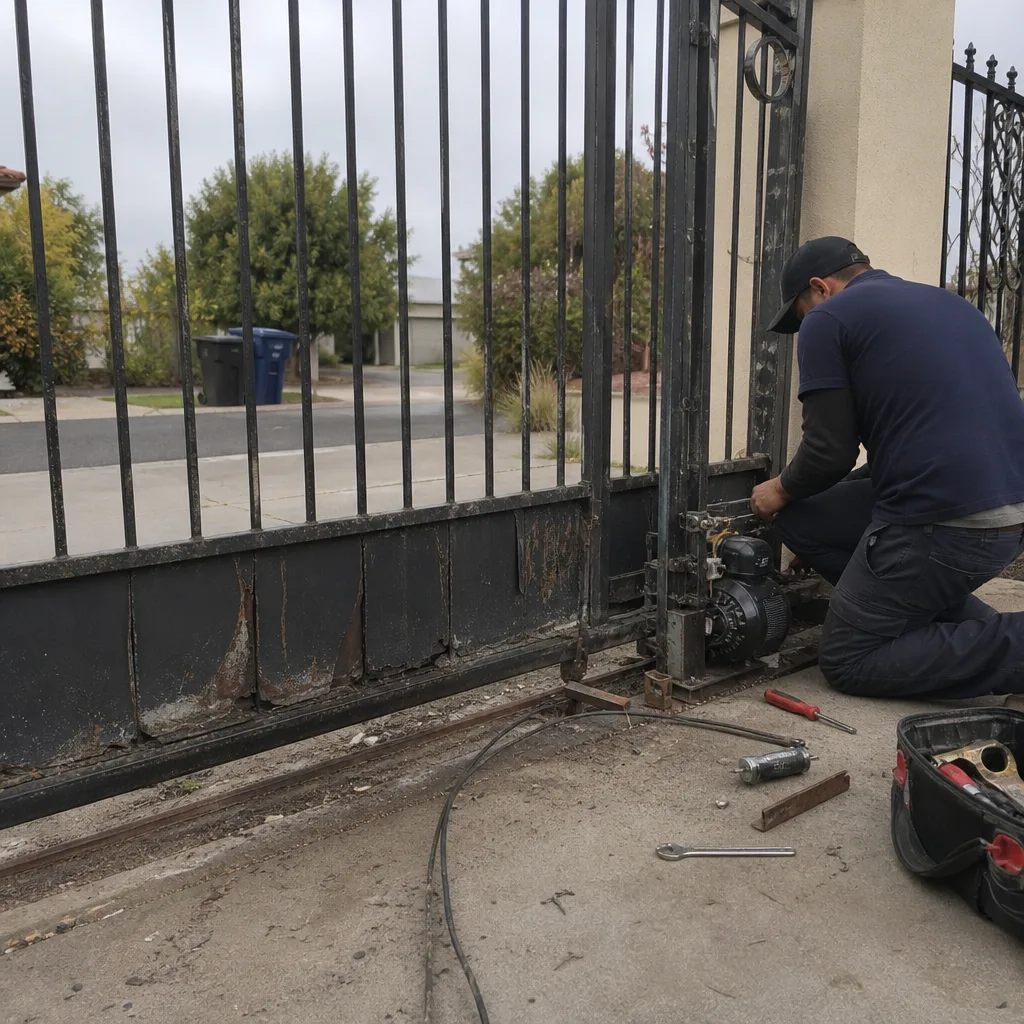 Before
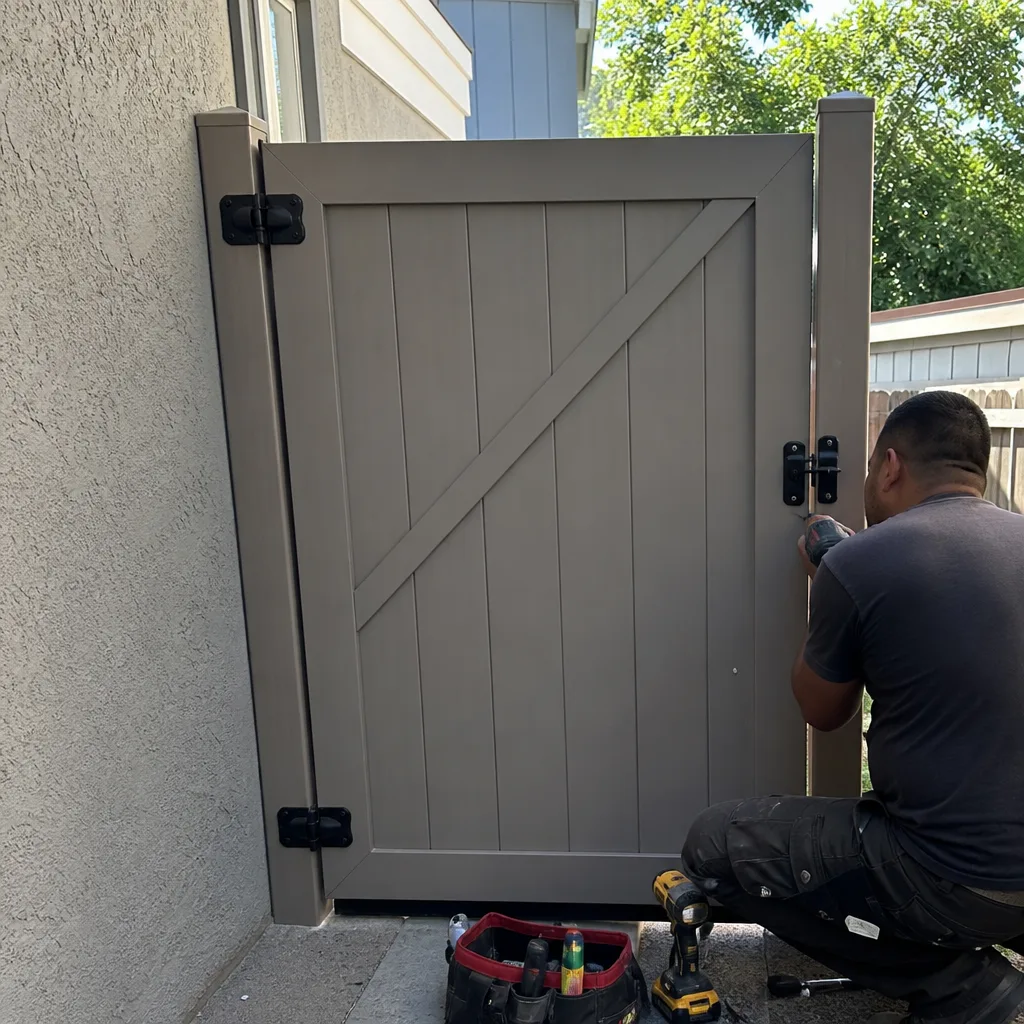 After
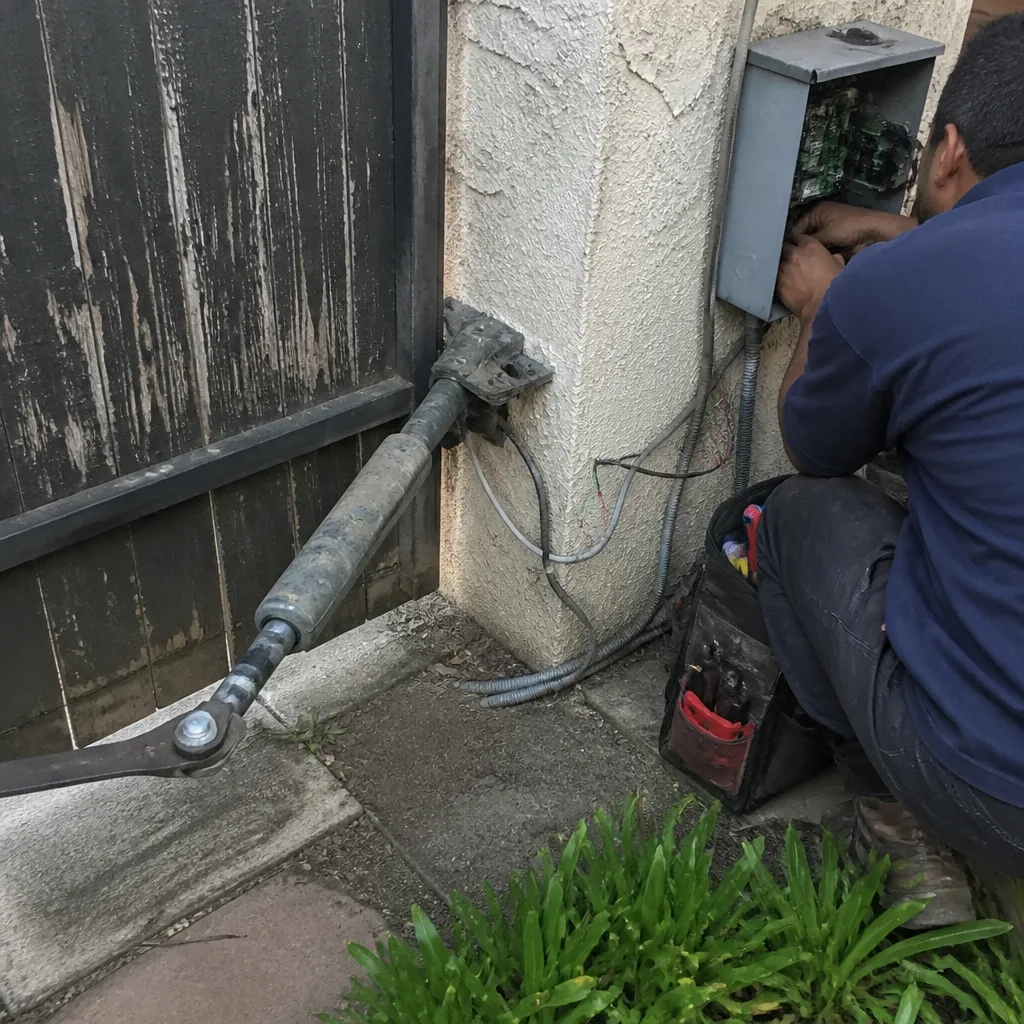 Before
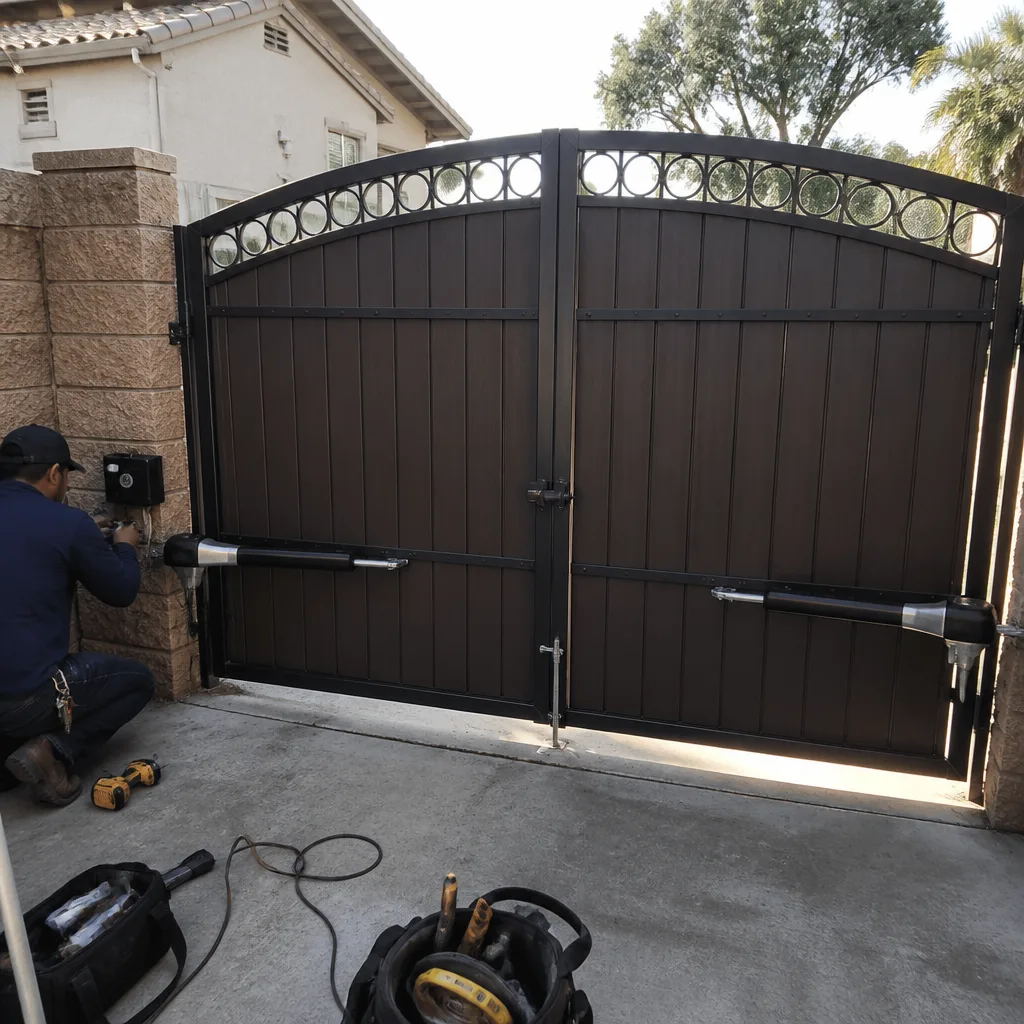 After
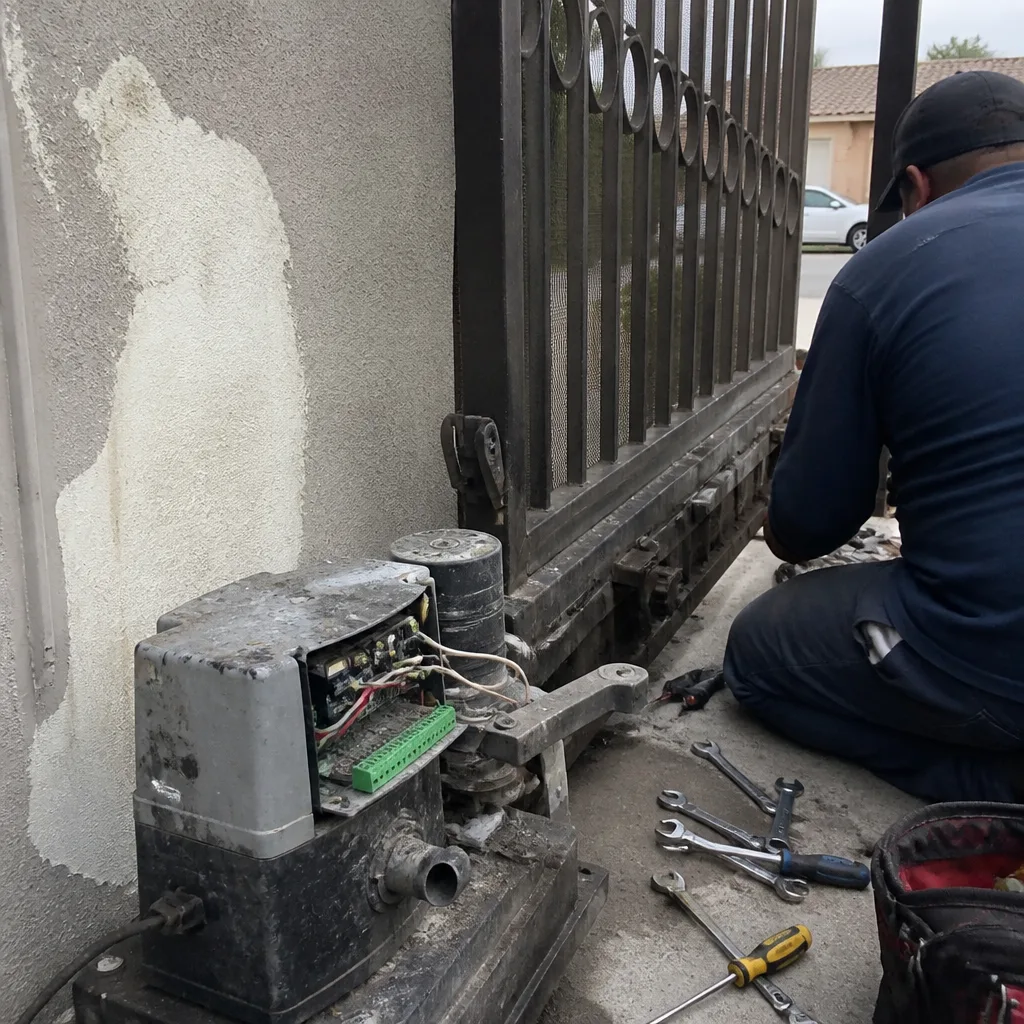 Before
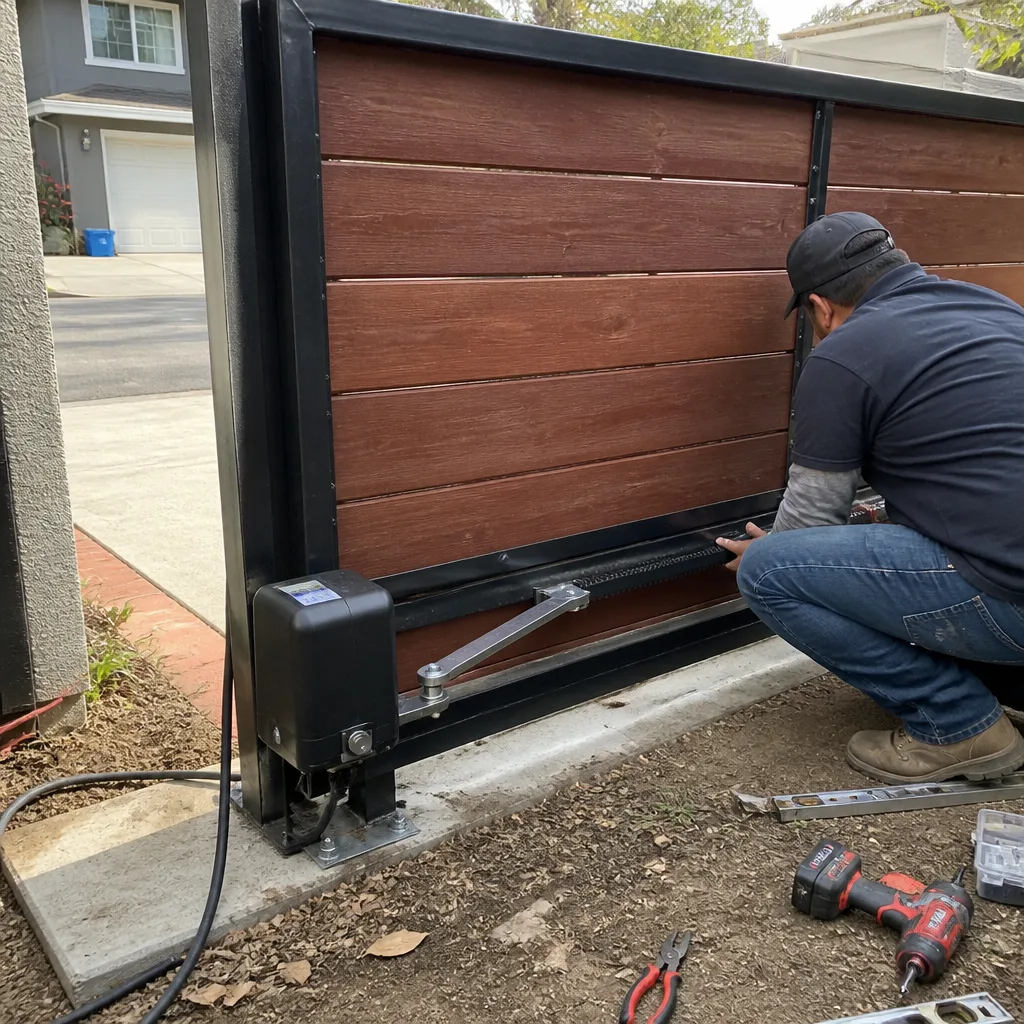 After
Common Mistakes to Avoid
- Replacing the whole operator because of a $15 capacitor. We see this at least once a month in Mira Mesa. A gate that starts, stalls, and starts again is often a capacitor, not a dead motor. Capacitors are wear items. Replace the capacitor first. If that doesn’t fix it, then consider the bigger repair.
- Adjusting limit switches to fix a force-sensitivity problem. If you crank the close limit past the physical stop because the gate reverses at the closed position, you’re not fixing the obstruction detection, you’re overwhelming it. That’s how gate hinges bend and operator arms snap. Fix the force setting, not the limit.
- Ignoring a gate that’s getting louder. A gate that grinds, squeals, or clanks more than it did last year is telling you about wear before it becomes failure. Replacing a worn roller costs a fraction of replacing a bent track. Noise is data. Act on it.
- Bypassing photo eyes or safety edges. It’s tempting to jumper the photo eye wires and get the gate closing again. If a child, a pet, or a delivery person is in the path when the gate closes, the legal and human cost dwarfs the service call. In California, safety devices on powered gates are not optional. Don’t disable them.
- Throwing parts at the problem one at a time. We see homeowners replace the remote, then the capacitor, then the battery, and then call us anyway. The manual-release test and the symptom tree in this guide are designed to prevent that sequence. Diagnose, then purchase.
- Treating wind-related intermittent failures as electronics problems. In Mira Mesa’s windier months, a swing gate that fails only when the wind blows is a mechanical or force-calibration issue, not a control board failure. Note the weather conditions when your gate misbehaves. That detail matters.
- Using WD-40 on gate rollers and hinges. It cleans and penetrates, but it doesn’t lubricate under load. A few weeks later the joint is drier than before. Use a proper lithium or silicone grease for gate hardware. If the roller is sealed, replace it rather than trying to lube it.
When to Call a Professional
Call a gate technician when the gate stops functioning safely and predictably: the manual-release test shows mechanical binding, you hear grinding from the operator, the gate reverses on a child or a car, the breaker trips repeatedly, or you see exposed wiring anywhere in the system. Also call if the gate is a commercial unit serving tenants, customers, or homeowners who depend on it daily: a down HOA gate in Mira Mesa is a liability. See our How to Hire a Gate Repair Contractor in Mira Mesa: A Step-by-Step Guide before you call. Gate Repair Mira Mesa offers free estimates in Mira Mesa. We work on the brand already on your property, no replacement pitch required. Call (833) 593-4660 and tell us what the gate is doing. We’ll tell you what it probably is, and schedule the call if you want us to come out.
Frequently Asked Questions
A gate that opens but refuses to close is almost always a photo-eye or safety-edge issue – one of the Gate Repair Warning Signs: A Mira Mesa Homeowner’s Reference Guide. The operator has been told something is in the path and is correctly refusing to close on it. Clean the photo-eye lenses, check that both indicator LEDs are lit steadily, and walk the gate’s closing path looking for obstructions. If the photo eyes are confirmed clean and aligned and the gate still won’t close, check the force-sensitivity setting for the closing direction and the condition of the safety edge if your gate has one.
Gate repair in Mira Mesa ranges from roughly $85 for a minor adjustment or remote programming to $600 and up for control board replacement or motor work on a commercial operator. Most residential repairs land between $150 and $400: capacitor replacement, limit-switch adjustment, photo-eye realignment, and receiver module swaps fall in that range. Commercial work on DoorKing, FAAC, and BFT operators trends higher because the hardware is heavier and the systems are more complex. Call (833) 593-4660 for an exact quote, ours are free.
Most of the time, yes. Gate Repair Mira Mesa keeps same-day availability for emergencies in Mira Mesa and surrounding San Diego neighborhoods, and we stock the common parts for LiftMaster, Mighty Mule, Ghost Controls, Linear, and Viking residential operators on the truck. A gate stuck closed is a real problem for anyone who needs to leave for work. If we can’t make it same-day, we’ll tell you that up front and give you the earliest honest time. Call (833) 593-4660 in the morning for the best shot at a same-day slot.
A full gate installation in Mira Mesa includes the gate itself (swing or slide, steel, aluminum, or iron), the operator, the post hardware, the control board, the safety photo eyes, a keypad or remote system, and the power run from the nearest circuit to the operator location. We handle the entire install, including the conduit work and the safety devices California requires on powered gates. If you’re upgrading from a manual gate, we also assess whether the existing posts and hinges can carry the new weight or need to be replaced first. Every installation includes a walkthrough of the system and a review of the owner-level maintenance.
We work on both. Commercial slide and swing gates on parking lots, HOA entries, and business driveways in Mira Mesa are a large part of our work, and we’re trained on DoorKing, FAAC, BFT, Elite, and Linear commercial operators as well as the residential lines. Commercial work usually means bigger hardware, more safety devices, and higher stakes when the gate is down, so we prioritize those calls and carry commercial-grade components for the brands we service.
A gate that works briefly after a breaker reset and then fails again usually has a component that’s drawing more current than it should as it heats up. The classic culprits are a failing capacitor, a winding motor that’s shorting under thermal load, or a control board with a compromised power supply section. The fact that it works after a reset tells you the system is electrically viable for a short run, which means the issue is a component under load, not a programming or settings problem. Continuing to reset the breaker repeatedly can damage the operator and the circuit. Call (833) 593-4660 and describe the pattern to us: how long it works after a reset, what the gate does just before it dies, and we can often identify the component over the phone.
The Bottom Line
Gate troubleshooting works best when you start with the symptom and follow it to the component. A gate that won’t open at all is usually power or remote. A gate that reverses at the closed position is usually force settings. A gate that stalls mid-travel is usually a capacitor or a mechanical bind. The manual-release test tells you which half of the system is at fault in two minutes and costs nothing. Most simple fixes, remote batteries, photo-eye cleaning, and force adjustments, are safe for a homeowner. Anything involving springs, cables, control boards, or motors deserves a call to a technician who knows the specific brand on your property. Gate Repair Mira Mesa serves electric gate repair in Mira Mesa and beyond, and we’re on the other end of the phone at (833) 593-4660 if you want to talk through your symptoms before booking anything.
Written by the team at Gate Repair Mira Mesa, serving Mira Mesa since 2017.