
Last updated November 2, 2026
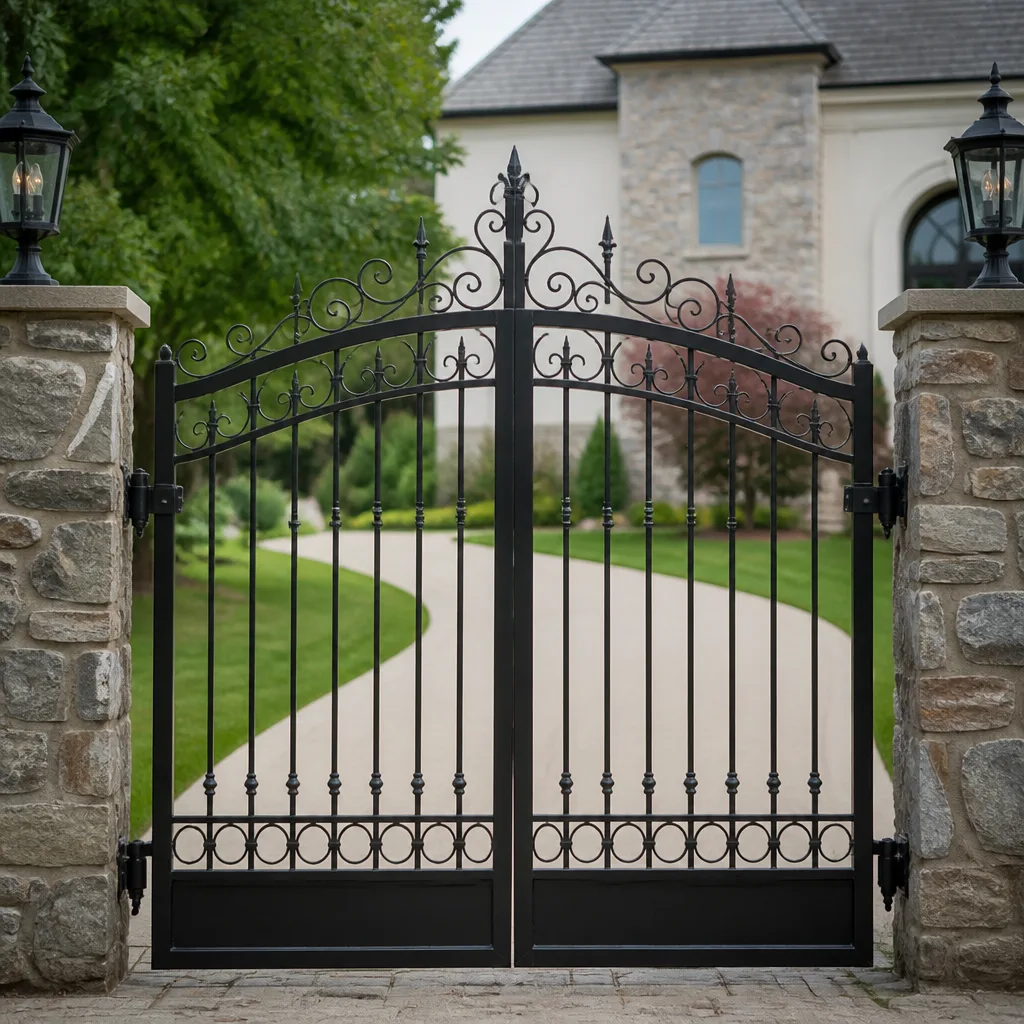 Wrought iron
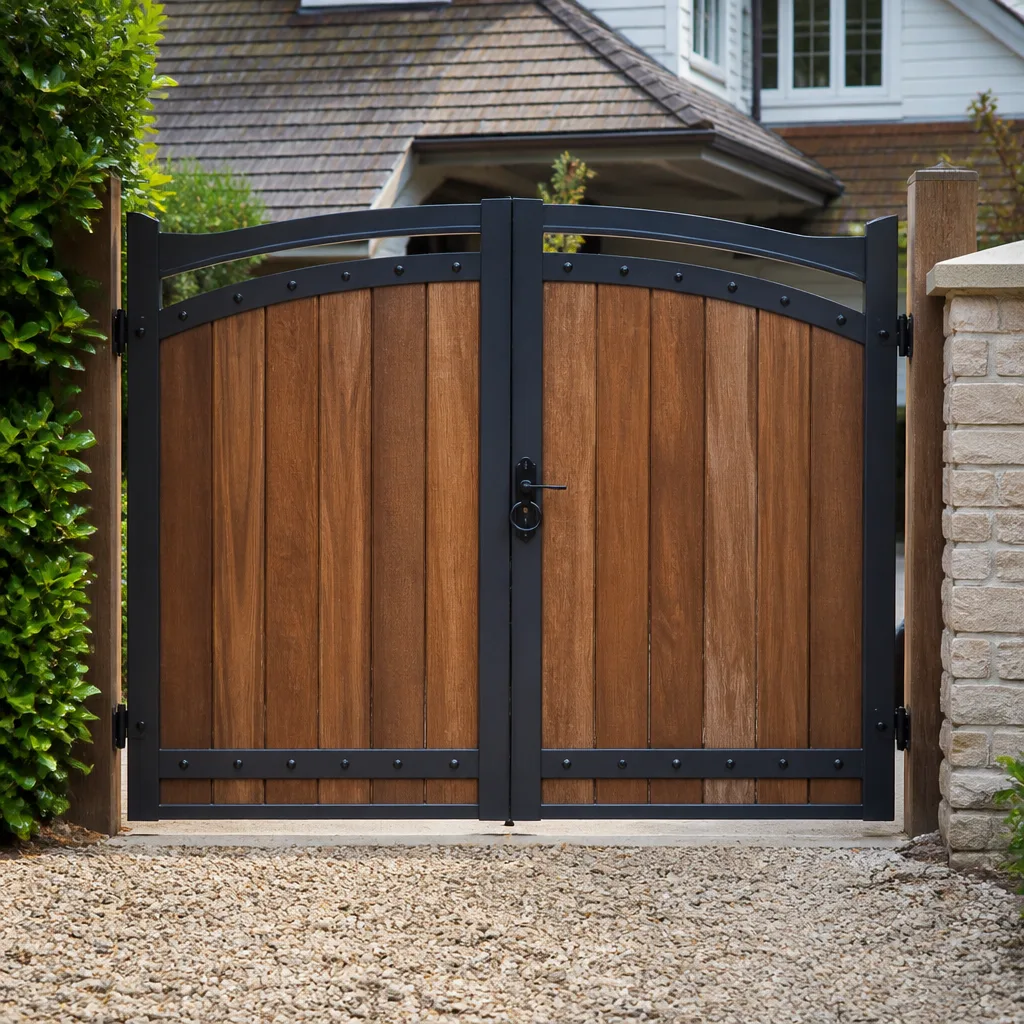 Wood & steel frame
 Farm & ranch
 Sliding driveway gates
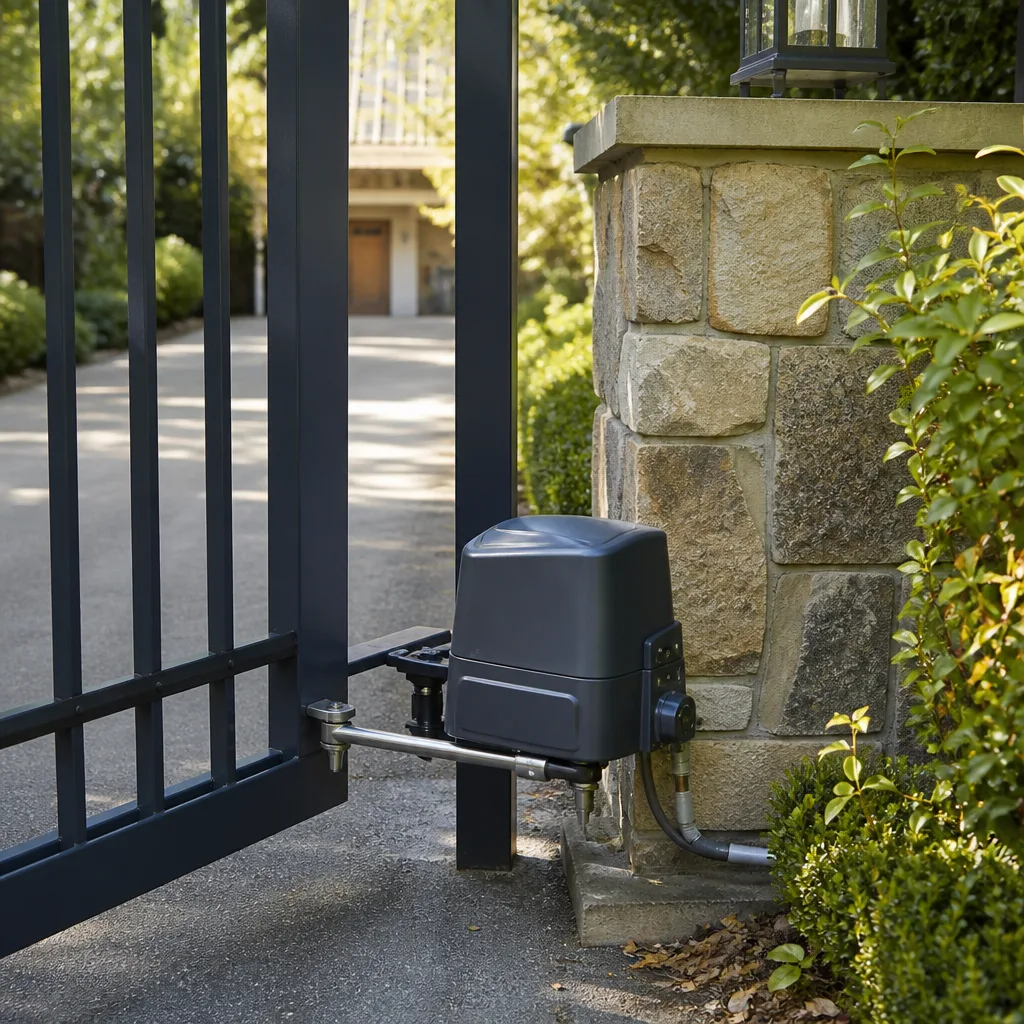 LiftMaster operators
Free on-site gate assessment - hinges, posts, and your LiftMaster or Nice gate operator checked before anything is quoted
The assessment is free and the quote is the invoice.
Get your free estimateGate Repair Emergency Preparedness Guide for Mira Mesa Homes
During the 2007 Witch Creek Fire, San Diego County firefighters encountered automatic driveway gates that wouldn’t open. Homeowners had evacuated, power was down, and responders had to force entry through gates that should have released manually but didn’t. The manual release had seized from years of disuse. Nobody in the household knew where the release key was. In Mira Mesa, where neighborhoods like Sorrento Valley’s eastern edge and the canyons near Los Peñasquitos Canyon Preserve sit close to wildland vegetation, a gate that won’t open during an emergency isn’t a repair issue. It’s an access issue. This guide covers what Mira Mesa homeowners need to know before the next fire season, power outage, or medical emergency.
Quick Answer
Gate emergency preparedness in Mira Mesa means knowing three things: how to manually release your specific gate operator when power is out, whether your battery backup can run the gate through a 24-hour outage, and how emergency responders access your property when nobody is home. Most gate failures during emergencies are not motor failures at all. They’re manual release mechanisms that have seized from disuse, and battery backups that were installed years ago and never tested.
Styles & brands we work with
- Wrought iron
- Wood & steel frame
- Farm & ranch
- Sliding driveway gates
- LiftMaster operators
Table of Contents
- Manual Release Operation: The Five Operators Most Common in Mira Mesa
- Battery Backup Systems: What Actually Works Through a 24-Hour Outage
- Emergency Access for First Responders: Knox Boxes, Keyswitches, and Pedestrian Gates
- Wildfire-Specific Preparation for Automatic Gates
- Creating a Household Emergency Gate Protocol
- Testing and Maintenance Before Fire Season
- Common Mistakes to Avoid
- When to Call a Professional
Manual Release Operation: The Five Operators Most Common in Mira Mesa
Every automatic gate operator has a manual release mechanism. When power fails, the gate must be released from the motor so it can swing or slide by hand. The problem in Mira Mesa is that many homeowners have operators from five major brands, and each releases differently. If you call for gate repair in Mira Mesa after an emergency, the technician will find that most gates didn’t fail mechanically. They failed because the homeowner couldn’t release the operator when it mattered.
Here’s how each operator type releases under power failure:
- LiftMaster swing and slide operators: These typically use a keyed manual release on the side of the operator housing. The key inserts into a small cylinder, and a half-turn disengages the gearbox from the gate arm. If the key turns but the gate won’t move, the pin inside the release is likely corroded.
- FAAC operators: FAAC units, both swing and slide, have a manual release lever or keyed release on the underside or rear of the chassis. On FAAC hydraulic models, the release valve must be opened before the gate will move by hand. Forcing the gate without opening the valve can damage the hydraulic seals.
- DoorKing slide operators: DoorKing 9000-series slide operators use a release handle or a chain-release lever inside the operator cover. The cover is typically secured with a small key. Once open, pulling the release lever disengages the chain from the motor sprocket. If the cover key is missing, the gate is effectively locked closed.
- Elite swing operators: Elite residential swing arms have a manual release knob or lever directly on the arm. Some Elite models require the arm to be unscrewed from the motor shaft using a provided wrench. If that wrench was lost, pliers usually work, but only if the release bolt isn’t seized.
- Mighty Mule swing operators: These units have a simple push-button or pull-pin release on the operator arm itself. It’s the easiest to use in an emergency, but the pin is often rust-bound because Mighty Mule arms sit exposed to sprinkler overspray and coastal air in Mira Mesa yards.
In our experience, the most common failure we see after a power outage is not the release mechanism breaking. It’s the homeowner never having tested it. A release that hasn’t been operated in five years may not operate when firefighters are standing at the gate.
Battery Backup Systems: What Actually Works Through a 24-Hour Outage
Battery backup for a gate operator is not a single product. It’s a system sized to the operator’s power draw. A small residential swing gate with a Ghost Controls or Mighty Mule operator draws far less current than a commercial-grade FAAC or Viking slide operator. The battery that runs one will not run the other.
The practical question in Mira Mesa is whether your backup can run the gate through a 24-hour outage, which is what SDG&E has historically reported during Santa Ana wind events that trigger public safety power shutoffs. Here’s what that requires:
- For a single residential swing gate: A 12V 7Ah sealed lead-acid battery or a 12V 10Ah lithium battery typically provides 15 to 30 full open-close cycles, depending on gate weight and condition. That’s often enough for 24 hours of normal use, but not if the gate cycles frequently.
- For a residential slide gate: Slide gates draw more current because they’re moving a heavier mass horizontally. A 12V 12Ah battery is a realistic minimum. Expect 10 to 20 cycles before depletion.
- For commercial slide or swing operators (DoorKing, FAAC, BFT, Viking): These systems don’t typically use small plug-in battery backups. They use larger battery banks, often 24V systems with multiple batteries in series. A failed battery in a series bank is more common than a dead battery across the board.
The brands with the most reliable factory battery backup integration are LiftMaster and FAAC. LiftMaster’s battery backup kits plug directly into the control board and include a charging circuit that monitors battery health. FAAC offers similar integration on many of its residential and commercial models. Ghost Controls and Mighty Mule have reliable aftermarket options, but they’re not always factory-matched to the operator.
Testing your battery backup before fire season is straightforward, but it takes time. Disconnect main power to the operator and run the gate through ten full open-close cycles. If the gate slows noticeably after five or six cycles, the battery is degraded. If the gate won’t complete ten cycles, replace the battery. Do this in May, before the Santa Ana season begins in earnest.
Emergency Access for First Responders: Knox Boxes, Keyswitches, and Pedestrian Gates
Firefighters in San Diego use Knox Box rapid entry systems. A Knox Box is a small, secure metal box mounted near the gate or entry point that contains keys, access cards, or gate remotes. The fire department carries a master key that opens every Knox Box in their jurisdiction. When a Mira Mesa homeowner installs a Knox Box and registers it with the San Diego Fire-Rescue Department, responders can access the property without forcing the gate.
But a Knox Box only works if the gate can be opened from inside the box. That means the box must contain either a working remote, a keyswitch key, or clear instructions for the manual release. Too many Knox Boxes in Mira Mesa contain remotes with dead batteries or keys that no longer match the lock after a gate repair.
There are other access options:
- Fire keyswitch: A tamper-resistant switch mounted on the gate pillar or nearby post, wired to the operator control board. Firefighters carry a standard fire service key that turns the switch and forces the gate to open. This is common on commercial gates but underused on residential properties in Mira Mesa.
- Pedestrian gate: A separate walk gate, even a narrow one, entirely bypasses the big gate problem. If the vehicle gate is stuck, a pedestrian gate that’s unlocked or accessible with a simple code gives first responders a way in. Most emergency medical calls don’t need vehicle access to the driveway. They need a clear path for a stretcher.
- Gate gap or emergency egress: On newer installations, a gap in the gate or a breakaway section is required by code in some jurisdictions for pool access or emergency egress. Mira Mesa homes built before these codes often don’t have one.
What matters most is that your access plan works on the day it’s needed. We’ve seen Knox Boxes installed on gates with dead operator batteries, which means the remote inside the Knox Box does nothing. The access system is only as good as the gate system behind it.
Wildfire-Specific Preparation for Automatic Gates
Mira Mesa’s wildfire risk concentrates along the canyon edges and open space boundaries. Homes near Los Peñasquitos Canyon, the Sorrento Valley edge, and the chaparral hillsides east of Camino Ruiz are the ones where a gate failure during an evacuation could be dangerous. During red flag conditions, the gate becomes part of the evacuation route.
Three wildfire-specific steps apply to every automatic gate in these zones:
- Disable or lengthen the auto-close timer during red flag warnings. Most operators have a setting that closes the gate automatically after a set period of 15, 30, or 60 seconds. During a chaotic evacuation when multiple vehicles are leaving, an auto-close gate can close on a trailer or a second car that’s following too closely. Set the auto-close to its longest setting, or turn it off entirely, when a red flag warning is active.
- Clear vegetation and debris from the gate track and operator area. Slide gates are especially vulnerable to leaves, eucalyptus bark, and tumbleweeds lodging in the track. During high winds, debris accumulates fast. A single branch in the track can stop a gate mid-cycle. Clear the track, the ground around the operator, and the area around the gate hinges before wind events.
- Verify the manual release before high fire danger days. Do not wait until the power is out. The evening before a predicted Santa Ana event, test the release. Open the cover, operate the release lever or key, and swing or slide the gate by hand once. This takes five minutes and eliminates the single most common failure we see in electric gate repair in Mira Mesa after outages.
One more point specific to Mira Mesa’s wind patterns. Slide gates face the wind differently than swing gates. A swing gate that opens into a Santa Ana headwind will strain the operator arm significantly. If you have a swing gate and live on an exposed slope or open street, consider whether the gate’s open direction makes sense for your site. It may be worth adjusting the gate to open with the wind rather than fighting it.
Creating a Household Emergency Gate Protocol
The best equipment in the world fails when nobody in the household knows how to use it. A gate emergency protocol is simply a written plan for what to do when the gate won’t open. It doesn’t need to be long. It needs to be specific.
Here’s a template for Mira Mesa households:
- Identify the operator brand. Write down the brand name. If you don’t know whether you have a LiftMaster, FAAC, DoorKing, Elite, or Mighty Mule unit, look for the label on the operator itself. The brand name is always printed there.
- Locate the manual release key or lever. Find where the release is on your specific operator. If it uses a key, attach the key to a labeled hook or peg near an interior door, not in a drawer. Write the key’s location into the protocol.
- Assign two adults in the household as the designated release operators. Both should practice releasing and manually moving the gate at least twice a year. The task should be familiar, not a puzzle solved under stress.
- Write down what to do if the gate is frozen closed. This happens more often with slide gates that have corroded rollers or debris in the track. The protocol should say: do not force the gate. Do not drive through the gate. Call the number on the operator and report the stuck gate. If it’s an evacuation, leave through another exit if one exists.
- Post the protocol. Tape it inside a kitchen cabinet door, include it in the household emergency kit, and keep a copy in the garage near the gate operator.
If the gate is frozen in the closed position during a medical emergency and no other exit exists, call 911 and report the gate as a barrier to entry. Mira Mesa firefighters do not expect homeowners to jerry-rig a stuck gate. They’d rather know about it on the dispatch call than discover it on arrival.
Testing and Maintenance Before Fire Season
Fire season in San Diego County now runs year-round in practice, but the highest-risk window for Mira Mesa is late summer through fall, when Santa Ana winds arrive and vegetation is driest. That makes August the right month for an annual gate check.
Here’s the pre-season checklist we recommend for every automatic gate in Mira Mesa:
- Test the manual release. Disengage, move the gate by hand, re-engage. If the release sticks, lubricate the mechanism and test again. If it still sticks, schedule a service call.
- Test the battery backup. Kill main power and run ten open-close cycles. Replace the battery if performance degrades.
- Inspect safety sensors. Photo eyes get dirty and misaligned during dry, dusty months. A gate that reverses unexpectedly or refuses to close is often a sensor issue, not a motor issue.
- Check the gate track and rollers. Clean debris, check roller wear, and listen for grinding. Slide gates need periodic roller replacement, a fact most homeowners discover only when the gate finally jams.
- Verify the keyswitch and Knox Box contents. If you have a keyswitch, test it. If you have a Knox Box, open it and verify the remote inside still works and the battery isn’t dead.
- Test the auto-close and force settings. A gate that slams shut is just as dangerous as one that won’t open. Test the gate’s force sensitivity with a rolled-up towel in the gate path. The gate should reverse on contact, not crush the towel.
Most of this checklist is doable by a homeowner in under an hour. The gate’s force settings and internal diagnostics are better left to a technician who works on these systems daily. But the manual release, battery test, and track cleaning are homeowner tasks that pay off directly in an emergency.
Common Mistakes to Avoid
- Never testing the manual release. This is the single biggest failure we see in Mira Mesa after every power outage. The release seizes, the key is lost, or the homeowner doesn’t know where the mechanism is.
- Assuming the battery backup works because the green light is on. Most battery backup indicators show charge status, not capacity. A battery that’s degraded to 20 percent of its original capacity can still show a green light and fail after two cycles.
- Using the gate during an outage as if nothing has changed. Every cycle on battery power drains the reserve. During an outage, treat the gate as a limited resource. Open it when you need to leave, then leave it open if possible.
- Mounting a Knox Box without testing gate access through it. A Knox Box with a dead remote or a key that doesn’t match the lock is useless. Test the complete access path at least once a year.
- Ignoring a gate that closes slowly or hesitates. Slow operation is often the first sign of a failing motor, low battery, or worn rollers. By the time the gate stops working entirely, the repair is more expensive and the timing is worse.
- Forcing a stuck slide gate by hand. Slide gates weigh hundreds of pounds. Forcing one off its track or bending the roller assembly turns a $150 roller replacement into a $900 track repair.
- Replacing the operator without checking the gate itself first. A new motor on a gate with worn hinges, rusted rollers, or a misaligned track will fail early. The gate and the operator are a matched system.
When to Call a Professional
Call a gate specialist when the manual release is seized and won’t free up with lubrication, when the battery backup fails a ten-cycle test, when the safety sensors won’t align despite cleaning, or when the gate has jumped its track or damaged a roller. These conditions don’t get better with time, and they’re dangerous to fix without the right tools.
If you’re not sure what brand of operator you have or you don’t know where the manual release is, that’s also a call worth making. A technician can identify the operator, show you the release, and test the backup in under an hour. Gate Repair Mira Mesa offers free estimates in Mira Mesa – call (833) 593-4660.
See the difference
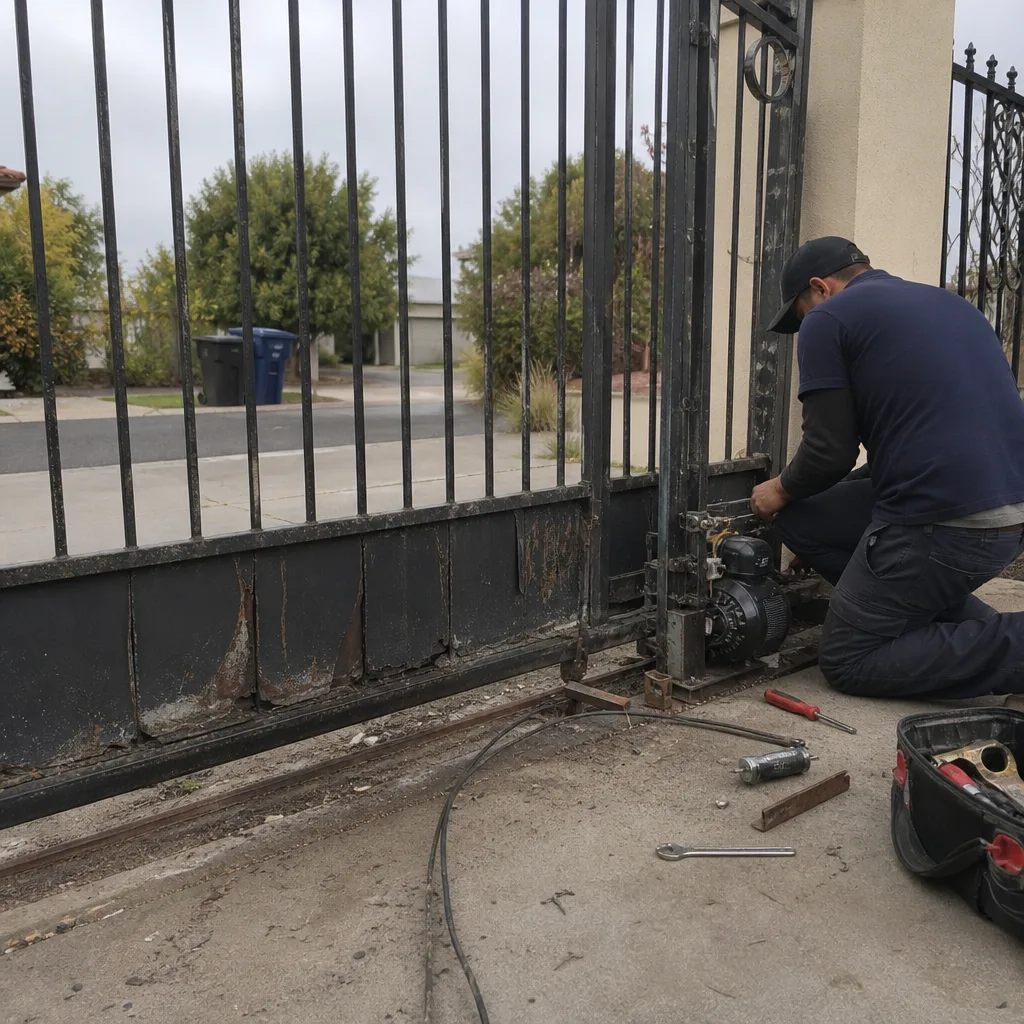 Before
 After
 Before
 After
 Before
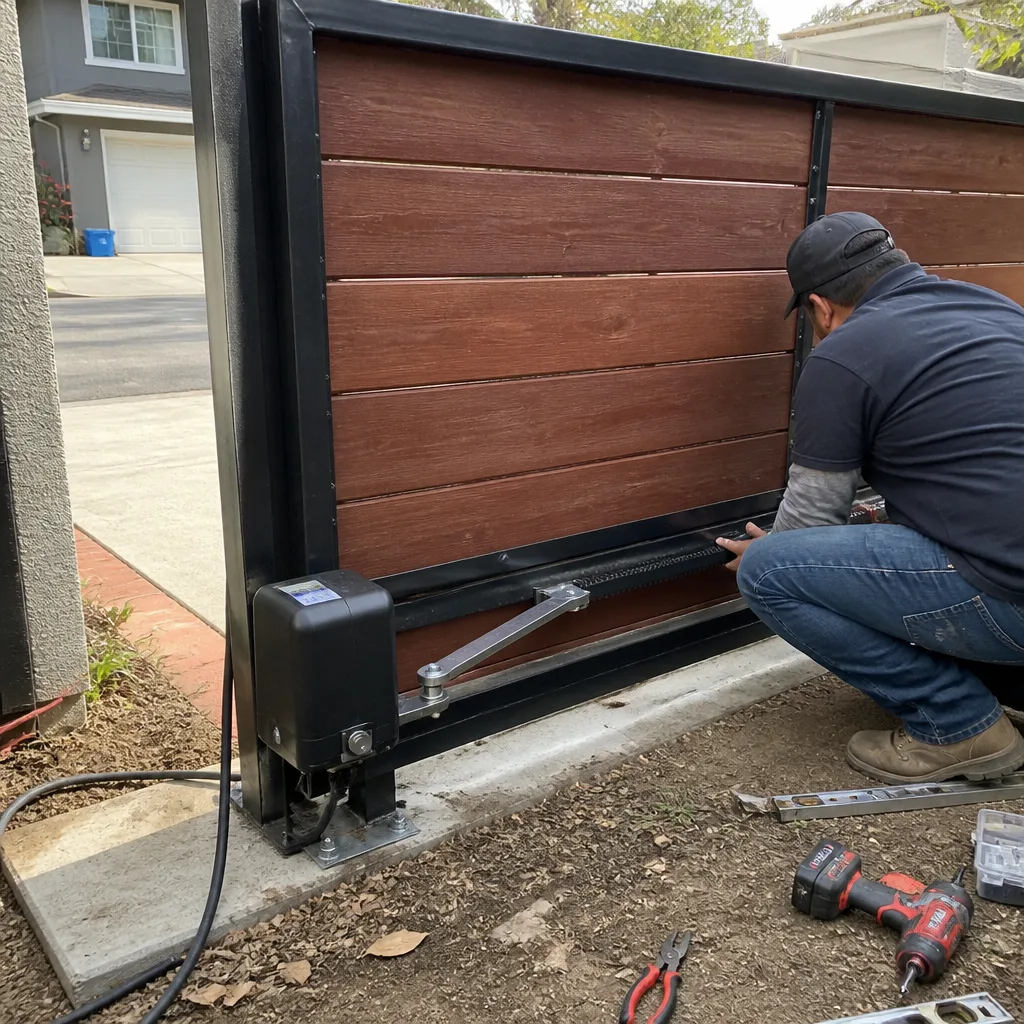 After
Frequently Asked Questions
Locate the manual release on your operator, which is typically a keyed cylinder, lever, or pull-pin on the operator housing or arm. LiftMaster and DoorKing use keyed releases, FAAC uses a release valve or lever, and Mighty Mule uses a push-button or pull-pin on the arm. If you have tested and lubricated the release annually, manual operation should take under two minutes. If the release is seized, call (833) 593-4660 – forcing it can damage the operator.
Emergency gate repair in Mira Mesa typically runs $150 to $450 for common failures like a seized manual release, a burned control board, or a stuck slide gate roller. The price depends on the operator brand and the part needed. Mira Mesa’s mix of older residential operators and newer smart-gate systems means some repairs need overnight parts, while most can be done same-visit. Call (833) 593-4660 for an exact quote – estimates are free.
If your home is in a Mira Mesa neighborhood that experiences SDG&E public safety power shutoffs, yes. A battery backup sized correctly for your operator will run a residential swing gate through a 24-hour outage with 15 to 30 cycles. LiftMaster and FAAC offer the most integrated factory backup options. Without a backup, your gate is stuck closed when the power drops, unless you can manually release it.
Only if you have a Knox Box, a fire keyswitch, or an unlocked pedestrian gate. San Diego Fire-Rescue carries a master key for Knox Boxes, but the box must contain a working remote or a valid key. Without one of these systems, firefighters will force the gate, which means cutting a lock, bending a panel, or removing a section of fence. The gate gets damaged, you pay for it, and access is delayed.
Debris in the slide gate track is the most common wind-related failure in Mira Mesa. Eucalyptus bark, palm fronds, and dried brush from canyon edges blow into tracks and stall the gate mid-cycle. The operator’s safety system then refuses to move the gate, which looks like a motor failure but is actually a blocked track. Clearing the track before wind events prevents most of these failures.
Test the manual release and battery backup twice a year, in spring and late summer before Santa Ana season. Test the safety sensors and auto-close force monthly. Test the Knox Box or keyswitch annually. These tests take ten to twenty minutes each and catch the failures that turn a routine outage into an emergency.
The Bottom Line
A gate emergency in Mira Mesa is usually not a gate problem. It’s a preparation problem. The manual release hasn’t been tested, the battery backup is older than the homeowner remembers, the Knox Box holds a dead remote, or nobody in the house knows where the release key lives. None of these conditions require expensive repairs. They require a plan and a few tests. If your gate serves a home near canyon edge or open space, treat the gate as part of your evacuation route, not a driveway convenience. And if you need a professional to walk through the emergency features on your specific operator, call a gate specialist who works on your brand. The hour it takes will matter more than you’d like to think.
Written by the team at Gate Repair Mira Mesa home, serving Mira Mesa since 2017. We specialize in gate repair in Mira Mesa, electric gate repair in Mira Mesa, and gate installation in Mira Mesa.